



Native American multimedia artist Danielle SeeWalker is painting her truth.
For Danielle SeeWalker, artistry and advocacy are one and the same. The Húŋkpapȟa Lakȟóta painter, muralist, beadworker, and multimedia artist is as known for her activism as she is for her vibrant, evocative works — what the Denver-based creative has described as “artivism.” This year, that artivism is being presented at several galleries nationwide, including a solo exhibition currently running at the Indigenous-led All My Relations Gallery in Minneapolis.
“My art focuses on Native women, Native scenery, even Native materials,” says SeeWalker, an enrolled citizen of the Standing Rock Sioux Tribe who was born and raised in North Dakota and moved to Colorado in 2018. “My culture, my identity, my experiences, and my stories all play a part in my work.”
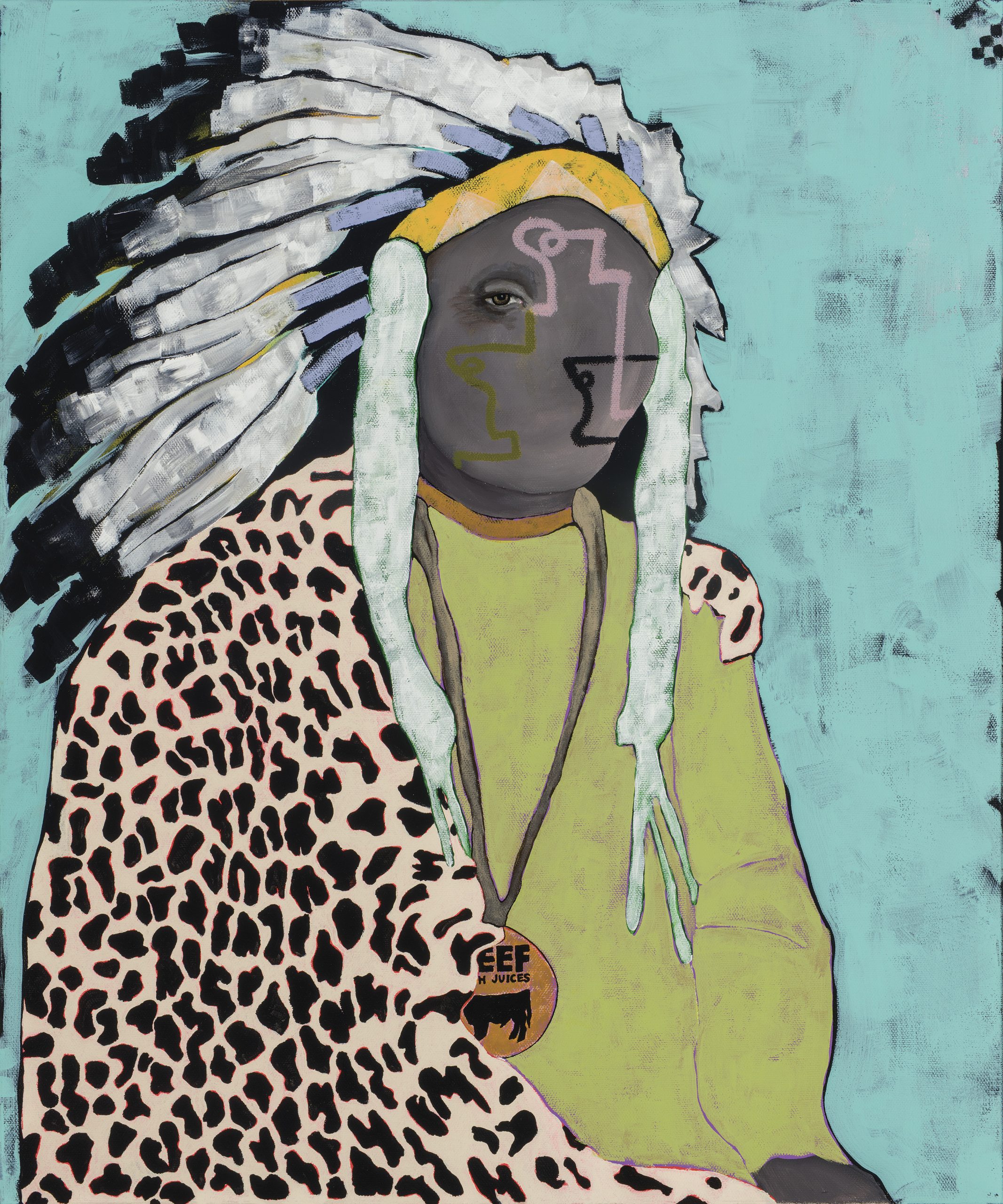 Wades in Water, acrylic, aerosol, oil stick on canvas.
Consider, for example, her Indian Commodity Food series. It depicts the government-issued rations given to tribal communities — items like beef with juices, ready-to-eat wheat cereal, and pasteurized processed American cheese — painted atop buffalo rawhide drums, speaking to the challenging conditions Native Americans experienced as they were relocated onto Indian reservations. Other pieces, such as You Can’t Have Our Braids and Everyone Talks About Having a Seat, But This Table Ain’t for Us, underscore ongoing discrimination against Indigenous women.
SeeWalker only started publicly showing her work in recent years, though she has been making art for as long as she can remember, including during her Great Plains upbringing. Raised by a Native father and a non-Native mother, she often faced discrimination through-out her childhood while trying to navigate two worlds in which she never felt fully accepted. Art served as an outlet to explore those experiences and emotions.
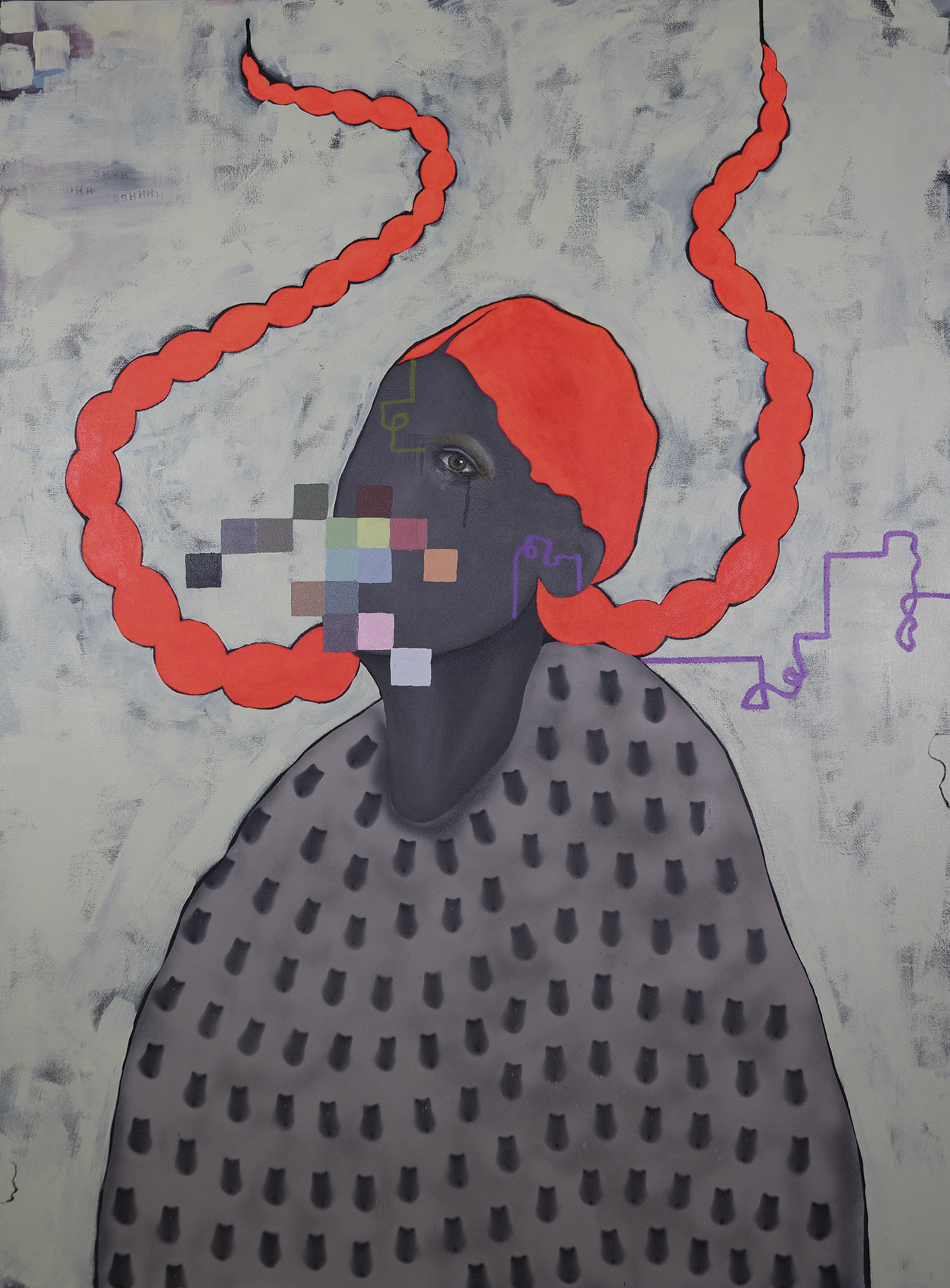 But I Have Something to Say, acrylic, aerosol, oil stick on canvas.
“It wasn’t until college when I met all these people from different walks of life with different cultural perspectives that I started to become really proud of who I am,” says SeeWalker, who comes from a long line of self-taught artists, including her dad. “I realized I needed to embrace my culture just as my dad had taught me, and that’s when I started to see art as my healing journey and my medicine.”
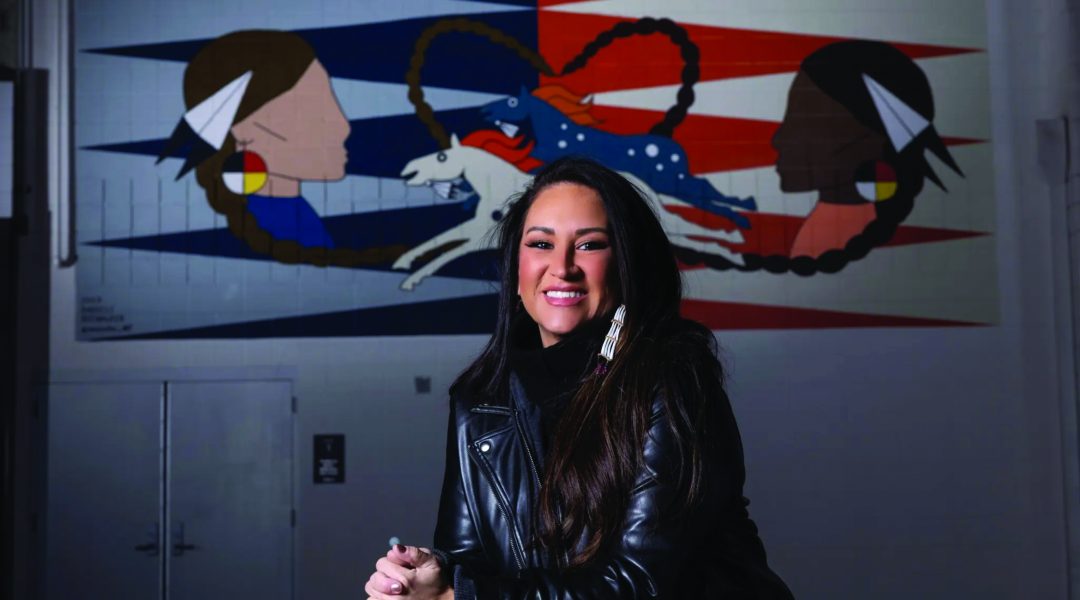
SeeWalker was making art mainly for herself until 2020, when local nonprofit organization Babe Walls approached her to create a public mural in nearby Westminster, Colorado. She used the opportunity to shine a light on the Missing and Murdered Indigenous Persons (MMIP) crisis. In the years since then, she has gone on to create dozens of murals, including We Are Horse Nation, which is on display at Empower Field at Mile High, home of the Denver Broncos.
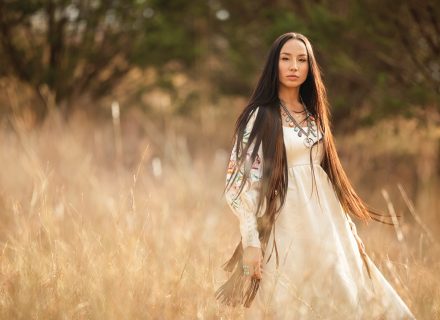
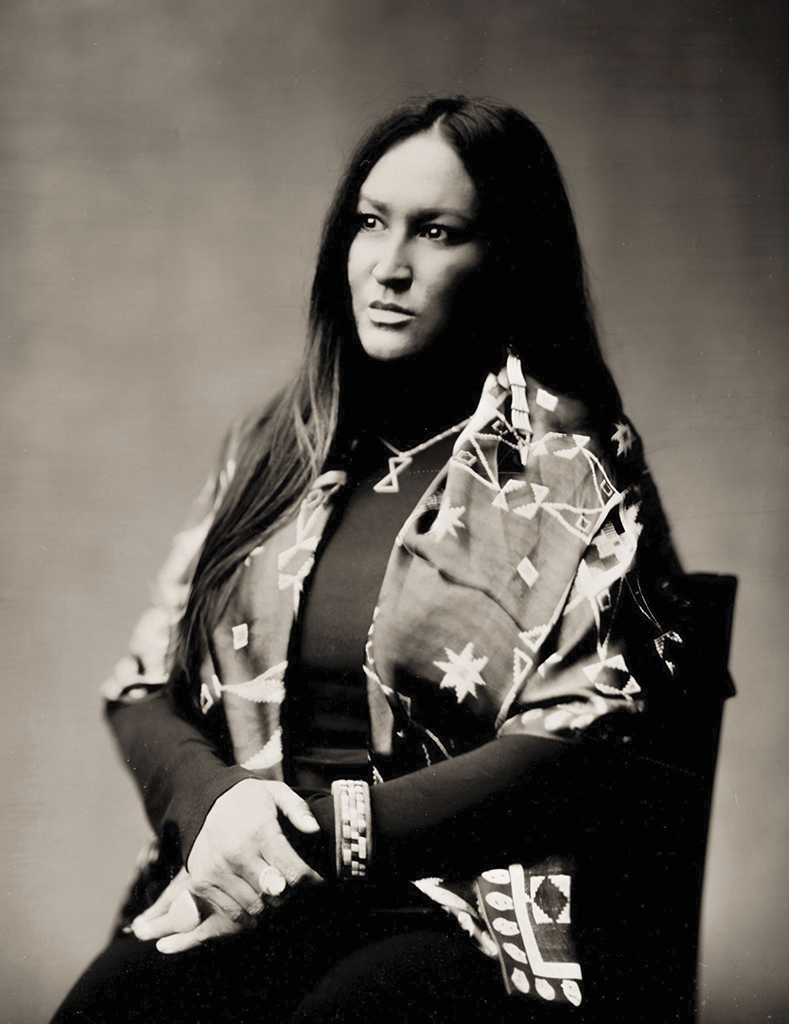 A wet-plate portrait of Danielle SeeWalker by photographer Shane Balkowitsch.
When that high-profile mural debuted in late 2023, SeeWalker posted on social media about its significance. “I just envision a little Native kid going to the game and seeing their culture portrayed through public art and feeling proud of who they are,” she wrote. “We all need to feel celebrated.”
She was thrust into the international spotlight in 2024 when she Instagrammed her painting G Is for Genocide, which depicts an Indigenous woman in a keffiyeh. Intended to illuminate the parallels between the historic plight of Native Americans and the modern-day plight of Palestinians living in Gaza, the artwork garnered attention and support — and controversy. It also cost SeeWalker an artist-in-residency opportunity with the town of Vail, Colorado, after community members raised concerns.
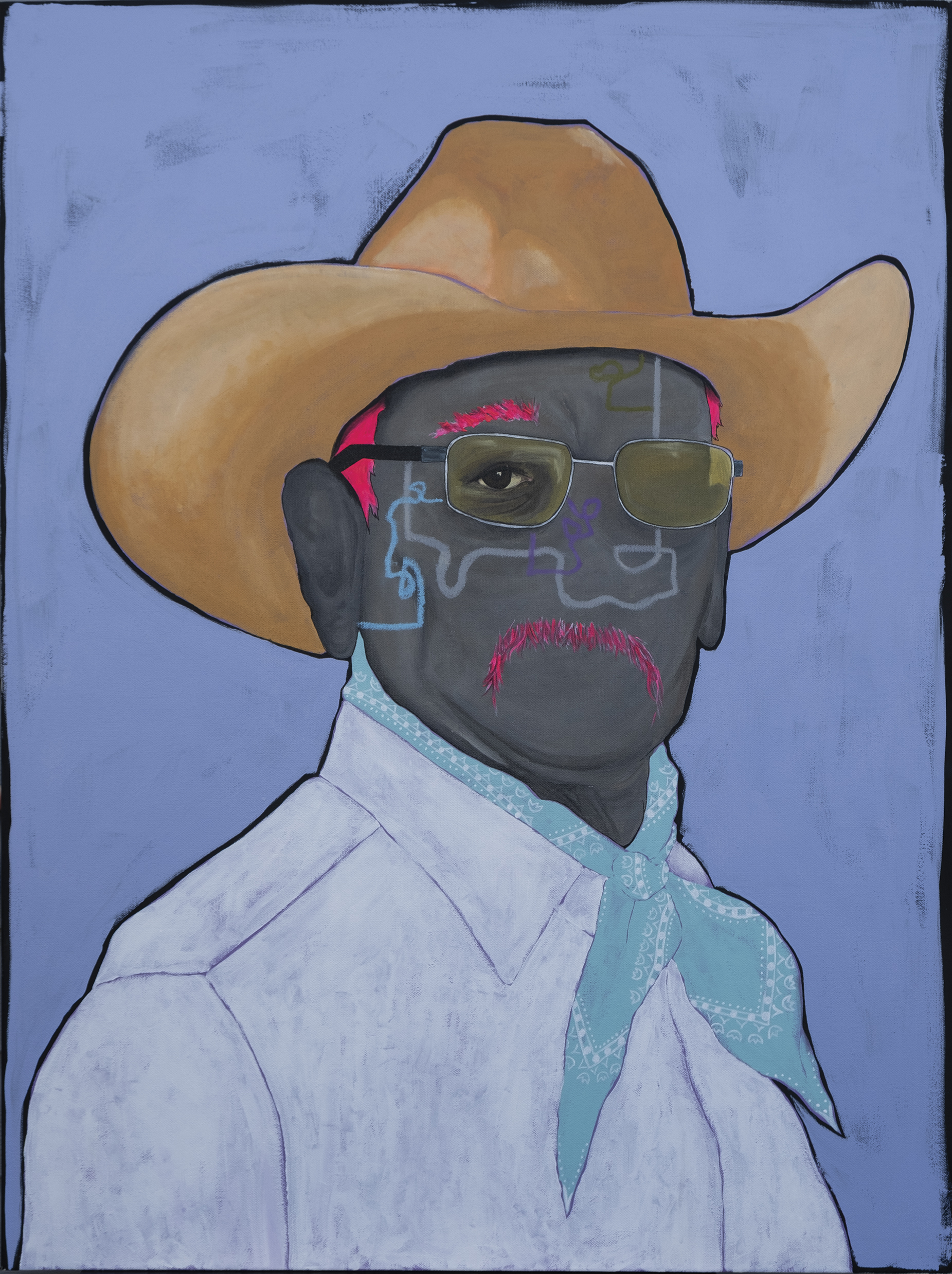 Patrick Kills Crow, acrylic and oil stick on canvas.
A media flurry followed, as did a First Amendment-focused federal lawsuit filed in October 2024 by the ACLU of Colorado, which noted that “Vail’s invidious viewpoint discrimination perpetuates a history of censorship of Indigenous people’s perspectives in Colorado and the United States.” That suit was settled last August, when the town of Vail agreed to pay SeeWalker an undisclosed sum and fund several proposed culture-focused projects, including creating an arts program for underrepresented communities, hosting an annual powwow, and providing annual cultural sensitivity training to its arts employees.
“I am hopeful that through this experience, [there will be] positive change for future underrepresented creatives, such as Native American artists,” SeeWalker told Colorado Public Radio. “That is what the heart of the settlement was all about for me.” SeeWalker’s art is about taking a stand — and standing up as a role model for Native youth. “Seeing public art that represented me as a kid would have given me a better sense of identity and helped me have higher self-esteem,” she says.
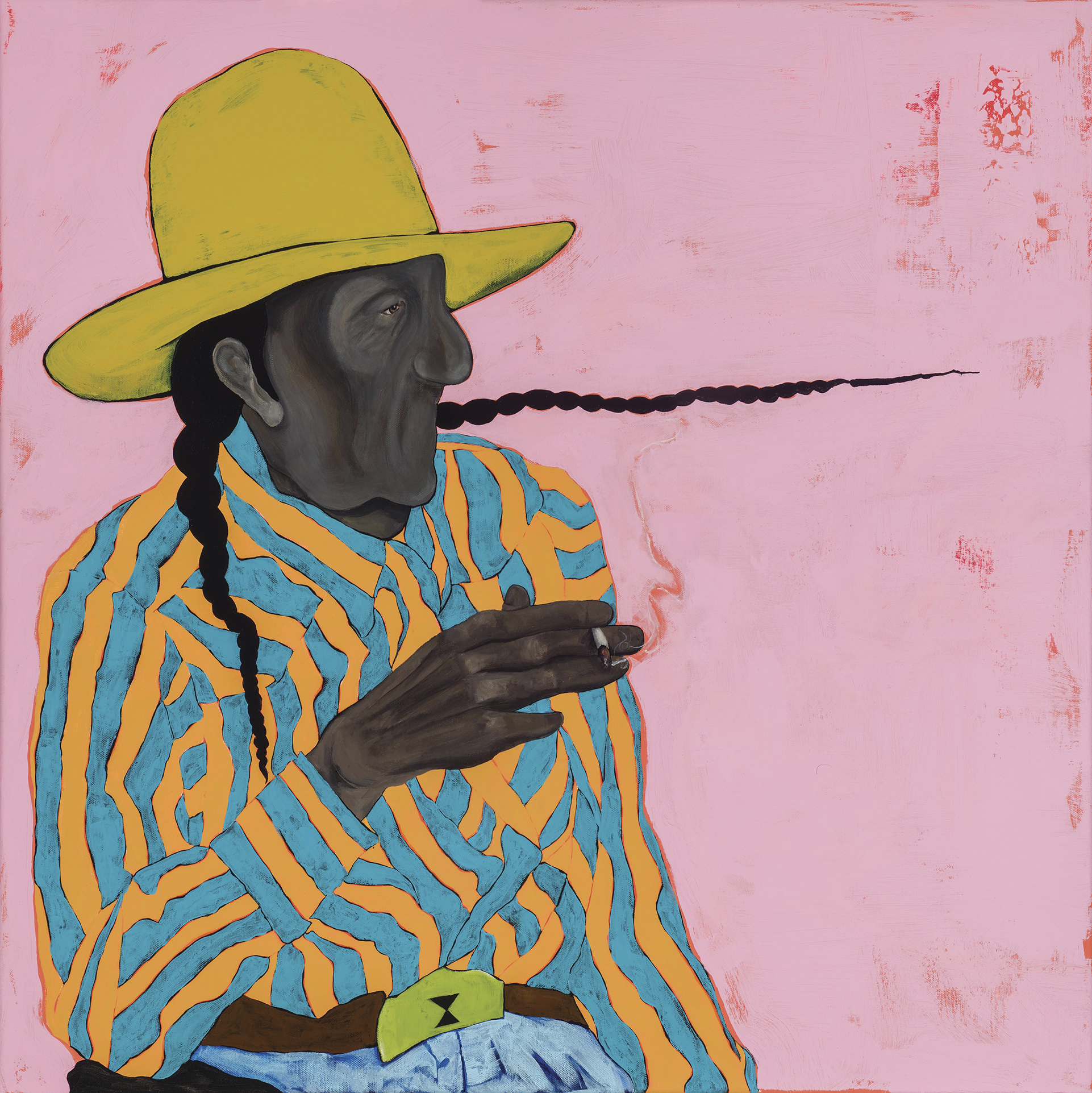 Uncle Giving Directions, acrylic on canvas.
“Right now, we’re in such a pivotal generation, because our parents grew up not having proper representation or a seat at the table. Now, a lot of contemporary artists are taking back that narrative and making our voices heard. Just in my lifetime, I’ve seen a huge evolution.” It’s an ongoing evolution that SeeWalker is no doubt helping shape.
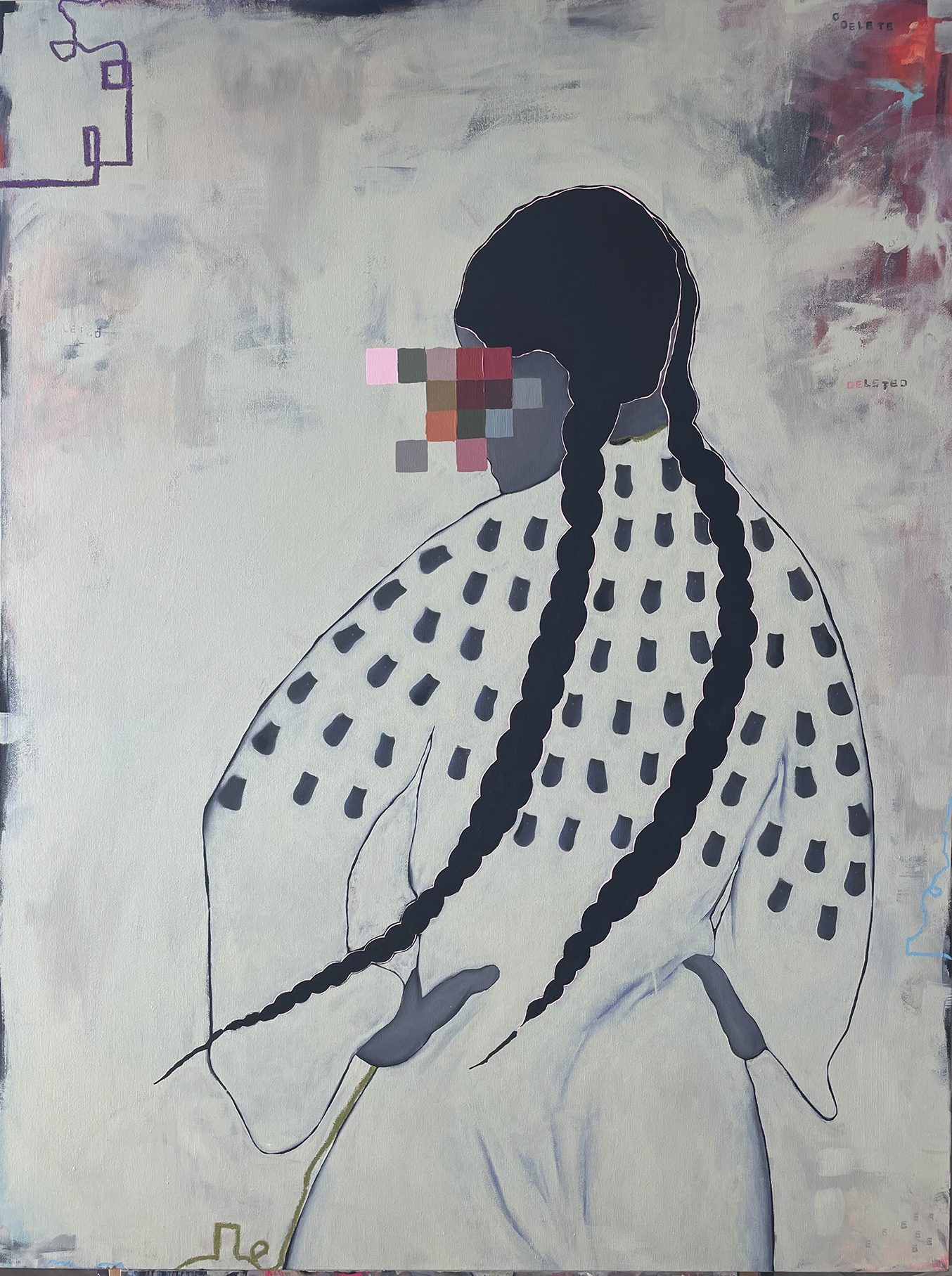 Erasure, acrylic, aerosol, oil stick on canvas.
Danielle SeeWalker’s solo exhibition at All My Relations Gallery in Minneapolis is on view April 9, 2026, through June 6, 2026. Learn more at allmyrelationsarts.org.
Cover: SeeWalker in front of her mural We Are Horse Nation, on display at Empower Field at Mile High in Denver.
Photography: Gabriel Christus/Denver Broncos, artwork provided by Danielle SeeWalker.