



A century and a half later, the battle that claimed George Custer, elevated Sitting Bull and Crazy Horse, and ignited a lasting debate over the Black Hills remains one of the nation's most enduring stories.
The United States’ 250-year history is chockfull of military battles, but three on U.S. soil rank above all others in the popular imagination: the Alamo, Gettysburg, and Little Bighorn, also known as Custer’s Last Stand.
What’s striking is that two of these “battles” seem little more than skirmishes when compared to the three-day bloodbath in early July 1863, at Gettysburg, Pennsylvania, the granddaddy of all Civil War clashes. With some 51,000 casualties (killed, wounded, and missing), no other American battle, neither here nor abroad, comes even close.
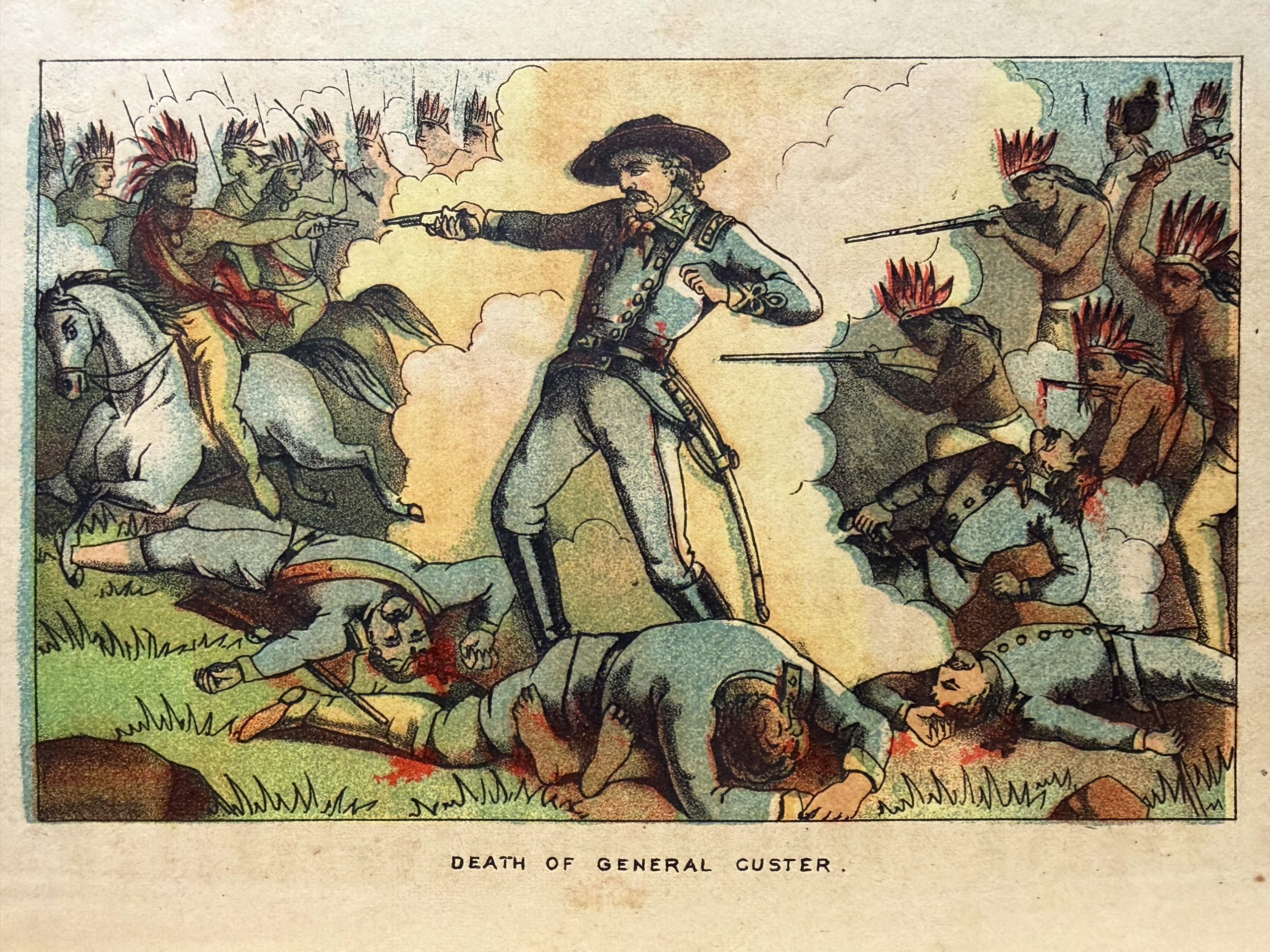
“Death of General Custer,” from J. W. Buel, Heroes of the Plains, 1882.
The 13-day siege of the Alamo in March of 1836, part of Texas’ fight for independence from Mexico, pitted about 200 defenders (including former Tennessee congressman Davy Crockett) against a Mexican army of 2,000 under Antonio Lopez de Santa Ana. The Texans were killed to a man, but the phrase “Remember the Alamo” reverberates still today, and probably more coonskin caps are sold at the Alamo museum store than any other place on Earth.
Southern Montana’s Little Bighorn, which celebrates its 150th anniversary on June 25, has similar casualty numbers as the Alamo, but it was a much quicker — and far less noble — affair. Aiming to crush Lakota resistance to signing away the Black Hills of present-day South Dakota, President Ulysses Grant’s administration ordered a military campaign in the spring of 1876 aimed at defeating the anti-treaty bands of Sitting Bull, Crazy Horse, and other Plains Indian leaders.
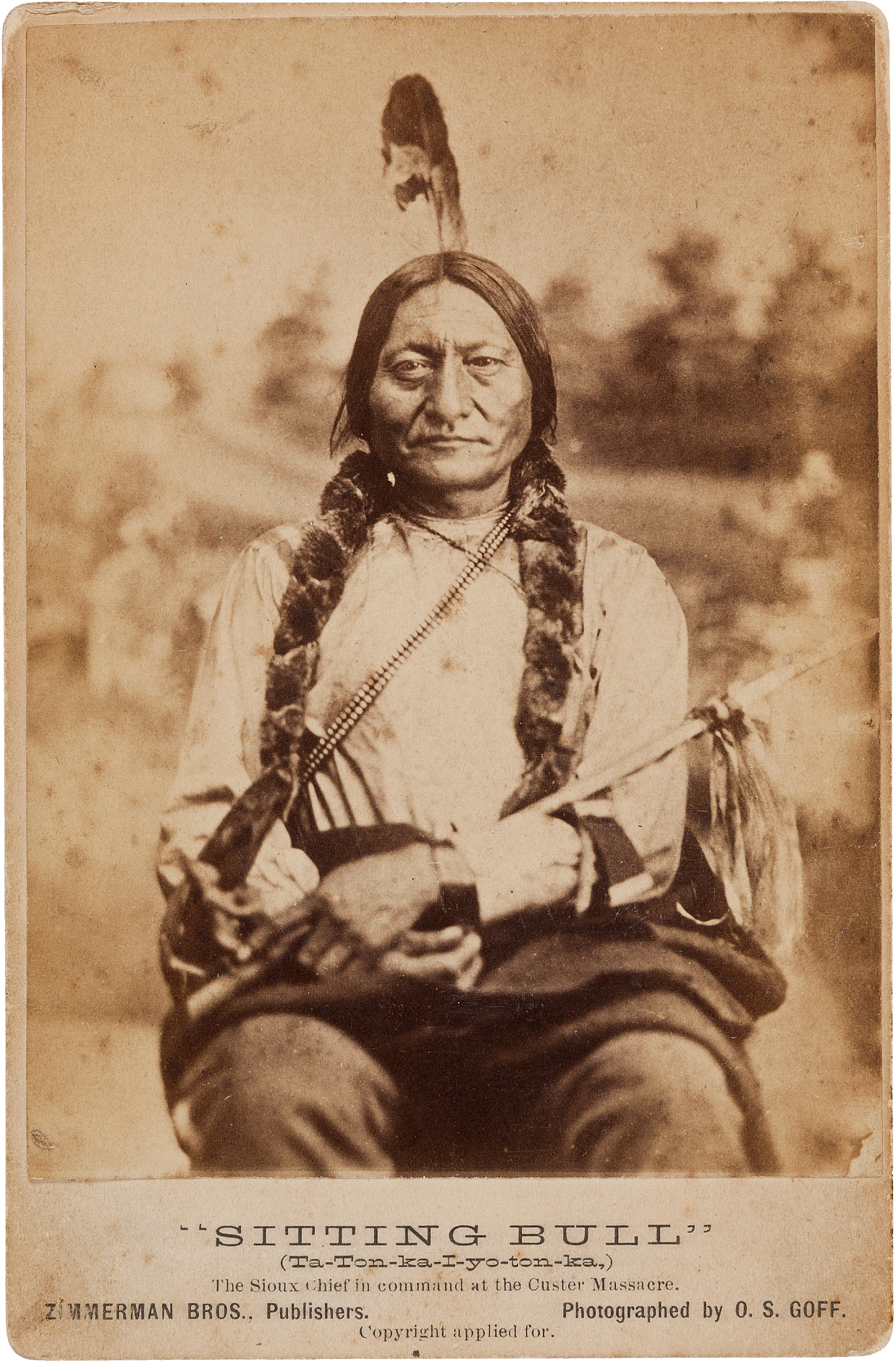
Sitting Bull, photographed by O. S. Goff, 1881.
One prong of that campaign consisted of the 7th U.S. Cavalry under the command of 36-year-old Lt. Col. George Armstrong Custer. Having gained the sobriquet “Boy General” during the Civil War after achieving the brevet rank of brigadier general at the age of 23, Custer was one of the Union heroes at Gettysburg, and his laurels only multiplied as the war progressed.
But upon locating Sitting Bull’s village of at least 5,000 men, women, and children, the Civil War hero made the tactical mistake of dividing his 645-man regiment into three battalions and a pack train prior to the attack. Consequently, about 1,500 Lakota and Cheyenne warriors, hell-bent on protecting their families, soundly defeated Custer’s regiment piecemeal. On a long ridge overlooking the village, Custer and more than 200 men under his immediate command were wiped out.
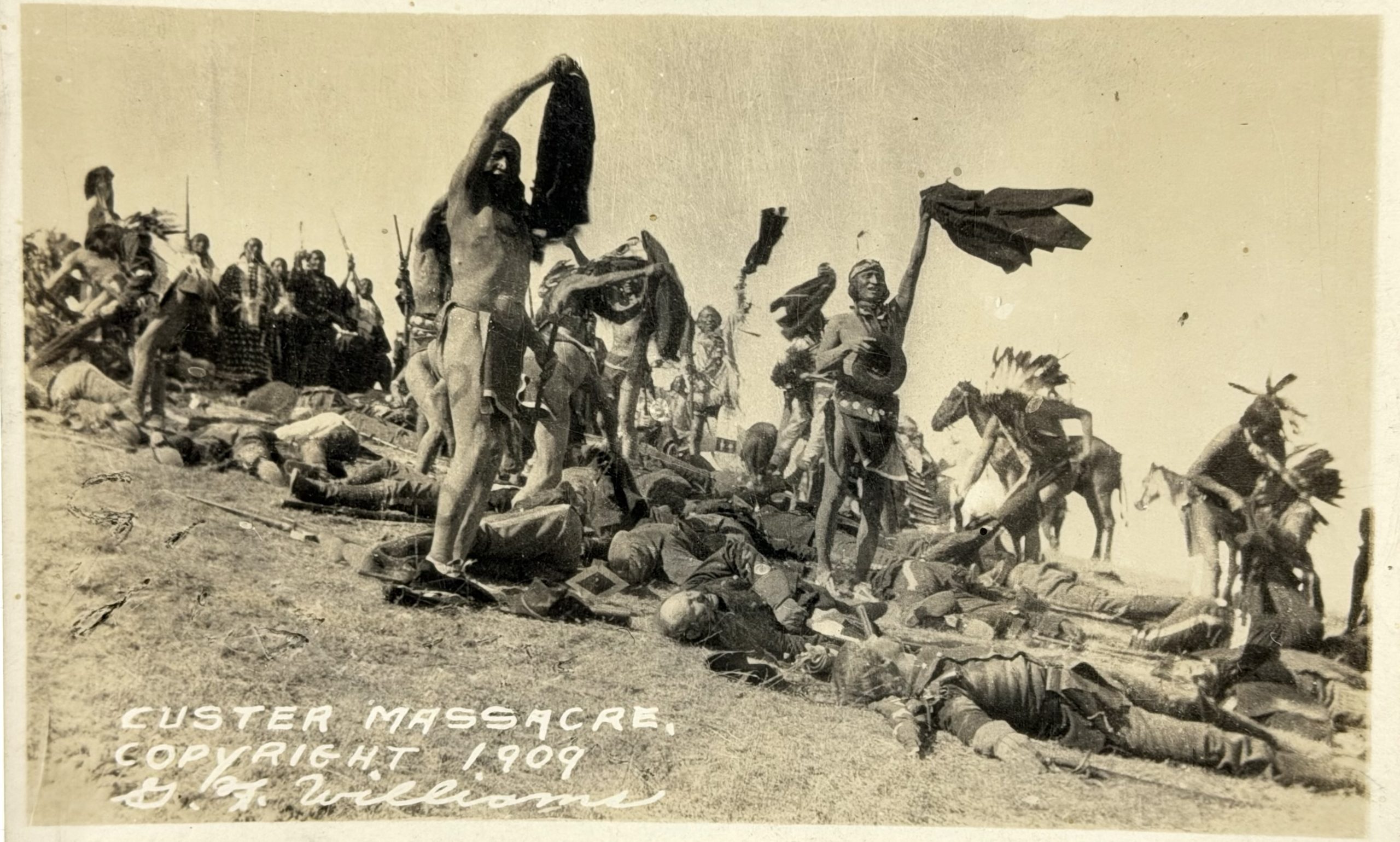
A scene from the 1909 silent Custer’s Last Stand, which was filmed on the battlefield using more than 400 Lakota, Cheyenne, and Crow men as warriors.
The Indigenous victory was the beginning of the end for Sitting Bull, Crazy Horse, and their followers, for they were soon forced onto reservations, where Indian agents and missionaries did their best to eradicate their language and culture. But it was also the beginning of a legend, which saw Custer and his men bravely fighting the enemy to the last bullet, gallantly dying on the hill of Manifest Destiny.
Custer’s Last Stand quickly became a meal ticket for authors, artists, and entertainers. And every major anniversary came with considerable fanfare on the battleground. The early commemorations even included several of the Indian combatants who’d fought Custer and his men. And hanging over each battlefield celebration was always the question of what went wrong for Custer, never what went right for the Lakotas and Cheyennes.
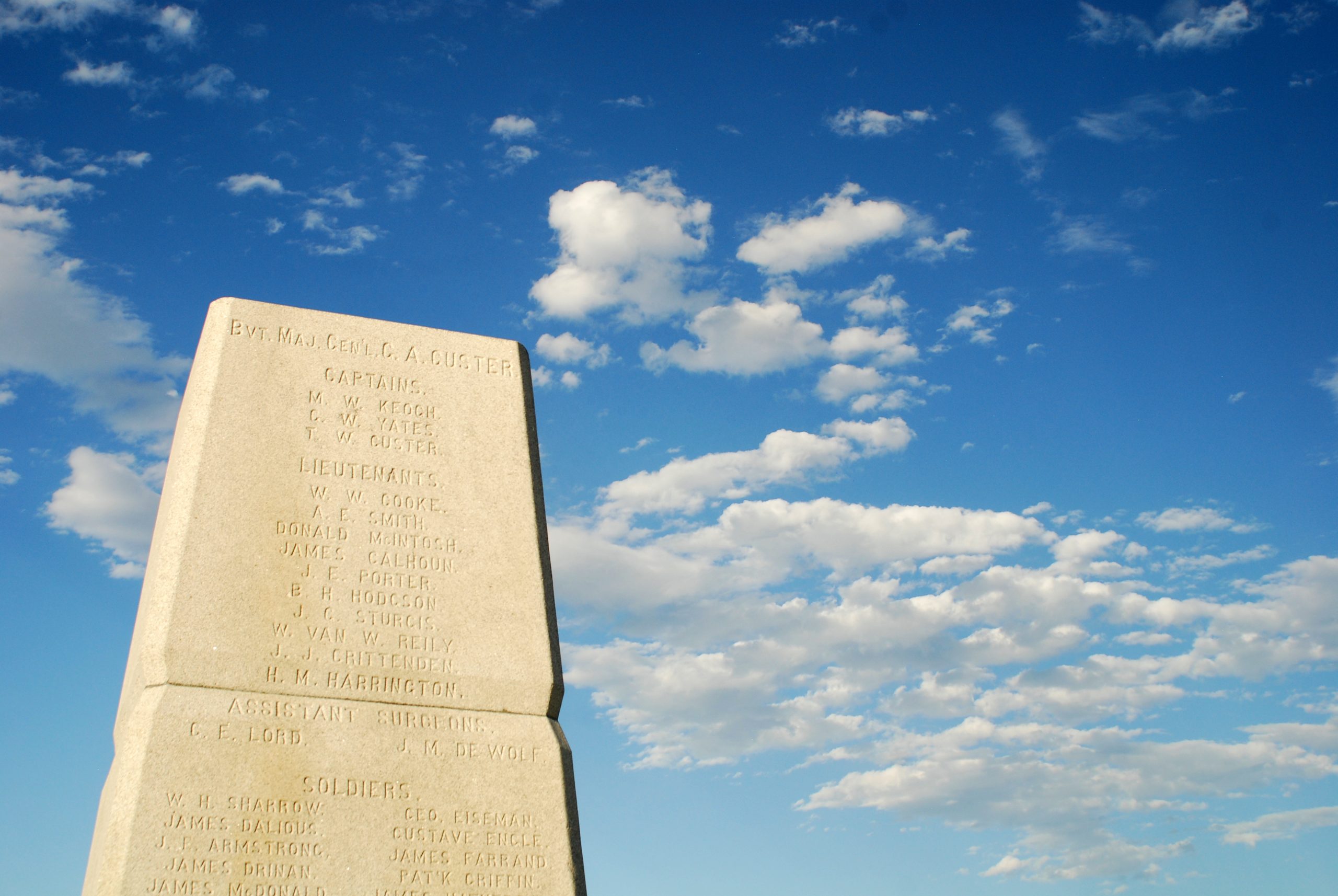
This granite monument was erected on top of Last Stand Hill in 1881 to honor the fallen soldiers at Little Bighorn. Photo by Mark Lee Gardner.
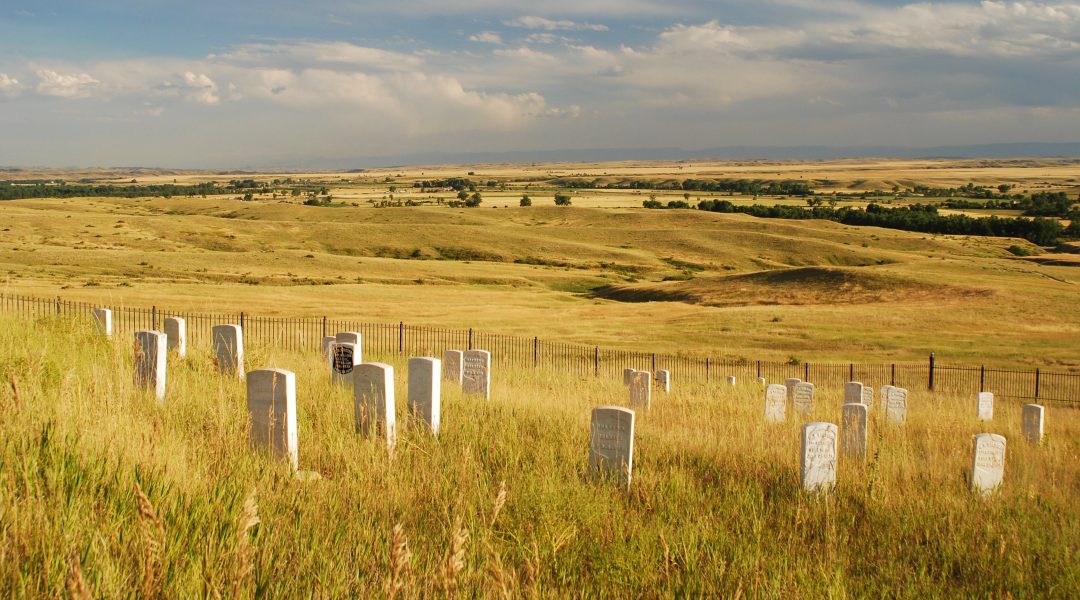
Recent decades, though, have seen the Indian victors and what they fought for gain equal footing with Custer. In 2003, less than 300 feet from the large stone obelisk on Last Stand Hill honoring the 7th’s dead, a striking memorial to the battle’s Indian casualties was dedicated. And visitors to the national monument today will now find red granite markers where Indian warriors fell, alongside the much older white marble markers for Custer’s troopers.
Fascination with Little Bighorn continues to this day. The National Park Service expects 10,000 visitors during this year’s anniversary. So why does curiosity endure after 150 years? Mostly because it involved larger-than-life individuals, Americans all, in a struggle for the fate of both the High Plains and a way of life. It also endures because the issue that brought Custer and his 7th Cavalry to the Little Bighorn in 1876 — control of the Black Hills — remains unresolved.
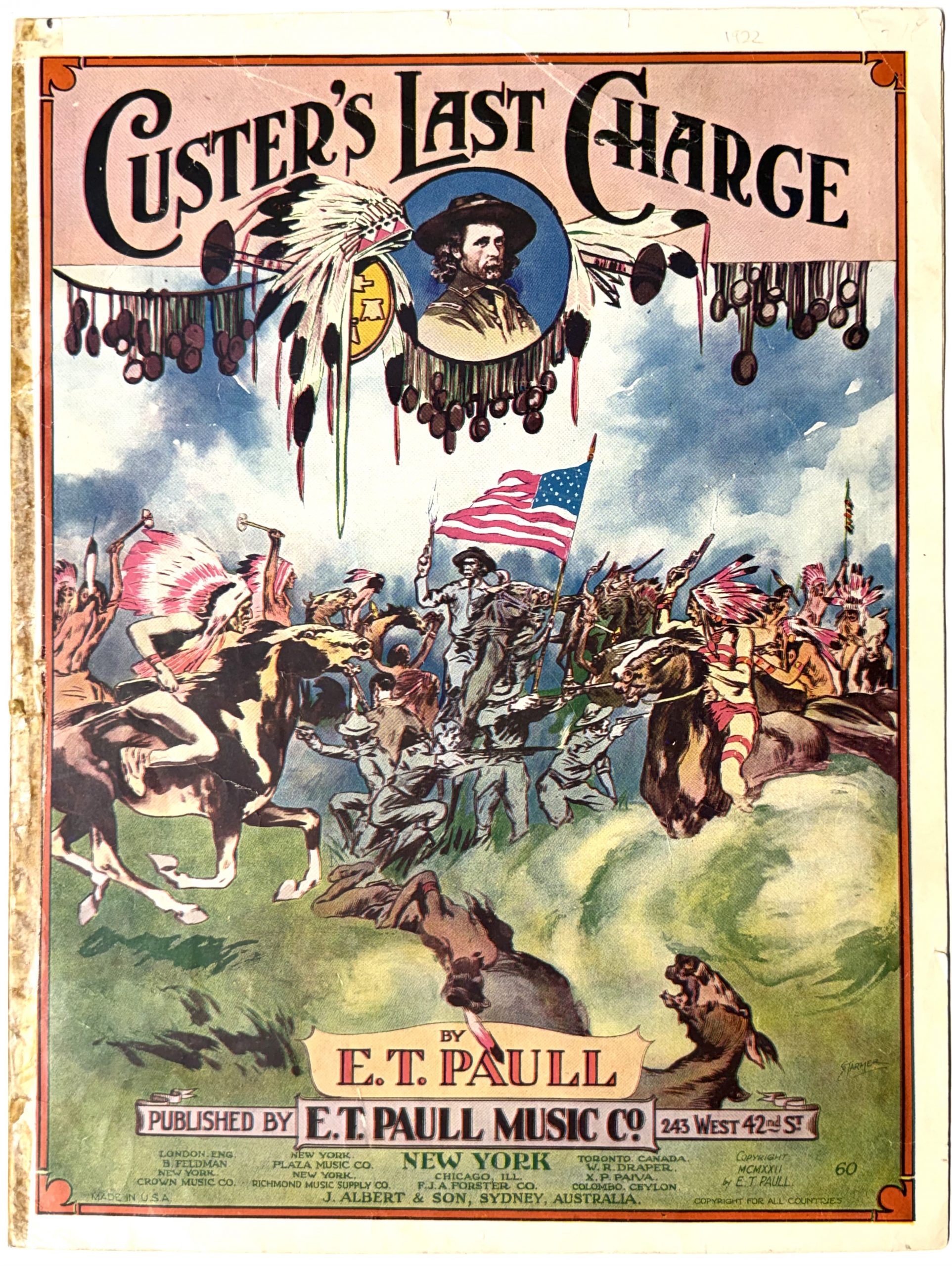
“Custer’s Last Charge,” a march-galop by composer E. T. Paull, 1922.
In 1980, the U.S. Supreme Court determined that the Black Hills had been unfairly taken from the Lakotas. It awarded them more than $100 million, but the Lakotas refused to accept it. They wanted their land back — and still do. The award supposedly sits in a Bureau of Indian Affairs account accruing interest and is now estimated to be valued at more than $2 billion.
When, if ever, that issue will be resolved is impossible to know, but what’s indisputable is that the names Custer, Crazy Horse, and Sitting Bull — and the storied place where they fought on a blistering hot June day 150 years ago — are forever etched in the American consciousness.
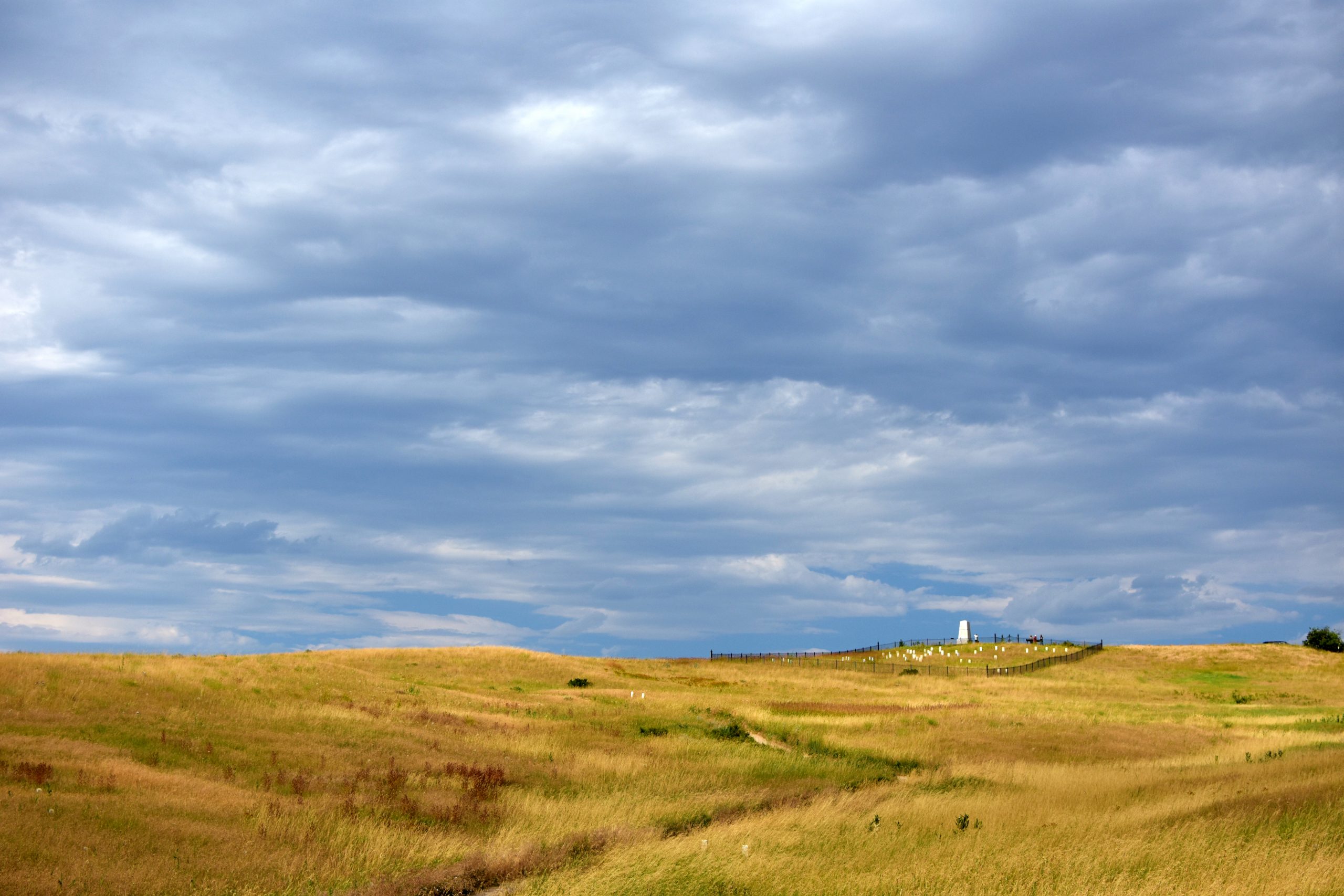
Little Bighorn Battlefield today, Last Stand Hill in the distance. Photo by Mark Lee Gardner.