





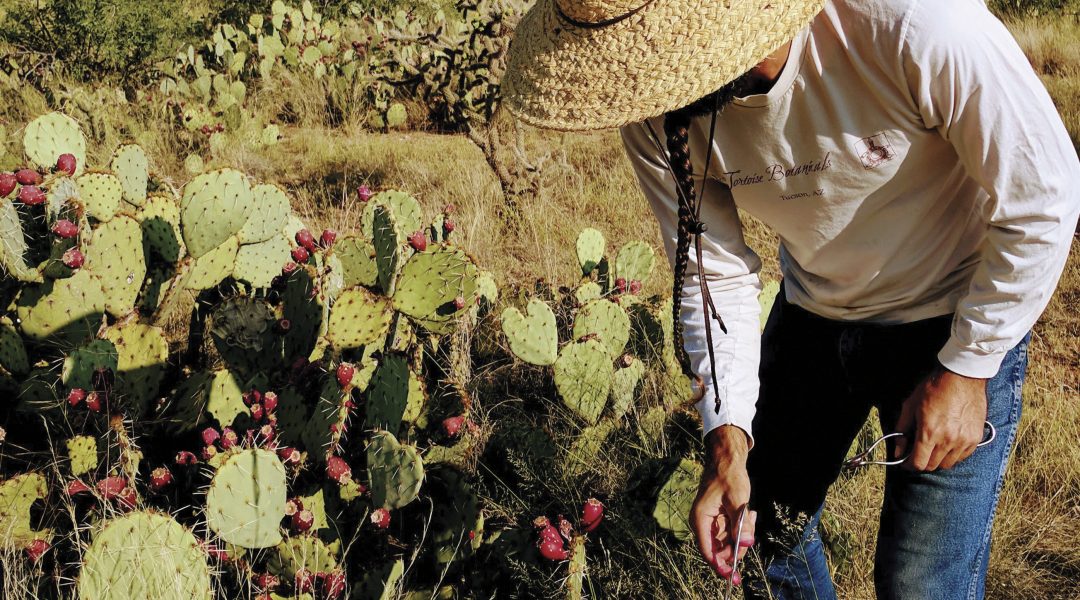
Who knew that the fruit of the famed prickly pear of the Southwest was called tuna? Tucson herbalist and forager John Slattery did — and how to make the most of eating it.
The Sonoran Desert may seem like a barren wasteland—an environment so harsh that nothing could survive. But spend a little time in this unique landscape and you’ll soon realize it’s brimming with diverse plant life, from the bright red flowers of ocotillo to the pale silvery-green leaves of white sagebrush.
As a bioregional herbalist and forager, John Slattery has made it his life’s work to celebrate the desert’s abundance. Based in Tucson, he’s become a leading authority on the many edible and medicinal plants that grow throughout the Sonoran Desert, which covers roughly 100,000 square miles of Arizona, Southern California, and Mexico.
“The Sonoran Desert is one of the most biodiverse regions in the U.S.,” he says. “It is also wetter than many people expect—this region experiences two rainy seasons, which bring remarkable abundance.” And that abundance includes a surprising number of things you can eat.
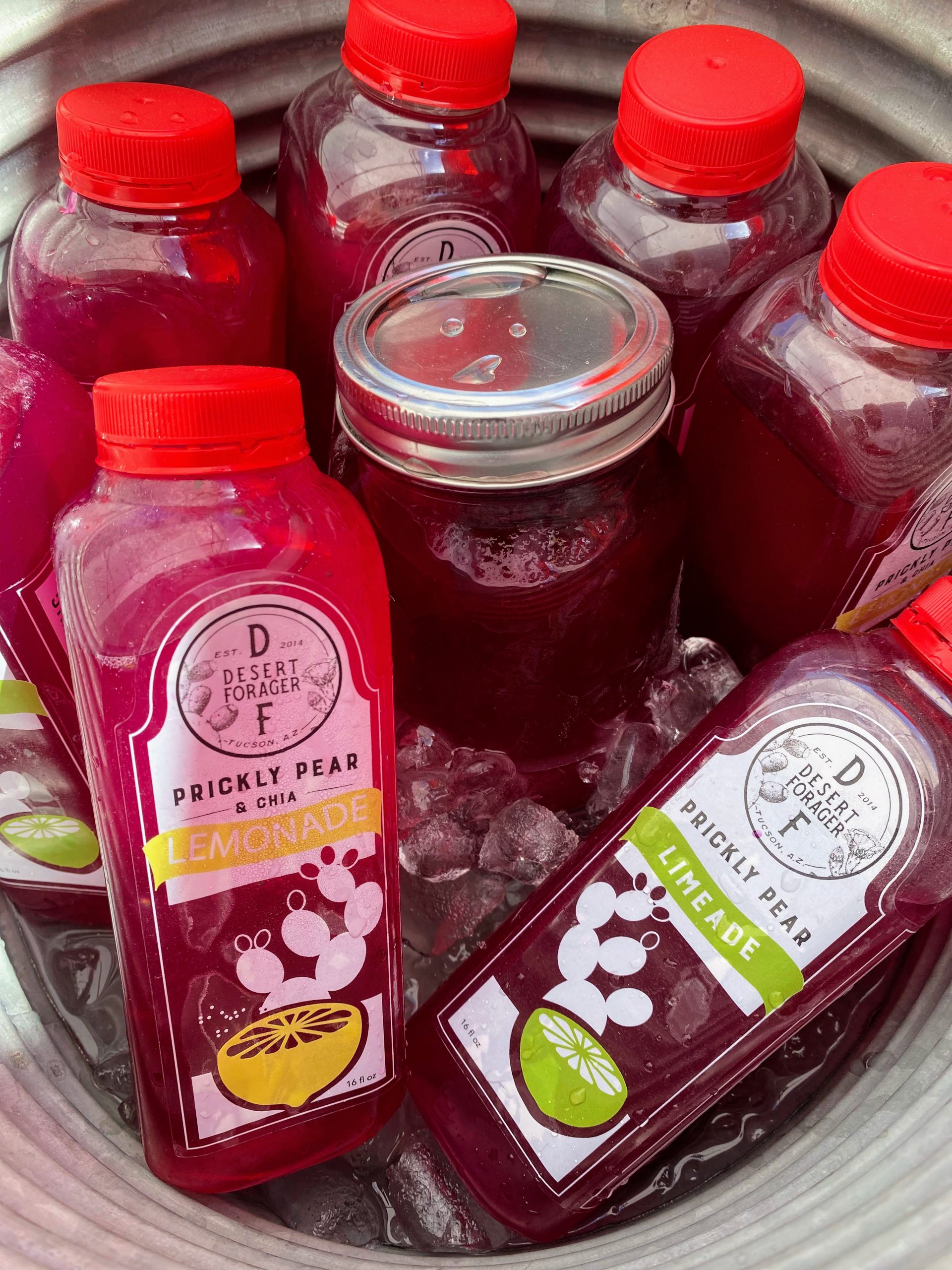
Slattery shares his vast knowledge in many ways. But one of the most delicious offshoots of his expertise is Desert Forager, a beverage brand he launched in 2014. Through lots of trial and error, Slattery figured out how to transform wild prickly pear cactus fruit into refreshing and boldly colored drinks. He makes a variety of beverages, including tart shrub syrups that are perfect for cocktails and mocktails, crisp lemonades, and tangy tepache, a nonalcoholic, fermented beverage from Mexico.
His products are always a hit at farmers markets and outdoor festivals. But they’re also starting to find their way onto the menus of several Tucson restaurants, breweries, and bars. When David Furmanski spotted people walking around with some of Slattery’s tepache at an event, he was immediately intrigued. And after he tasted it, he knew he had to put it on tap at his Voltron Brewing Company. “It looks amazing—in the sunlight, it just glows,” Furmanski says. “It’s a great nonalcoholic option, and it’s gluten-free, so it checks two boxes outside of our main wheelhouse of beer. And it’s hyperlocal.”
Edible and Therapeutic Plants
Slattery’s deep appreciation for plants started in his 20s, when he embarked on a journey of self-discovery. As he traveled throughout Mexico, Central America, and South America in the early 2000s, he felt called to work with plants as medicine.
Eventually, he settled in Tucson, where he threw himself into learning everything he could about the unique desert ecosystem. In 2005, he launched Desert Tortoise Botanicals, a company that makes handcrafted herbal products for health and well-being. “Desert Tortoise Botanicals was born out of my spiritual path, which materialized into a lifestyle,” he says. In the years that followed, he began experimenting with wild plants in the kitchen. He tinkered with mulberries, elderberries, and even herbs, but eventually gravitated toward foraged prickly pear cactus.
Found throughout the Sonoran Desert, prickly pear cacti have broad, flat, green pads that are covered in poky white spines. In March and April, the cacti begin to bloom, producing bright yellow flowers that brighten the landscape. Eventually, the flowers give rise to small oblong-shaped fruits called tuna, which savvy home cooks have long gathered for jams and jellies. The pads, called nopales, are a staple of Mexican cuisine.
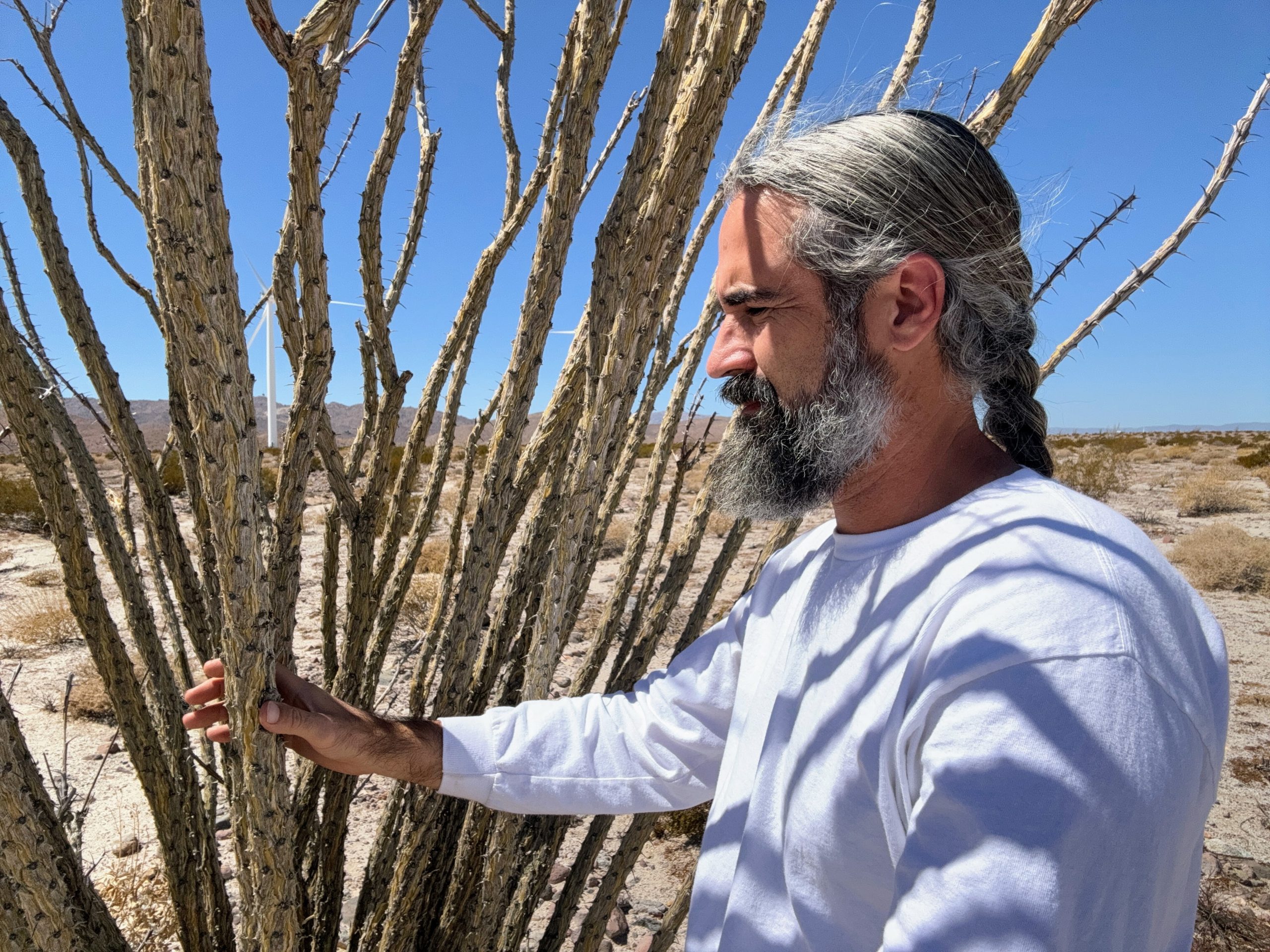
Prickly pear cacti are not only tasty but, according to Slattery, they can also provide an array of health and wellness benefits. Loaded with nutrients and antioxidants, the paddles and fruit may help support digestion, the immune system, and heart health. “It’s so abundant,” he says. “I thought, Let’s really delve into what we have so abundantly that’s really beautiful, can be delicious, is so therapeutic.”
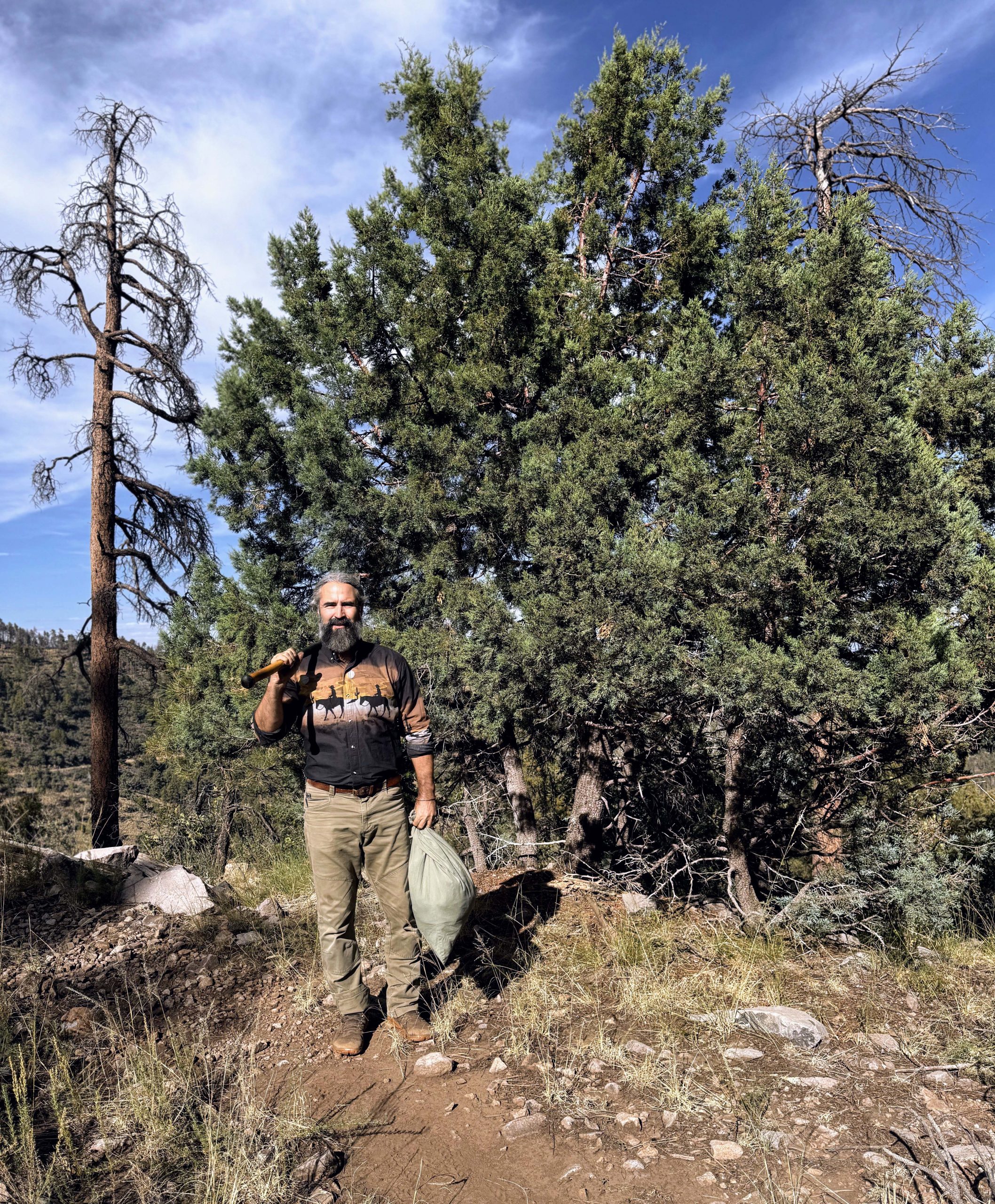
Armed with five-gallon buckets and tongs, Slattery heads out into the desert to find ripe, sweet prickly pear fruit—dodging rattlesnakes, scorpions, tarantulas, Gila monsters, and other hazards as he goes. There are numerous species and subspecies, but Slattery primarily works with two: the Engelmann prickly pear and the brown-spined prickly pear.
Back in his kitchen, he blends the vivid magenta fruit into a slurry, which he repeatedly strains to remove the skin, seeds, spines, and barbed hairs. After using the juice to make Desert Forager beverages, he dehydrates and grinds the remaining pulp into a fruity powder, which he also sells. (He recommends adding the reddish-pink dust to icing, macarons, smoothies, pancakes, and hot, foamy milk beverages.)
Sharing His Knowledge
Beyond making consumables, Slattery also wants to spread his wisdom, which he’s gleaned over the years from personal experience, observing nature, Indigenous elders, clinical training, and scientific research. He has written two books, Southwest Foraging and Southwest Medicinal Plants, which instruct readers on how to safely find and use the region’s many edible and therapeutic plants. For those looking to deepen their knowledge even more, Slattery also offers immersive hands-on courses in topics like vitalist bioregional herbalism, plant energetics, wildcrafting, and foraging. His offerings range from one-day “Intro to Foraging” workshops to intensive 12-month vitalist herbalism trainings.
Initially, he says, he was determined to create an “army of herbalists.” But he soon realized he couldn’t simply transfer his hard-earned knowledge to others. “I’ve shifted more and more away from trying to train someone to be a professional herbalist and really just facilitate experiences for people in nature on the landscape with plants,” he says. “It doesn’t even matter if people go through the whole course and don’t remember a single bit of information. Really, it’s about the experience.”



Equipped with lots of drinking water and sunscreen, students follow Slattery into the desert, where he teaches them how to identify and gather nearly 100 wild plant foods. Slattery explains key traits to look for in each season and shows his budding herbalists how to use simple, traditional tools to process their foraged foods in the field. At the end of each session, he prepares an alfresco feast using the ingredients they’ve harvested.
His pupils walk away knowing how to find and forage various edible and medicinal plants. But they often end up learning something about themselves, too. Slattery loves these moments of self-discovery and tries to create a setting where people can tap into their long-buried sense of wonder and curiosity. But, mostly, he lets the desert work its magic.
“Nature is our teacher,” he says. “Nature is our classroom.”
In the field: Slattery shares his vast knowledge of desert plants during hands-on foraging workshops and trainings.
RECIPES
Prickly Pear Shrub Syrup Cocktail
This refreshing drink pairs the subtle smokiness of mezcál with the zingy tartness of Slattery’s Prickly Pear-Grapefruit Shrub Syrup—perfect for sipping on a patio on a hot summer’s day.
INGREDIENTS:
2 ounces mezcál
½ ounce fresh lime juice
2 ounces sparkling water
1 ounce Desert Forager Prickly Pear-Grapefruit Shrub Syrup
Pinch of salt
INSTRUCTIONS:
1. Prepare the glass by wetting the rim with a lime wedge and coating it with smoked sea salt.
2. In a cocktail shaker, combine mezcal, lime juice, Desert Forager Prickly Pear-Grapefruit Shrub Syrup, and a pinch of salt. Add ice to the shaker and shake vigorously.
3. Pour the sparkling water into your glass.
4. Strain the mixture into the glass over ice.
5. Garnish with a lime wheel.
Prickly Pear Margarita Mocktail
Not drinking? No problem. You won’t miss the alcohol while swilling this citrusy zero-proof spritz.
INGREDIENTS:
1 cup Desert Forager Prickly Pear-Limeade
2 tablespoons fresh lime juice
2 tablespoons Desert Forager Prickly Pear Syrup
Sparkling water
Lime wedges
Sugar and salt for rim
Ice
INSTRUCTIONS:
1. Run lime wedges around the rim of the glasses. Dip the rim of each glass into the sugar and salt mixture and set aside.
2. Mix together limeade, lime juice, and Desert Forager Prickly Pear Syrup. Fill glasses with ice.
3. Pour mixture evenly into both glasses. Top with sparkling water. Add lime wedge to garnish and enjoy.
Prickly Pear Oat-chata
A riff on the traditional Mexican drink horchata, Slattery’s version uses oat milk for extra creaminess and a splash of prickly pear syrup for a tangy twist.
INGREDIENTS:
1 pint iced oat milk
½ teaspoon cinnamon
1 tablespoon Desert Forager Prickly Pear Syrup
INSTRUCTIONS:
1. Blend the oat milk and cinnamon and pour over ice.
2. Stir in the Desert Forager Prickly Pear Syrup.
From our October 2025 issue.
Find Desert Forager’s prickly pear products online at desertforager.com. To book a foraging experience with John Slattery, visit johnjslattery.com.
PHOTOGRAPHY: (ALL IMAGES) COURTESY OF JOHN SLATTERY