



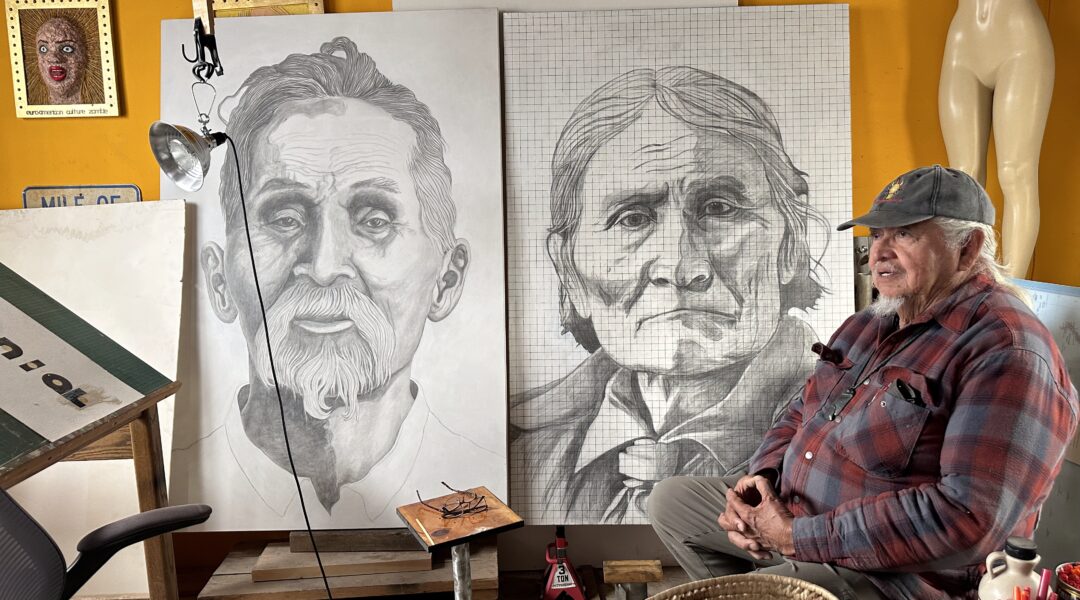
In conversation with acclaimed Apache artist Bob Haozous, who calls it like he sees it.
His work has been described with a wealth of words: politically charged, provocative, humorous, satirical, experimental, innovative, imposing, monumental. Yet despite all these attempts to characterize his creations, octogenarian Warm Springs Chiricahua Apache artist Bob Haozous has largely defied definition throughout the six decades of his career.
Surely that’s because his artwork is so wide-ranging. His talents include sculpting, drawing, painting, printmaking, jewelry making, and more. His sculpture materials of choice include wood, stone, steel, and aluminum, among others. And his thematic commentary delves into weighty topics like identity, race, and gender.
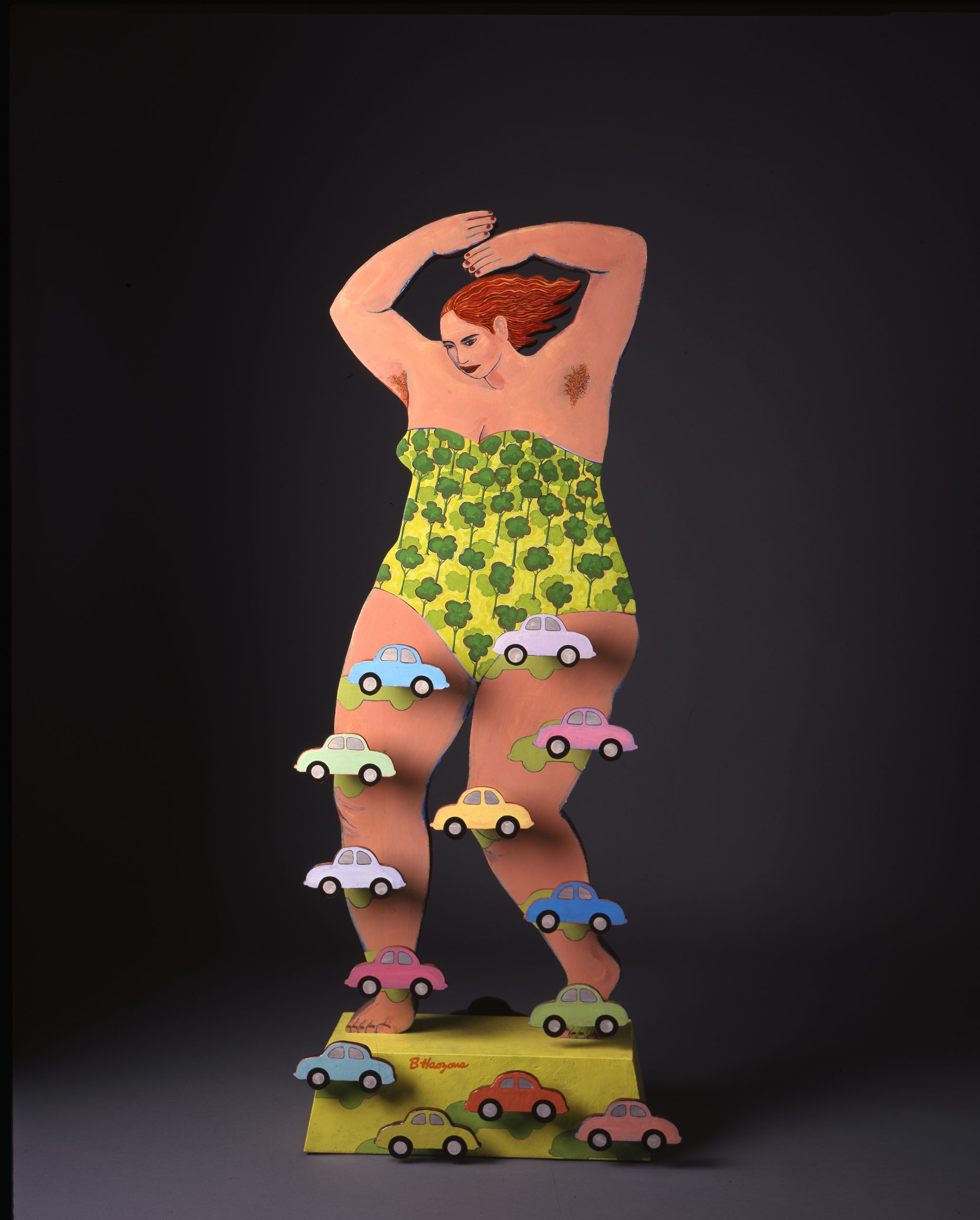 Ozone Madonna, 1989. Mahogany, steel, paint, 57 x 24 x 12 inches. Purchased with funds provided by the National Endowment for the Arts and the Goldsmith Foundation.
The common thread through his work, which has been witnessed the world over? A striking social commentary exploring the layered nuances of Indigeneity. That’s currently on full display at the Heard Museum in Phoenix, where more than 75 of Haozous’ creations are being showcased as part of the artist’s first major retrospective.
Much like what he makes, Haozous resists being shoved into too small of a box. “I don’t really call myself a political artist unless I want to,” says the 82-year-old artist, who lives in Santa Fe. “When I was in college in Oakland, which is next to Berkeley, they would talk about how art is a political statement in itself. And I believe that. Art should reflect who we are today, and we’re the storytellers of today. We’re not merely artists — we’re storytellers. And the story we tell has to be our own and has to come from the roots of our culture.”
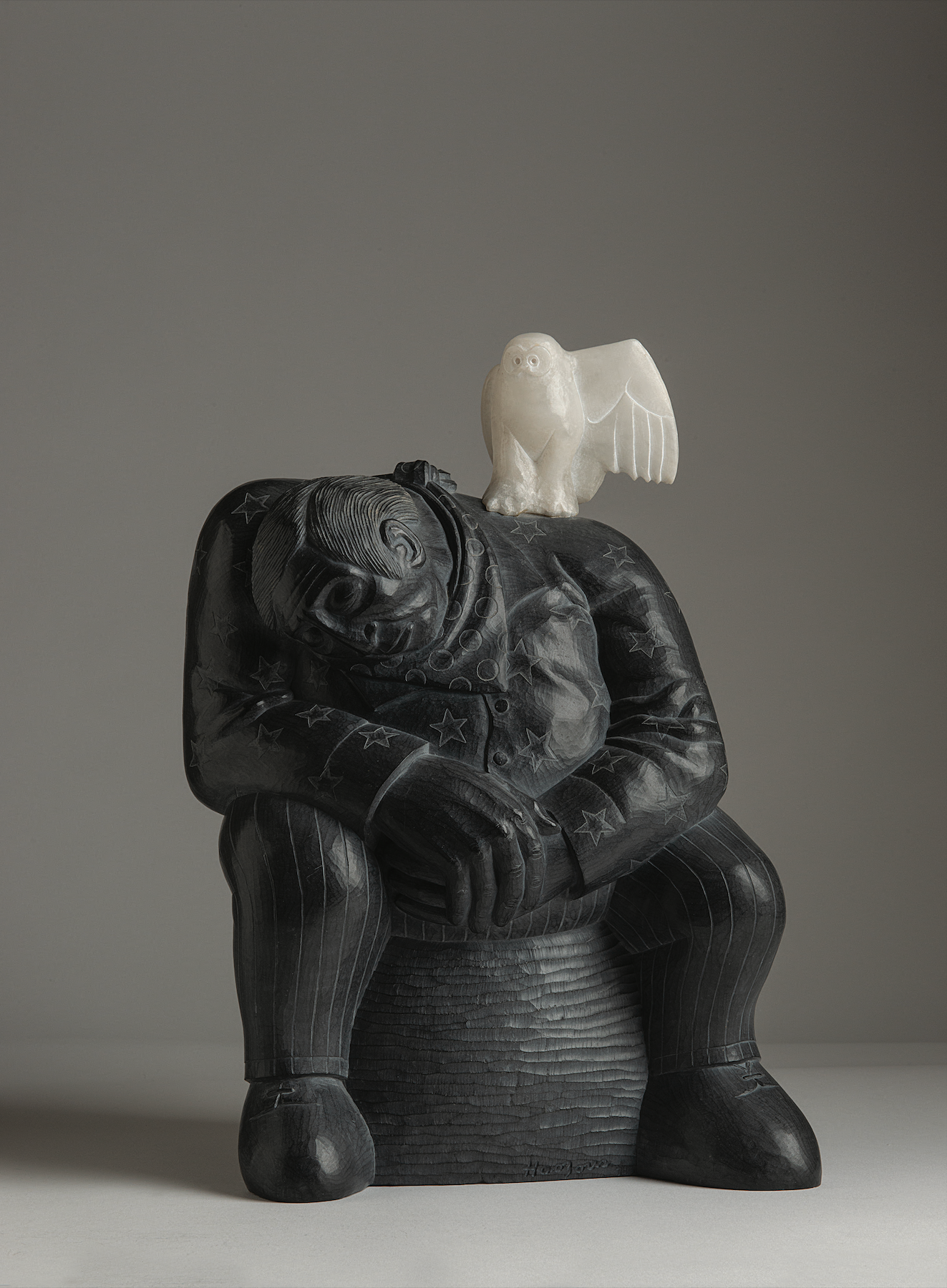 Grandfather’s Vision, 1978. African wonderstone, quartz, 15¾ x 10½ x 6 inches. Collection of Corinne Cain.
That notion has long been a driving force behind his creative practice, as has a desire to dismantle the definitions surrounding so-called Indian art. Considered one of the most important voices in the Native American fine art movement, Haozous was born in Los Angeles and grew up in Utah watching the example set by another renowned Indigenous artist: his late father, Allan Houser. Still seen all across the globe more than 30 years after his passing, Houser’s iconic sculptures, drawings, and illustrations helped shape the art genre that his son aims to break open.
But Haozous — who opted to reclaim the family’s Apache name and shed the English version given to his dad at an Indian boarding school in Oklahoma — isn’t just looking to be a contrarian. Quite the opposite: He has great reverence for his father and even takes inspiration from his work. In fact, the two even shared an art studio for a time. Considered together, their complementary creations have come to represent the rich diversity of what was once a very narrow category.
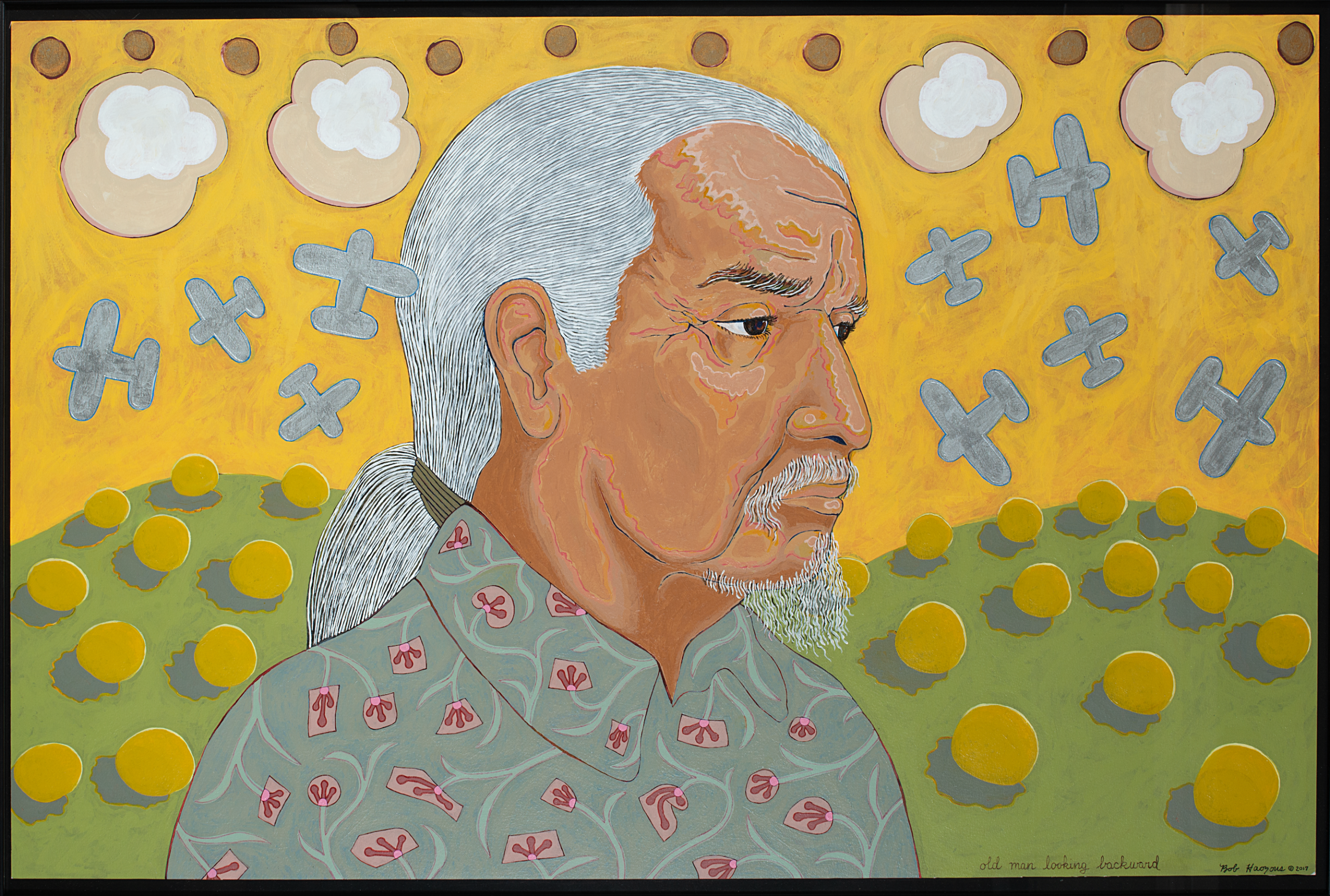 Old Man Looking Backward, 2017. Mixed media on paper, 24 x 29 inches. Collection of the artist.
“I’m constantly criticizing the romantic image that Native Americans have been given as an economic tool,” says Haozous, who earned a degree in sculpture from the California College of the Arts. “When I went to school, I learned about all the things that students are supposed to learn about — all the great artists and great thinkers of the past — but it was almost entirely dominated by Western thought. After spending time with so many Native people, I’ve come to believe that we aren’t bound by the rules of Western man, unless we want to succumb to their needs. Especially in the arts, we’re asked to make stuff that’s attractive to [non-Native patrons] but not meaningful to us. So consequently, a lot of Native art is really an expression of vocation and not of a cultural voice.”
He’s quick to question the commodification of what he dubs “pan-Indian” iconography — buffalos, eagles, and other symbols that tend to sell well and therefore have become ubiquitous at art markets — reflecting Western understanding of Indigenous life rather than representing specific tribal communities’ actual culture. Instead of just buying into what he knows art aficionados are shopping for, Haozous opts to explore the more complex, challenging aspects of Indigeneity.
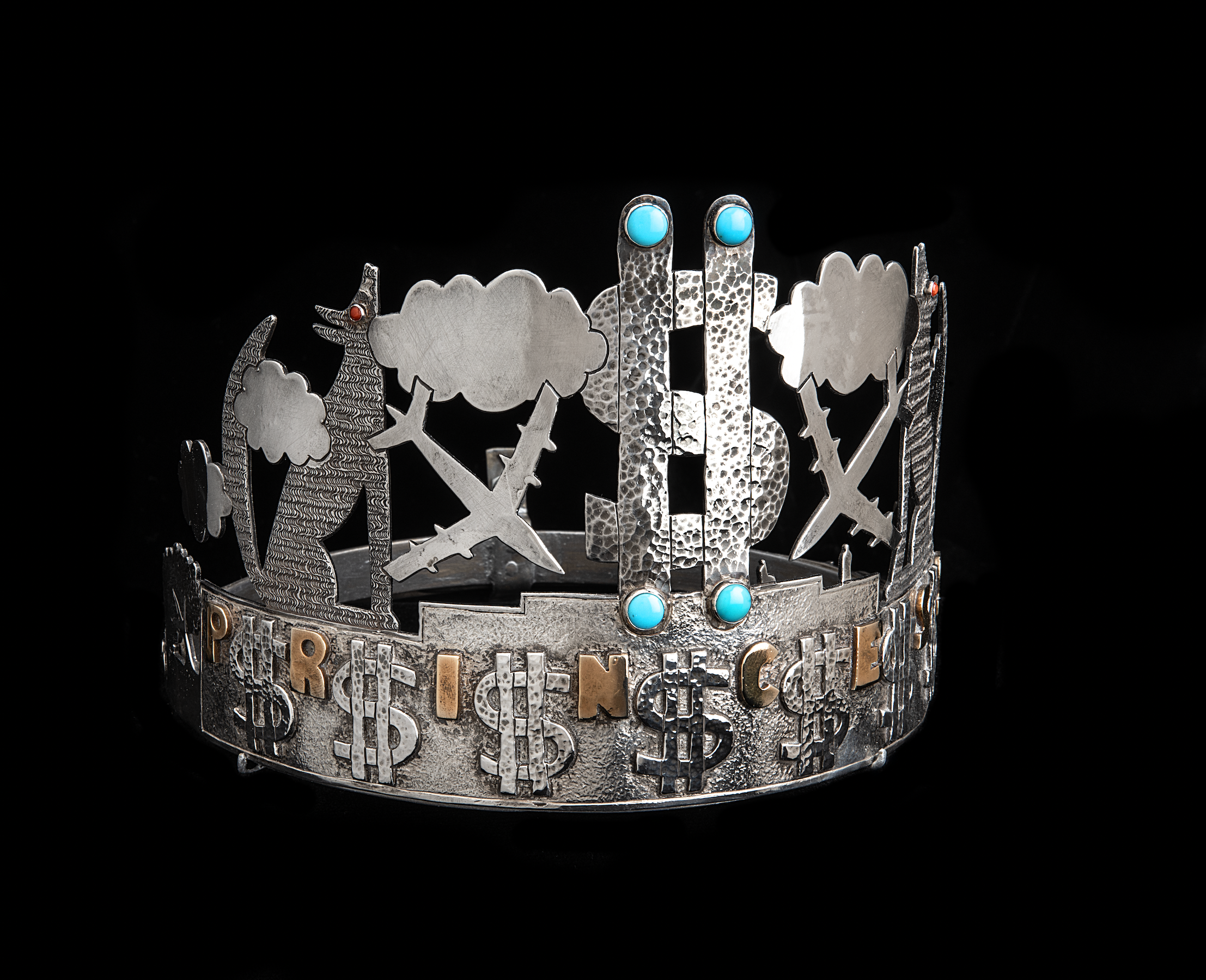 Princess Crown, 1990. Turquoise, coral, silver, 14k gold. Collection of Gary, Brenda, and Hayley Ruttenburg. ABOVE: Modern portrait of Bob Haozous, by Henrietta Lidchi.
“Through colonization and boarding schools, they took away the most important aspect of art: the internal communication with your own culture,” he says. “That resulted in all these Native artists deeming themselves abstract expressionists, which made no sense to me. So I decided to really analyze my tribal history, and I came to the conclusion that we didn’t ignore the ugliness of life. We looked at the balance of life, both the good and the bad. And we lived on a more horizontal plane, where we were part of all things, rather than on a vertical plane that places one thing above another. Today, I see a horrible disassociation from nature; we’ve been separated from our true person, our true relationship to our tribe.”
He deftly conveyed this concept in his early work, which teased at romanticized depictions of Native people and often showed them asleep, meant to represent that disconnect from traditional Indigenous worldviews. Even this many years into his career, Haozous still wrestles with these ideas — specifically, the seemingly opposing nature of Native and non-Native thought — which is why his work continues to be deeply imbued with that rich social commentary.
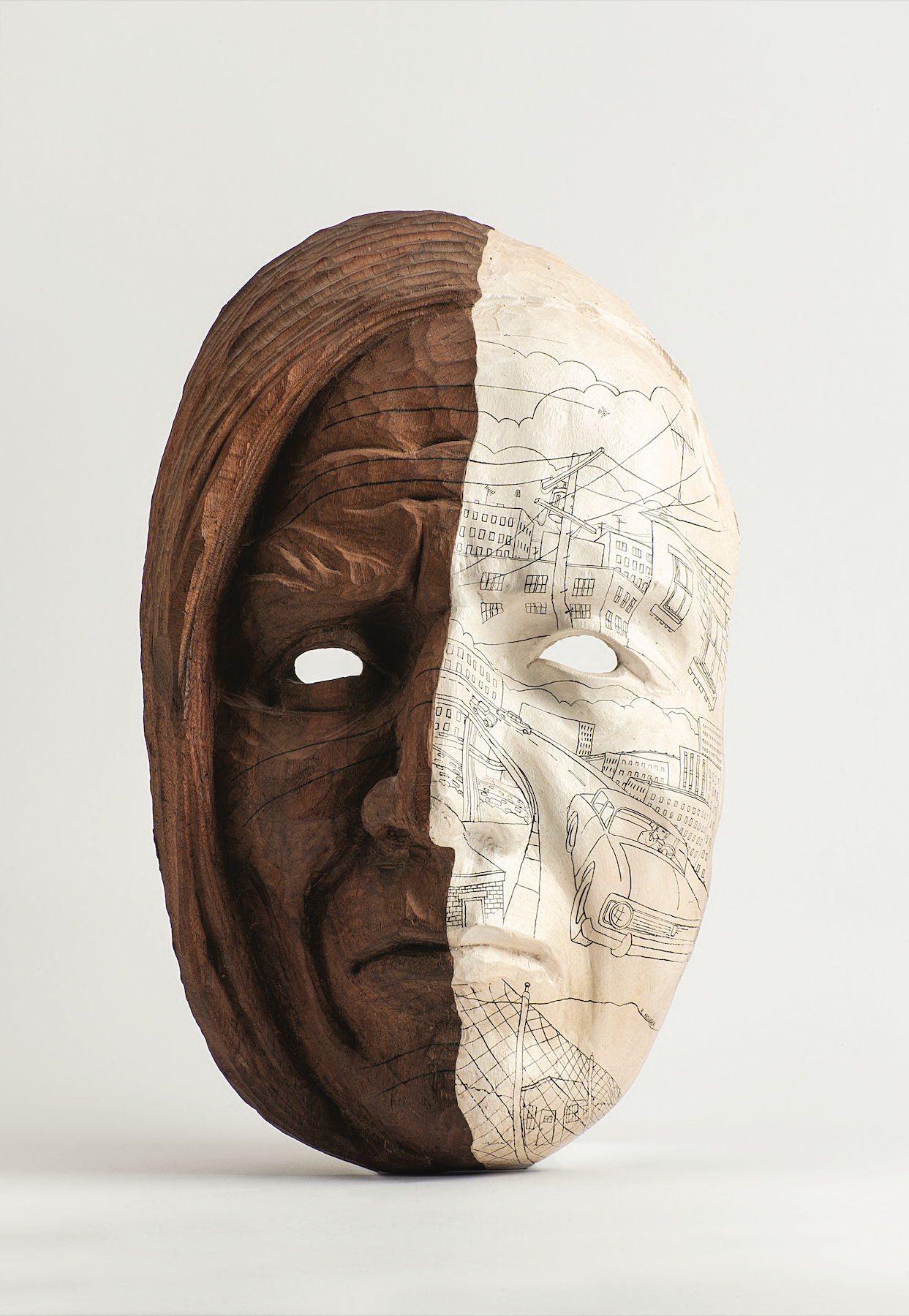 Untitled (mask), n.d. Mixed media, wood, paint, ink, 17½ x 9 inches. Four Winds Gallery, Pittsburgh.
A prime example of a more contentious work is the 48-foot-tall steel sculpture entitled Racism Shrine, which was erected in 2020 — a year marked by global racial tensions — in Santa Fe’s Haozous Place, a sprawling art park and museum that features more than 70 of his father’s sculptures. The face of that larger-than-life artwork quite literally spelled out what Haozous describes as the “racist indoctrination of Western forces” upon Indigenous cultures: caste, gender, ethnic, regional, economic, cultural, political, religious, educational, institutional, and environmental.
“People don’t want to go there, because we’ve forgotten how to go there,” he asserts. “But what I’m doing is what everybody should be doing — self-reflecting on your relationship to nature and your people and all things. I can’t speak for my tribal past; I can only speak for my relationship to my tribe today. And my relationship to my tribe today can be deemed controversial or politically motivated or whatever people want to call it. But it’s really what I feel and what I see. It’s not what my father or my grandfather saw or felt.”
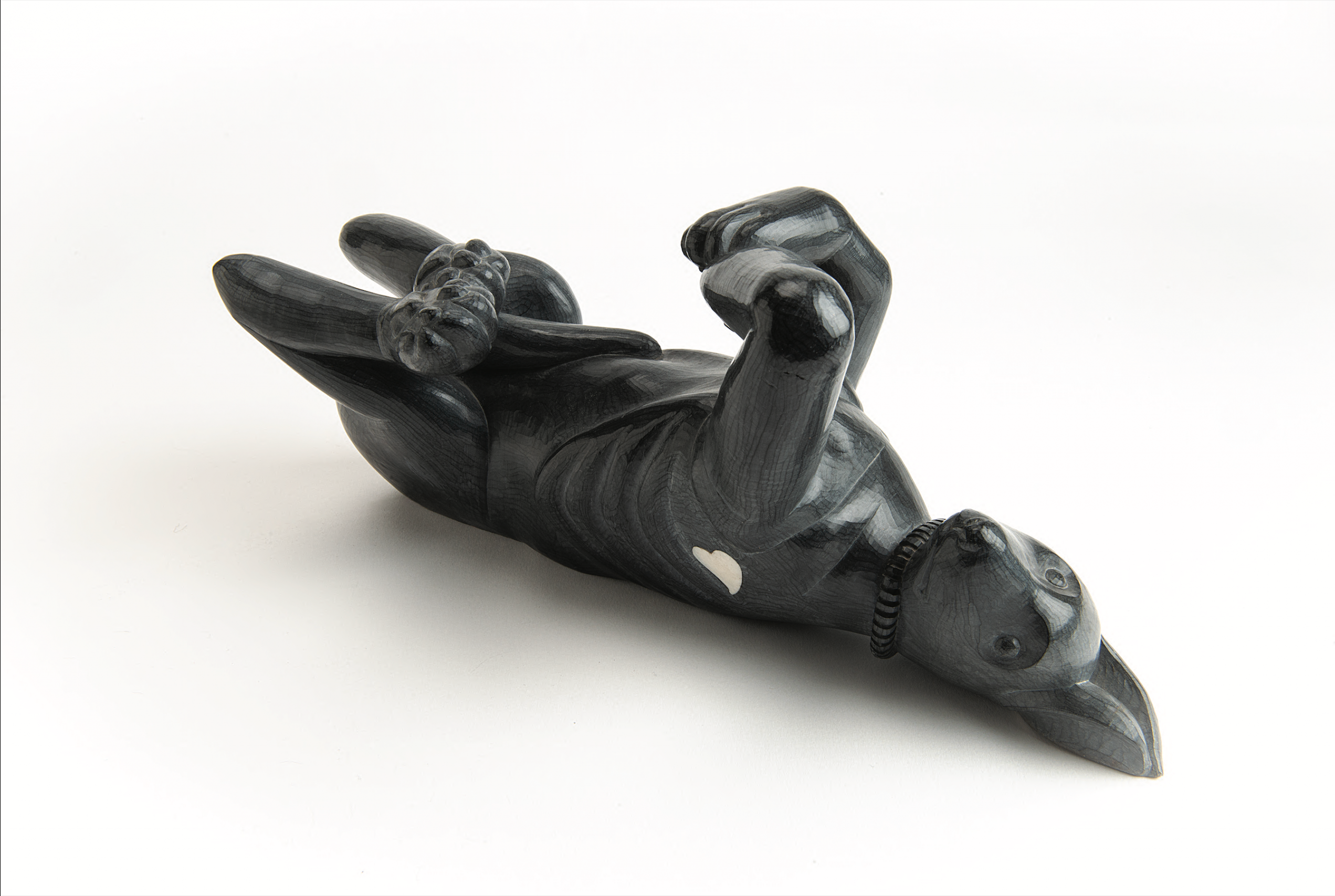 Santa Fe Dog, 1978. African wonderstone, 6 x 14 x 5 inches. Collection of Corinne Cain.
Growing up, Haozous and his four brothers were encouraged by their dad to “think what we wanted and to understand that we all had a different voice, just like his voice was different.” In that way, he is carrying on his father’s artistic legacy by challenging the confines of preconceived notions about Indigenous creativity. (His brother Philip is also an accomplished artist specializing in sculpture.)
Haozous recalls a pivotal moment when he showed his dad a beautiful drawing one of his artist peers had made recreating a buffalo artwork on display in his father’s studio. “He looked at it, crumpled it up, and threw it in the trash,” he remembers. “He said, ‘Anybody can copy.’ That really affected me, because I don’t want to copy what we romanticized of our past; I want to tell what I actually see.”
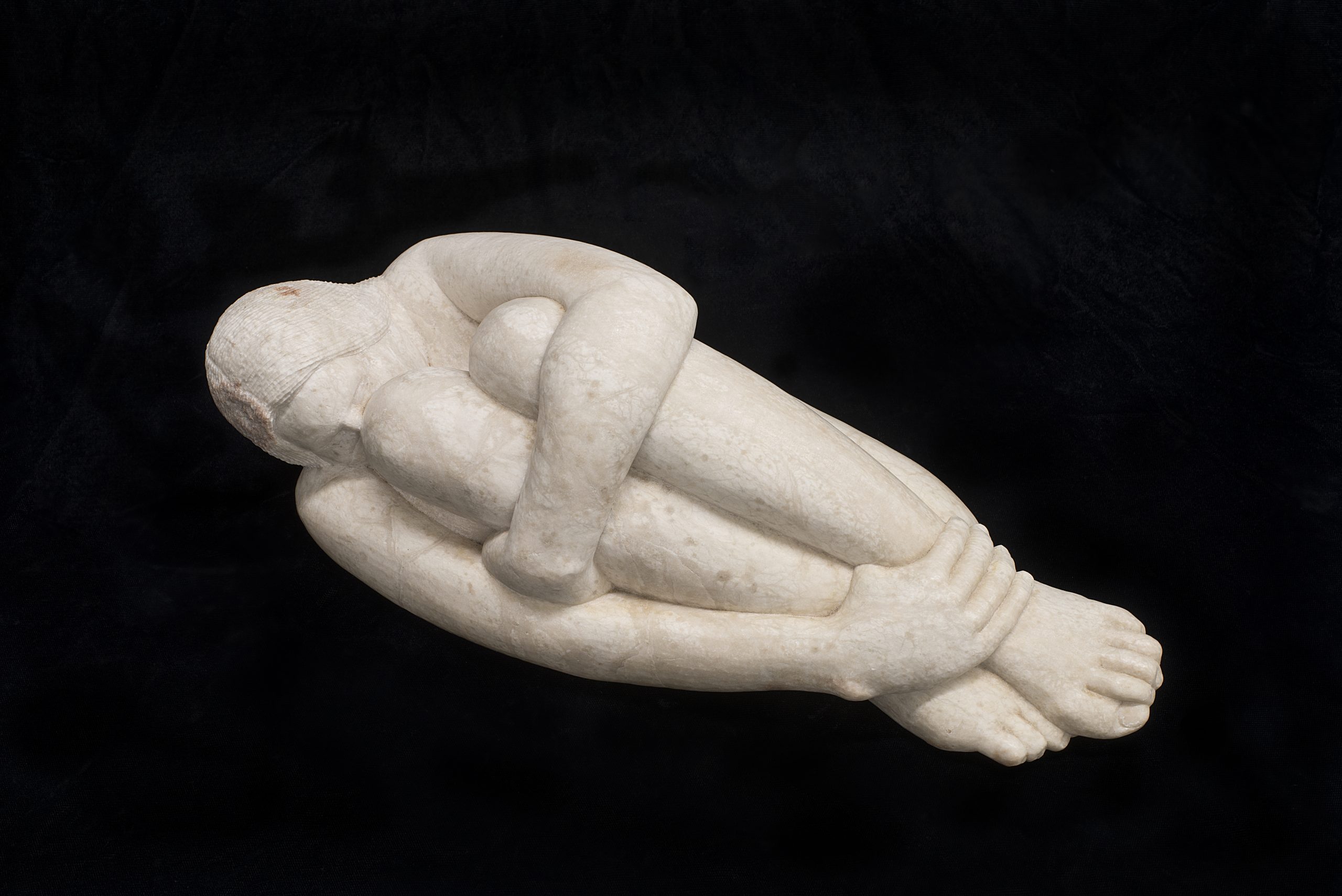 Sleeping Warrior, 1975. Colorado pink alabaster, 5.5 x 13.5 x 6 inches. Gift of Dr. Edwin L. Wade and Carol Haralson.
Bringing those visions to life can be messy work, by Haozous’ own admission. “My studio is messy; my mind is messy; my creative process is very messy,” he says. “That’s because the things I see are so confusing, especially in world politics. How do you speak about what we’re doing to ourselves without challenging people or hurting people?”
To that end, Haozous believes art should be mentally stimulating — otherwise why make it? “That’s the whole point; it has to be intellectually entertaining, or else you’re just making crap,” he says. “I do it because I love doing it. I use my mind and my body to take on challenges and figure out how to make them work. My father is a good example of this. The last year of his life, he was ill and was told he wouldn’t last too long — so what would he like to do? They suggested he travel, maybe go to Europe to see the museums or go to Tahiti and lie on the beach. But he just wanted to work, and he worked until the last moments of his life because he loved the creative aspects of it.”
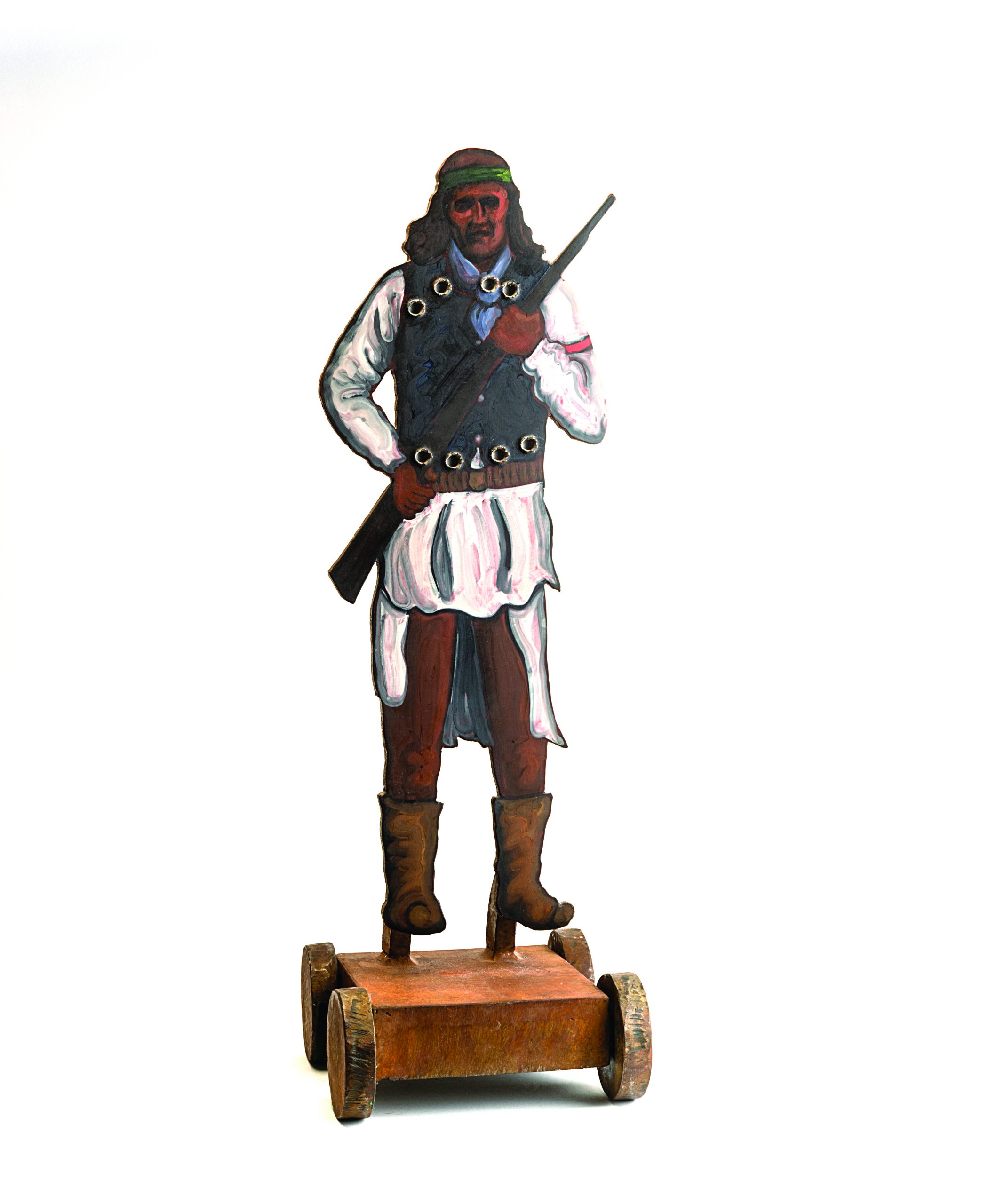 Portable Apaches #4, 1990. Steel, paint, 32.5 x 12 x 11.375 inches. Gift of Natalie Eigen. Portrait of Bob Haozous, 1979.
And while Haozous certainly wants his creations to cause audiences some contemplation, he doesn’t take himself — or his art — too seriously. “You make it, you put it out there, and if you’re lucky enough to get it back, you see it can be improved or dismantled,” he says. “Because it’s not a sacred object; it’s just a tool of communication. I’m just a small cog in a wheel of Native thought. So when people think of my stuff as controversial, maybe they’re right. After all, I’m giving people something to make them think. And maybe it’s wrong. Maybe it’s meaningless. Maybe it’s hopeless. Maybe it’s beautiful. It doesn’t really matter — that’s just my job as a storyteller.”
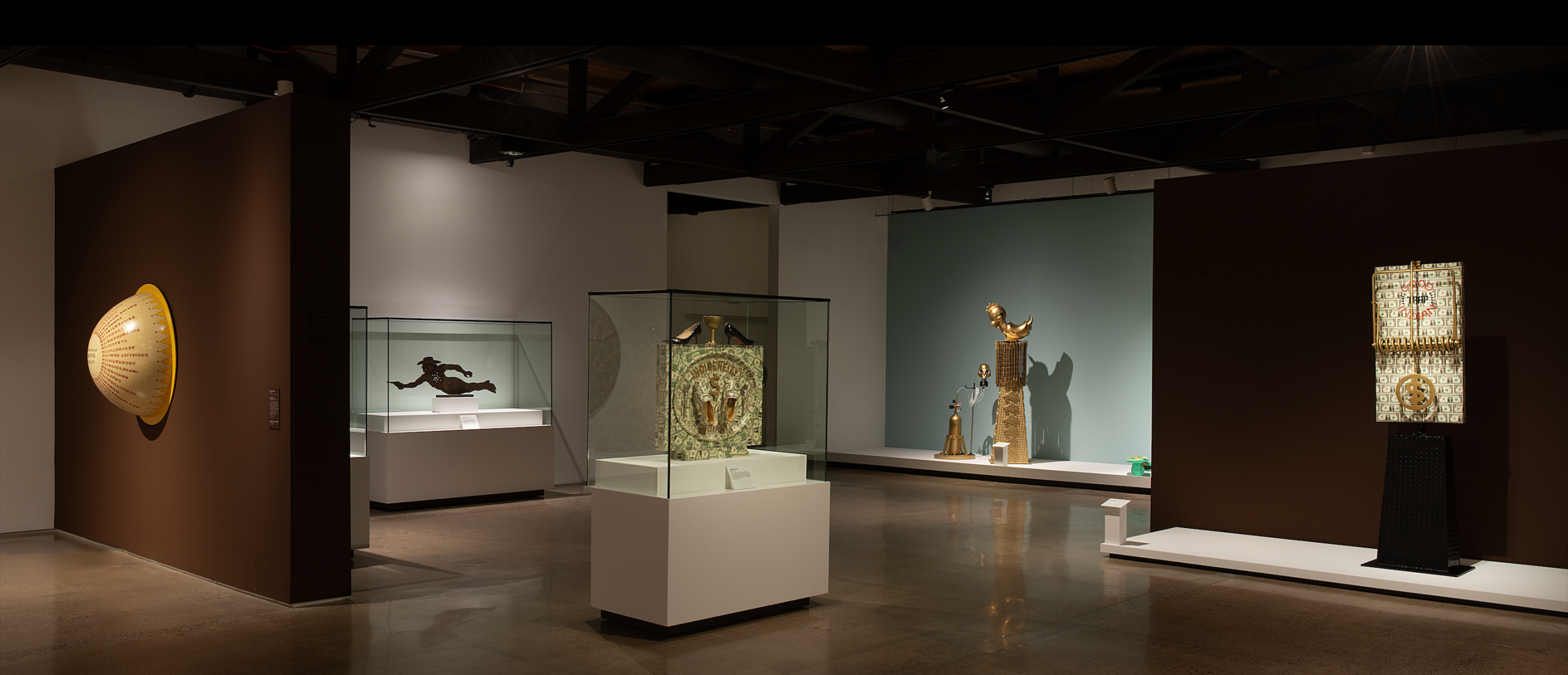 Bob Haozous: A Retrospective Viewexhibition at the Heard Museum.
From our August/September 2025 issue.
Bob Haozous: A Retrospective View runs through November 30, 2025, at the Heard Museum in Phoenix. For more information, visit heard.org and bobhaozous.com.
HEADER IMAGE: Modern portrait of Bob Haozous, by Henrietta Lidchi.