





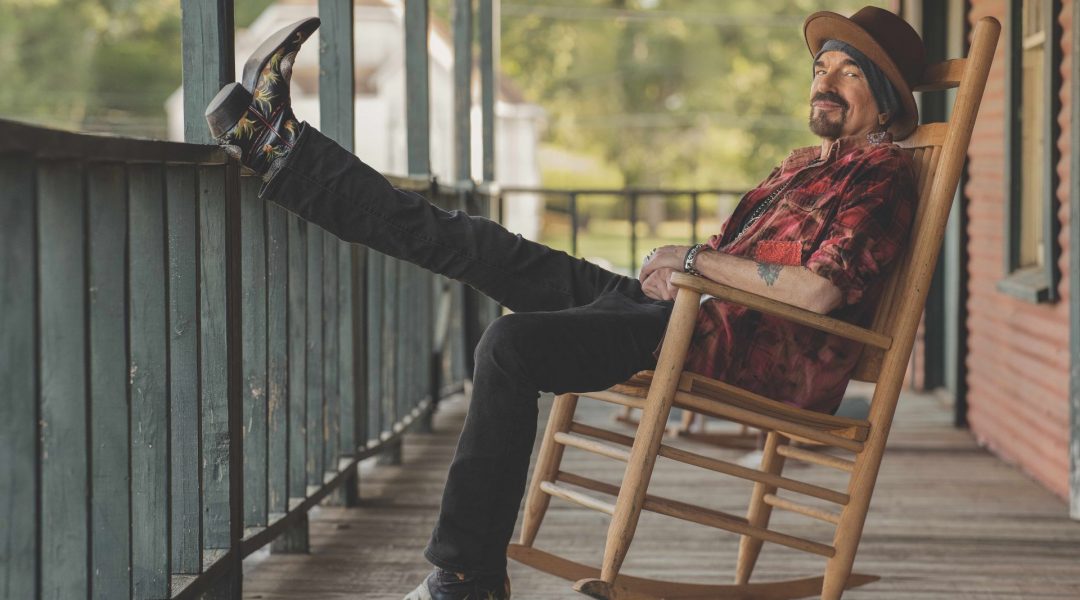
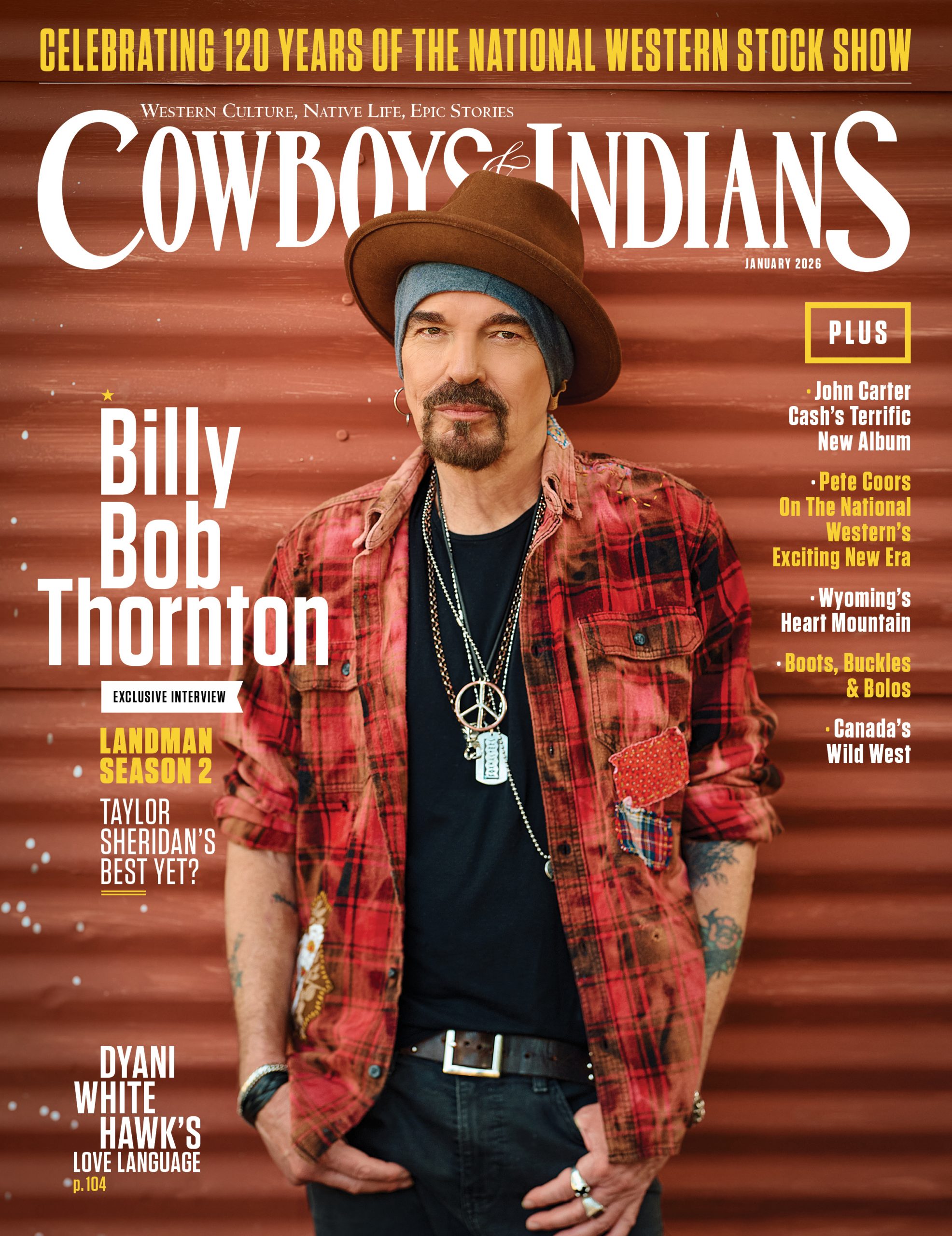
From being frontman in his band, The Boxmasters, to being landman Tommy Norris in Taylor Sheridan’s oil-intrigue hit, Billy Bob Thornton gets frank about surviving poverty, staying true to yourself, and pursuing happiness — and really good tobacco.
Billy Bob Thornton gave them fair warning.
“Yeah,” the Landman star told me a few hours before he and his band, The Boxmasters, gave a full-throttle, rock-the-house October concert in the newly renovated Ritz Theatre of Crockett, Texas, “that’s why I gave that interview ahead of time for the local paper. I said, ‘Look, if you haven’t seen us before — we’re not a country band. We’re a rock ‘n’ roll band. And we’re loud.’”
How loud? Put it this way: As I sat in the second row from the Ritz stage, my Apple Watch flashed a warning: “Sound levels hit 95 decibels. Just 10 minutes at this level can cause temporary hearing loss.” No kidding.
Not to worry though: From what I could tell, neither I nor anyone else in the audience suffered any permanent hearing damage. And judging from the crowd’s enthusiastic reaction — an instant and enthusiastic feedback that included people dancing near the stage at Thornton’s invitation — a good time was had by all.
Well, almost all.
“I can always tell the husbands who got dragged here by their wives,” Thornton told me with a mischievous grin. “They just sit there with their arms folded while their wives want to dance.”

Thornton and The Boxmasters have been together since 2006, cutting albums and performing pump-up-the-volume pop-rock heavily influenced by their favorite hits from the 1960s. Listen closely, and you’ll hear unmistakable allusions to The Beatles, Badfinger, The Rolling Stones, and The Dave Clark Five, along with touches of The Mothers of Invention, The Allman Brothers, and Kris Kristofferson, underscored by Mellotrons, jangly guitars, and solid backbeats. My favorite of their tunes: “She Looks Like Betty Page,” a raucous tribute to a possible femme fatale who can get away with anything as long as she resembles the notorious ’50s pinup queen. Your mileage may vary.

The Boxmasters have opened for the likes of ZZ Top, Steve Miller, and, just this past summer, The Who. But whether they’re performing for thousands in the Amerant Bank Arena of Sunrise, Florida, or tearing up the joint in a smaller venue like Crockett’s Ritz Theatre, they are dedicated to demonstrating they are serious rockers — and not just a vanity project for some dilettante movie and TV star.
Which is not to say, however, that Thornton has quit his day job. Quite the contrary: The Hot Springs, Arkansas, native continues to rack up credits on a lengthy résumé that includes, among many other notable titles, Sling Blade (1996), the acclaimed indie that showcased his Oscar-nominated breakthrough performance as a mentally challenged gentle giant, and for which he earned an Academy Award for Best Screenplay; A Simple Plan (1998), a thriller that cast him opposite his late friend Bill Paxton and netted him another Oscar nomination; The Judge (2014), a well-received courtroom drama that enabled him to swipe scenes from costars Robert Downey Jr. and Robert Duvall; and Goliath (2016–2021), the Amazon Prime drama in which he played a gone-to-seed but indefatigably resourceful lawyer.

He’s currently on view in Landman, the smash-hit Taylor Sheridan-produced Paramount+ series, playing Tommy Norris, a crisis manager for a West Texas oil company whose private and professional lives are chockablock full of nasty surprises and disruptive challenges. There’s even more on Tommy’s plate in Season 2, as he assumes the title of president for M-Tex Oil after the death of the company’s founder — Monty Miller (John Hamm, his longtime friend) — and agrees to help Cami Miller (Demi Moore), Monty’s widow, preserve her late husband’s legacy.
Here are some highlights from my pre-concert conversation with Billy Bob Thornton at the Camp Street Café in Crockett, Texas, (edited and condensed for length and clarity).
Cowboys & Indians: How much of your sense of humor, your sense of direction, your drive, whatever, do you think is informed by your Arkansas roots?
Billy Bob Thornton: I’d say a lot of it is. Because it was a place that was rich in storytelling. My grandmother was a writer and wrote for magazines, and wrote a novel, and different things like that. My folks all had characters around. I was always interested in characters. And I just grew up around a lot of them.
One of the things about the South that’s different than everywhere else is, tragedy and humor and all these things are all mixed together in a way. I mean, you’ll see drunk people laughing at a funeral. It’s just a different kind of world I grew up in. And I grew up very poor out in the country. We didn’t have running water, electricity, or anything. Went in an outhouse until I was about 9, because I grew up at my grandmother’s house. But, like I say, every day was full of characters and funny stuff. We found humor in just about everything. So, yeah, I would say I wouldn’t trade the way I grew up for anything. I’m very happy that I wasn’t the son of a record producer or movie producer or something like that and grew up in Beverly Hills. I don’t think I would’ve appreciated life as much.

C&I: Your mother was a self-proclaimed psychic. While you were growing up in Arkansas, did she ever do a reading for you, to predict your future?
Thornton: My mother talked to me quite a bit. We never called it a reading, but she would just have discussions with me. She actually told me one time — and this is way back, because I never intended to be an actor. I didn’t know anything about it. I didn’t know anything about movies. I grew up in bands and worked as a roadie and moved to L.A. to play music. But then I ended up somehow getting on — I think it was Matlock. I had a scene or something on Matlock or Knots Landing, or one of those.
And my mother, years before I even went to L.A., she said, “I have a feeling Burt Reynolds is going to be instrumental in your success.” And she said, “And you will have success.” And sure enough, in the late ’80s I met Burt Reynolds, and he helped me out quite a bit.
I mean, people can believe it or not believe it, but she said stuff to me that was only in my head. I mean, there’s no way that she could have known it. Like, I was broke one time. Well, broke one time, broke all the time. But I had a cousin named Jackie, a second cousin, and he drove a truck. And I was really broke at the time. My mom was living in Louisville, Kentucky, by then. She’d remarried after my dad died, and the guy she was married to was a doctor, and he wasn’t real nice. So he only gave her money to go to the grocery store to get what they needed. He was real cheap. But she would sometimes sneak a $20 bill in an envelope and mail it off to me. I was still living back in Malvern, Arkansas.
So, anyway, I was broke, and it was right at the beginning of wintertime, and I’d been working for the county road department. They laid some people off, and I was of one of them. [Laughs.] I think it was because my hair was to my waist. But one way or the other, she was on the phone with me, and she said, “There’s some things that I’ve been seeing. Do you know anybody named Slidell?” And I said, “Not that I can think of.” She said, “Do you know a place called Slidell?” I said, “No, not really.” And she said, “Well, I just think someone or something to do with Slidell is going to help you out.”
Well, it wasn’t but three or four days later, my cousin Jackie the truck driver came by the house. And I hardly ever saw him, so I thought it’d be bad news. And he said, “You know how to drive a truck. You drove one for the highway department, right?” I said, “Yeah, yeah, I can drive a truck.” He said, “Well, I got to haul a load down. I can pay you $200.” At that time, $200 to me may as well have been a million. And I said, “Where are we going?” And he said, “Slidell, Louisiana.” I’m just saying. ...
C&I: Taylor Sheridan is famous for sending his actors to cowboy camp whenever he’s doing a Western-themed show. Did you wind up having to go to oil patch camp before Season 1 of Landman?
Thornton: Well, actually I didn’t go to it. But a lot of the guys who are playing the roughnecks and things like that, they went to it. Because with me being their boss, I mostly just had to learn what everything meant, like all the technical language about oil and everything. And I knew some about it because I’ve had friends who worked in the oil business, but I just had to learn what I was really talking about. And we were fortunate to have Christian Wallace on the set all the time, because he’s the one who did the podcast that the show is based on. And Christian and his family worked in the oil business. So if I had a question about something, I could just go ask Christian if it was a technical thing. But in terms of having to go out there, I’m too old for that. Let the kids do it.

C&I: What was the toughest nut for you to crack while building this character for yourself?
Thornton: Well, Taylor really wrote this with my voice. I mean, we talked about it before and he kind of wrote the show for me. And so I pretty much played me as if I were a landman. And once I had a good understanding of all that meant, that wasn’t a hard part. I would say the hardest part of this was just long hours, a lot of dialogue, extreme cold, and extreme heat. Those were tougher nuts to crack really than the character.
C&I: You have many scenes in which you deliver what are essentially monologues, as you explain something to somebody or seriously bust their chops. Have there ever been times when you’ve pulled Taylor or the director on that particular episode aside, and said, “Now, look, this is a pretty damn long monologue. And you want me to do this in one take? Could we cut it up a little bit?”
Thornton: No. I mean, I’m as dumb as a bag of hair, but I grew up with severe anxiety disorder, which I still have. And I have severe obsessive-compulsive disorder. And I also was severely dyslexic. But for some reason, I’ve always been able to memorize things instantly. It’s like I’m dumb as hell on every other aspect of life. But I can see things—it’s almost like a savant thing. I can look at a monologue like that, and I see two or three chunks. I don’t read left to right slowly like most people do. I look at something and I go, “Oh, OK. It says that.” It’s almost like some kind of weird science fiction movie where it goes into my head.

I mean, if you do a monologue that’s three pages long, you’ll drop something here and there that might be important, and you do another take and you get it. But no, I go straight through them. I just had one with Andy Garcia not too long ago, just me yapping for three or four pages, and every now and then he’ll go, “I see.” Or something like that. So I just have a knack for remembering that stuff. And if you know what it means, it’s easier to memorize. You can tell when an actor is just reciting lines they’ve memorized — there’s a vacant look in their eye, and they’re remembering the words. I just go out there and start talking to somebody. And I throw some of my stuff in, too, every now and then. Taylor has been very kind to me about that because he knows I’m essentially an improvisational actor, so he lets me throw some of my stuff in there.
I’ll tell you where I do have a problem is if there’s a scene that’s nine pages long and there’s seven or eight people in it, and I’ve got one line every other page. I sit there and start thinking about other shit. God, you can’t help it with my mental issues. But it’s really harder for me when I don’t have as much dialogue.
C&I: What gives you the greatest sense of satisfaction playing Tommy Norris? I mean, have there been days on the set when, whether it’s a four-page monologue or just an interaction with one other actor, you think when you’re finished: Damn! This is fun. I can’t believe they’re paying me to do this shit.
Thornton: Right. Yeah, I know what you mean. Almost all the time I feel that way. But it’s especially the days when I get to say what’s on my mind in that character. It’s when I just unabashedly am who I am in that moment. And by “who I am,” I mean that character.
A lot of actors, they’ll talk about the character and they’ll say, “Well, who is Gary Matthews? He’s the type of guy ...” Well, see, if you do that, you’ve already separated yourself from the character. I play myself in everything. I don’t care how different it’s from me on the surface—the character in Sling Blade to the character in A Simple Plan to Bad Santa and to this. To Fargo, Goliath, any of it. I’m always playing myself no matter what, no matter how physically different I look or how different the character is from what you might understand about me. I mean, obviously I’ve never been a killer, but I’ve played one a couple of times.
And if I were a lawyer, I’d be kind of like the guy in Goliath. If I were in the oil business, I’d be like Tommy Norris. Yeah, I like the days when I’m giving the corn — we call it that when you chew somebody’s ass out. Instead of receiving the corn. That’s not good. I got the corn from my wife last night. But it’s those days when what Taylor’s written is just somebody being unabashedly who they are. And I think it’s why Landman hit with an international audience. Because people were tired of stepping around stuff. In this show, people just say whatever the hell they think.
C&I: But are you ever worried that people might think not only you’re this character, but you also share his politics? Or are we maybe misguided in reading a political agenda into this guy?
Thornton: First of all, Taylor doesn’t write it with an agenda. This just gives you a look behind the curtain of the oil business, and the people around it, and how they’re affected and how it works. Look, if you do a movie about Jack the Ripper, you’re not saying, “Oh, aren’t serial killers awesome?” You’re just saying, “Here’s what happened.” And that’s what Taylor has written.
I had a question in New York where we were doing some kind of Q&A thing. And there was this lady. When you do these Q&As, you can always tell, you can always spot them. I go, “That lady’s going to ask the first question, and it ain’t going to be good. And she was right on the front row. And sure enough, when they opened it up for questions from the audience, she said, “How do you justify the morality of doing a show about oil?” I knew it was coming.
And I said, “Well, a couple things. First of all, I do have this speech about these wind turbines, and that’s all true. So if you would like to leave your purse at home and don’t put any lipstick on, then you don’t need oil.” And she says, “Well what about burning it?” I said, “Well, you have to understand that oil companies are corporations like a pharmaceutical corporation or any other corporation. They’re moneymakers. That’s what they do. They’re in business.”
You can take the tech companies — nobody says anything about them. There’s a lot of danger mentally, emotionally, and physically in that world. Nobody talks about it. Like I say in the scene [with the wind turbines], don’t get me started on your lithium batteries. Where are we going to put those? Who knows what those are going to do to the environment? And where are we going to bury them? Here’s the thing. Oil companies are there to make money. Like a movie company. If it becomes popular to make movies about chihuahuas who can talk, you’ll see a dozen of those sons of bitches come out.
So I said to the lady, “If they could discover a way to make everything in the world work on water, the oil guys would instantly jump into the water business.” That’s all it is. It’s not that Taylor’s saying, “Isn’t oil wonderful? And it doesn’t do anything to the environment.” He’s just saying, “The world operates on this stuff right now. If you can figure out something else, go ahead. We’re ready. Because we’re going to run out of oil, too. So please figure something out.”
C&I: Finally: You turned 70 last August. Were you at all surprised that you made it that far?
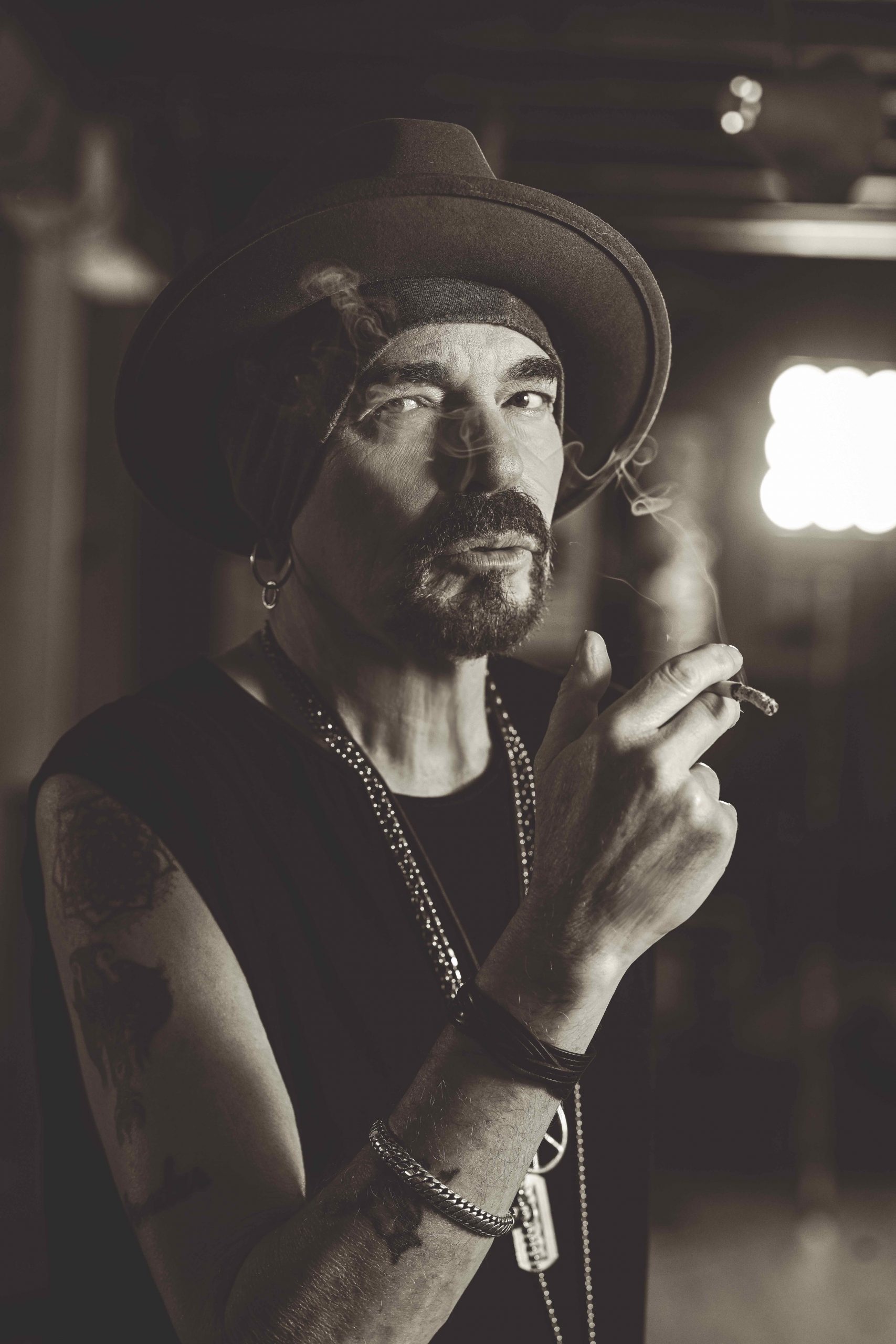
Thornton: I didn’t think I’d make it to 30. Yeah. And I mean that. But after a while, age became unimportant. See, I don’t look the age that I am. My friends I went to school with look like they could be my dad. And it’s simply because I eat really healthy. I smoke great cigarettes. And my holistic doctor said, “Keep drinking the beer and smoking the cigarettes. Because you don’t have stress. If that makes you happy, do it because happiness will make you live longer.” I believe that a hundred percent.
And my mom had good genes. That’s why my skin doesn’t look like I’m 70. Actually, 70 didn’t freak me out; 60 didn’t freak me out. Fifty freaked me out because I got an AARP magazine in the mail. And I was like, “Shit!”
Now, 50 to me is like bleeping kids. Really, the only age that freaked me out was 50 — and 40. Because 40 is when you go from being the little creep you are while growing up, being a teenager and stuff, and running around. When you get to 40, you’re like, “Oh, I’m this guy now.” And my dad died at 44. When I was a kid, I thought he was an old man at 44.
But now 70 is like the new 60, and 60 is the new 50. It keeps going up and up and up. So to me, I think once I get in my 80s, if I ever live that long, I think that’s going to make me realize: OK. Now I’m here. Because I talk to Sam and Duvall a lot about it. Duvall’s 94 now. And I see Bobby, he’s kind of different than he was, but he’s still great.
If you make sure that your own happiness is there all the time, and the people around you are happy, I honestly think that’s what helps you live. But like Frank Zappa said, “Tobacco is my favorite vegetable.”
Catching Up On Landman
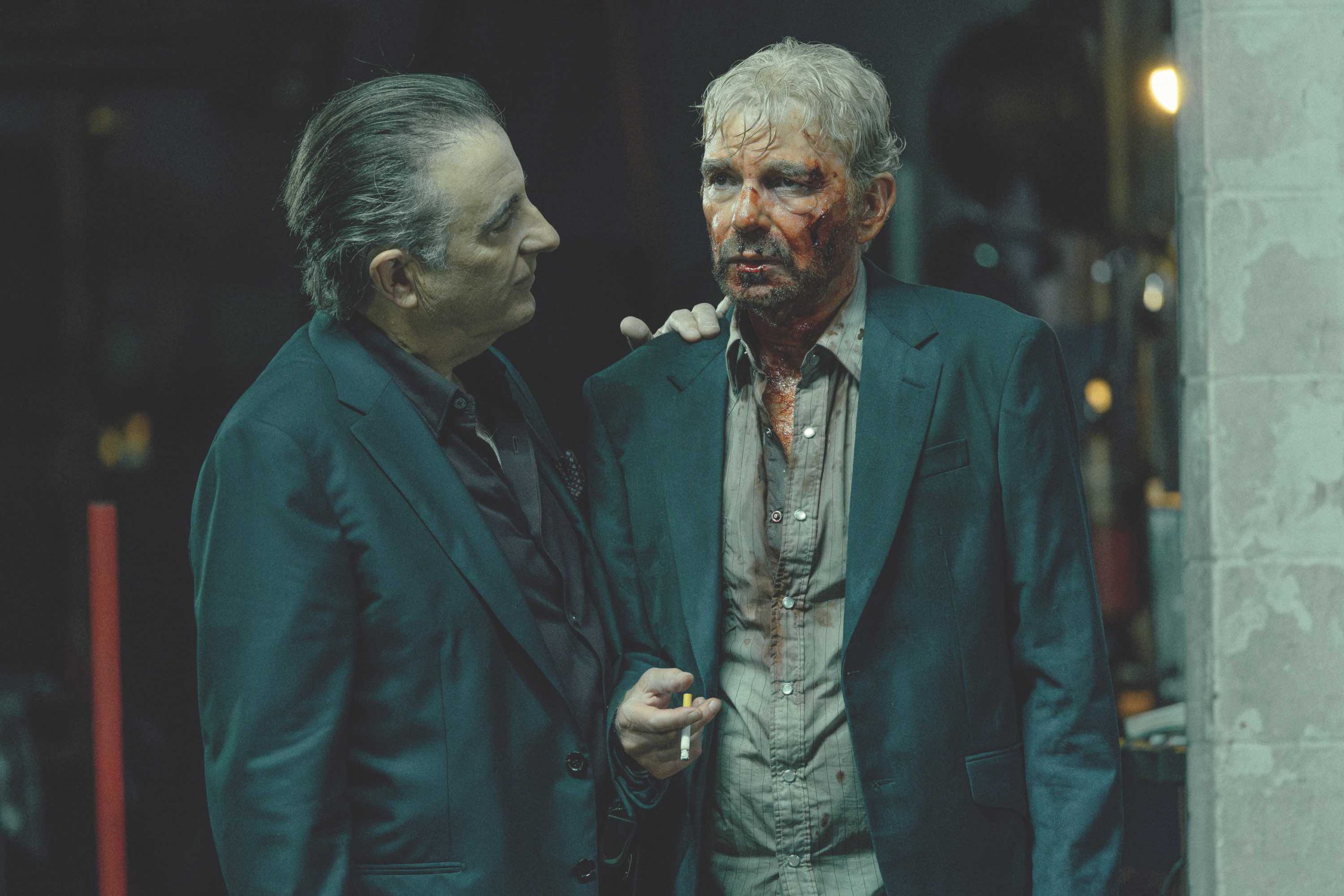
For the benefit of those who tuned in late ... Landman, according to the official Paramount+ template, “is set in the proverbial boomtowns of West Texas and is a modern-day tale of fortune-seeking in the world of oil rigs. The series is an upstairs/downstairs story of roughnecks and wildcat billionaires who are fueling a boom so big, it’s reshaping our climate, our economy, and our geopolitics.”
Billy Bob Thornton plays the title character, Tommy Norris, crisis manager for the fictional M-Tex oil company. “I’m a fixer and a foreman,” Thornton said of Tommy in a pre-Season 1 interview. “There aren’t really a lot of scenes where my character comes home and says, ‘My God, was my day amazing!’ I slink into the house every day like somebody just beat the hell out of me.”
At the end of Season 1, Tommy Norris was burdened with even greater responsibilities: Following the death of his friend Monty Miller (John Hamm), founder of M-Tex, he was elevated to the rank of company president and tasked with helping Cami Miller (Demi Moore), Monty’s widow, protect her late husband’s legacy. That presumably will be the prime focus of Season 2.
Tommy lives with Angela (Ali Larter), his ex-wife, with whom he has kinda-sorta reunited; Ainsley (Michelle Randolph), their strong-willed and fun-loving college-age daughter; Nathan (Colm Feore), a buttoned-down M-Tex company attorney and administrator; and Dale (James Jordan), a rowdy but loyal M-Tex petroleum engineer. Cooper (Jacob Lofland), Tommy’s ambitious son, is now on his own, learning the ropes of the oil business while planning to start his own company. He lives with, and is inspired by, Ariana (Paulina Chávez), a recently widowed mom, whose husband perished in an oilfield explosion that nearly killed Cooper as well.
Other central characters include Rebecca Falcone (Kayla Wallace), a hard-charging lawyer on the M-Tex Oil payroll whose take-no-prisoners approach often impresses Tommy, even though he more often mocks her seeming naïveté about the oil business; Galino (Andy Garcia), a drug cartel kingpin who saved Tommy from being killed by one of his hot-headed minions in the Season 1 finale and has expressed interest in transitioning into a more legitimate business; and T.L. (Sam Elliott), Tommy’s father, a new character introduced in Season 2.
Yes, we know: In real life, Elliott is only 11 years older than Thornton. But remember, this isn’t real life: This is Landman.
PHOTOGRAPHY: (LANDMAN) LAUREN ÌLOÎ SMITH/PARAMOUNT; (ALL OTHERS) DIXIE DIXON
From our January 2026 issue