




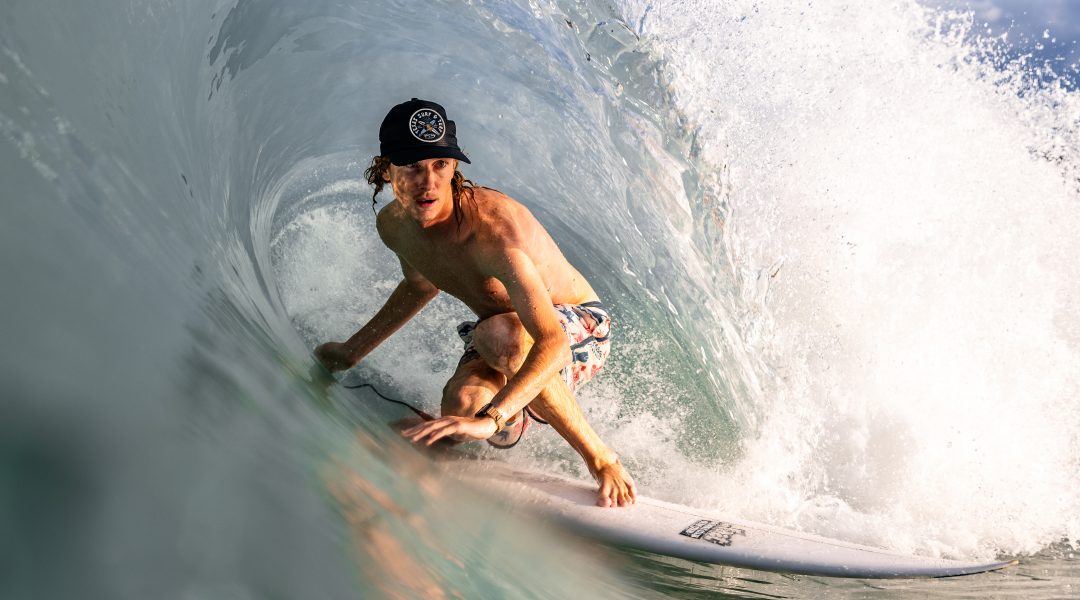
We take a lesson, catch a wave, and hang 10 far from the coast with Waco Surf instructor Reef Ellison.
Cowboys & Indians: Hey, Reef, tell us a little bit about yourself and how you got to Waco, Texas, of all places, to teach surfing.
Reef Ellison: I’m from Galveston, Texas, a little island south of Houston. I started surfing at age 3 with my dad pushing me into waves after seeing a local TGSA (Texas Gulf Coast Surfing Association) contest at my local beach. The perfect waves brought me to Waco Surf. Being from the Texas coast, surfing is a mission because swells vary quickly, making the waves inconsistent. I was actually here at Waco Surf for the opening day of the pool, and since that day, I knew I wanted to be a part of this industry.
C&I: What do you like so much about it?
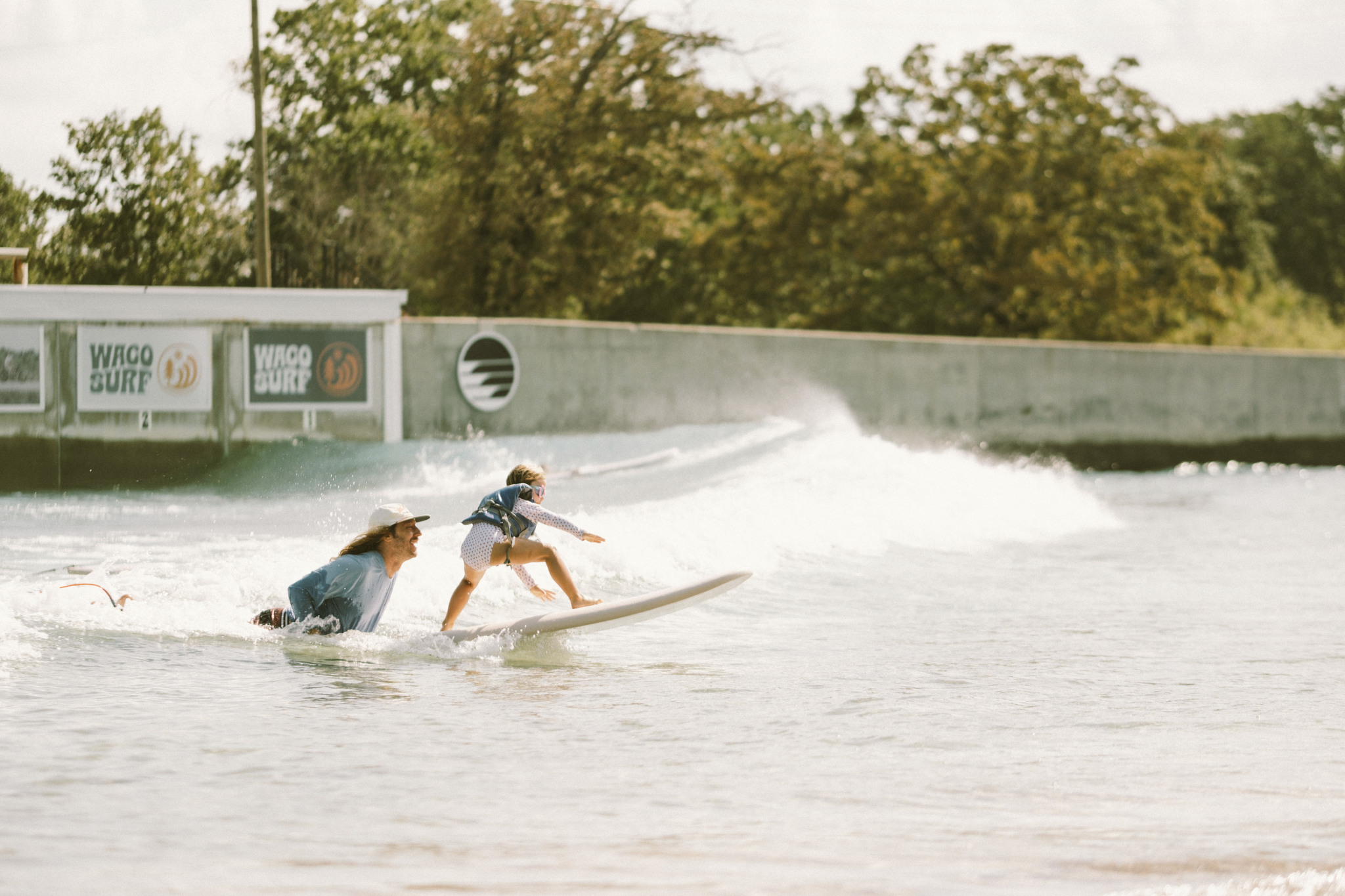
Ellison: My favorite thing about teaching is watching the excitement and joy that people get after standing up on the board for the first time. Especially for those who have never even been in the ocean or to the beach, it’s something they never thought they would do, and it’s awesome to see them get hooked on surfing.
C&I: Besides Waco, where do you love to surf?
Ellison: For favorite places to surf when on the coast: anywhere on the Texas coast, but I travel to the northwest side of Puerto Rico when I can.
C&I: Now to the lesson: What do you need in terms of skill and equipment to take a beginning surf lesson?
Ellison: Generally, you need a good sense of balance going into it, and just a swimsuit, bottle of water, sunscreen, and be ready to get in the sand and water.
C&I: How is catching a wave inland at Waco Surf different from in the ocean?
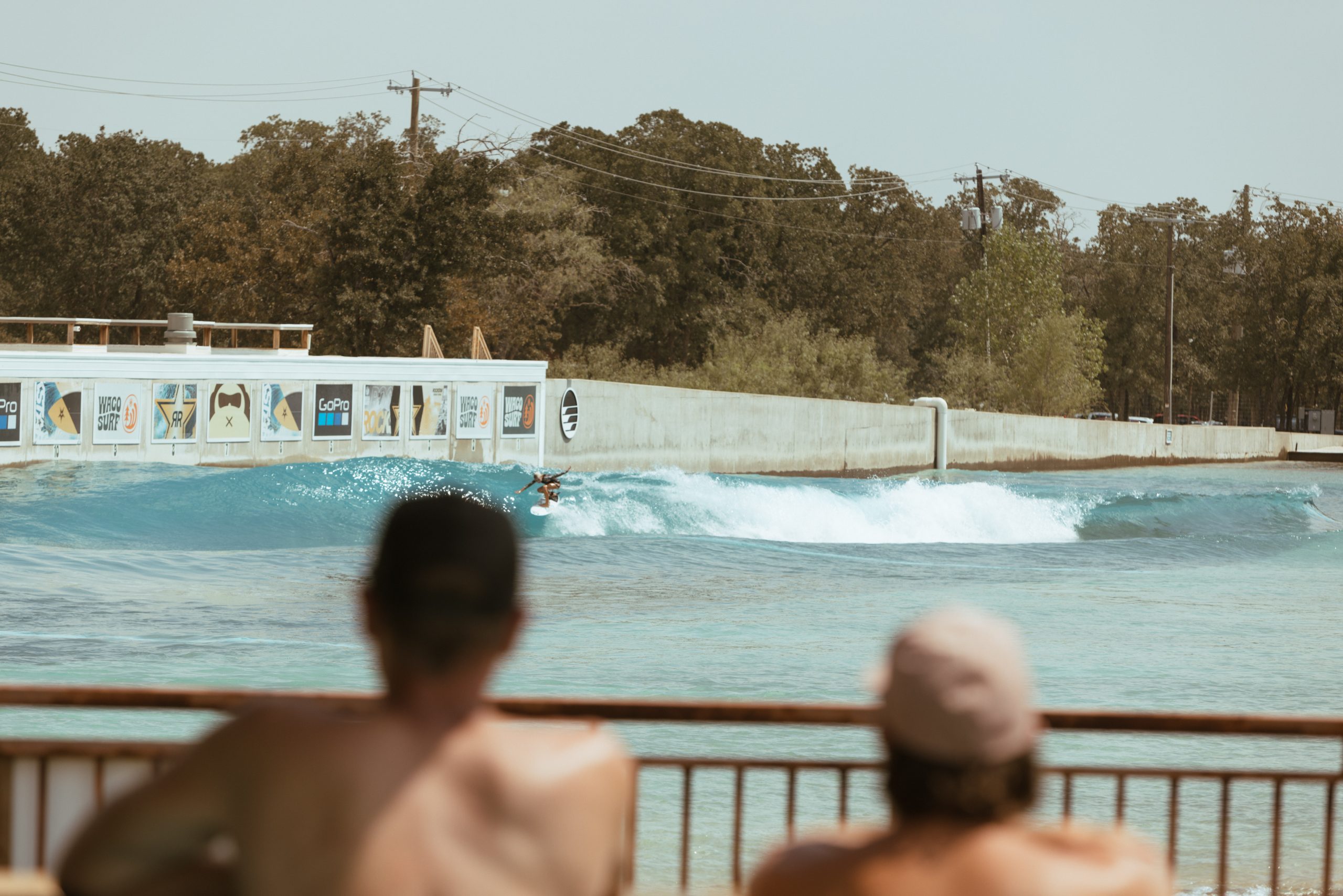
Ellison: It’s a lot more controlled. You don’t have to worry about current, position, timing, etc. We handle a lot of that for you.
C&I: What is “popping up”?
Ellison: Popping up is the action of standing up on the surfboard right after you catch a wave.
C&I: What is your body actually doing in terms of balance and which muscles are you using when you pop up?
Ellison: It's a quick transition from lying down on your board to standing on it, so establishing good balance is very important. You use the whole chain of the body while popping up, engaging many muscles, starting with the upper body, then the torso, and finally the legs.
C&I: What is the movement you’re making?
Ellison: Eyes forward, hands low by the top of your ribs, flat on the board. Keep your back foot slightly bent ready to stand up. Push yourself up/off the board; then use your slightly bent back foot to add pressure with your toes. You should have three points of contact on the board. Now, use that base to stand up onto your front foot. Then pick your chest up and turn your shoulders down the line. Start slow, then go faster as it gets more comfortable.
C&I: How can you improve the balance and strength needed?
Ellison: Basic balance exercises and going over the steps I laid out.
C&I: What muscles are you working?
Ellison: Almost all of them.
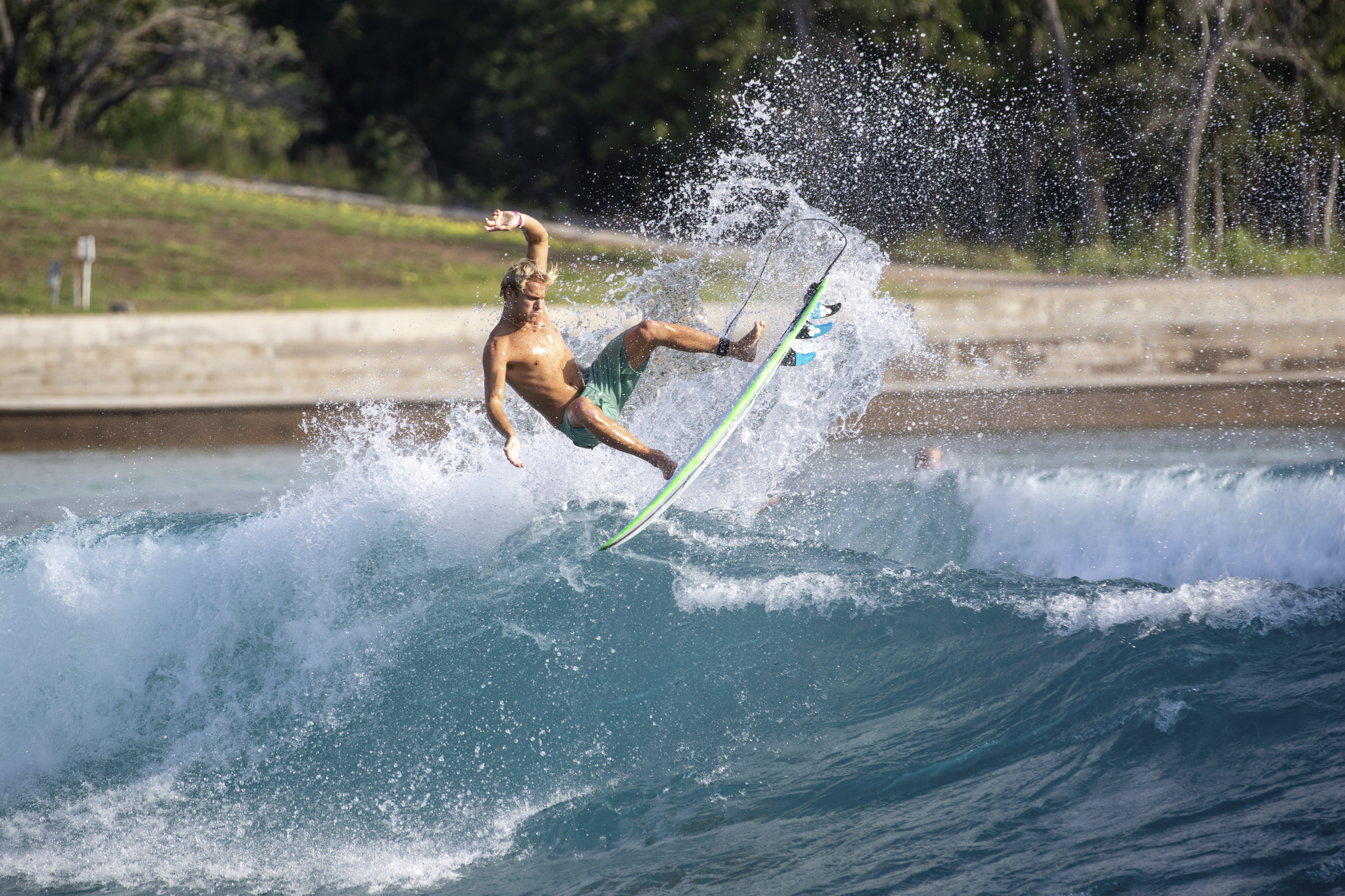
C&I: If you’re right-handed, is the back leg typically the right leg? When initially getting on your feet, are you more or less in the middle of the board? Is primary riding position slightly back from center?
Ellison: Generally, yes, but it;s the opposite for some people. It varies for people based on their flexibility, but you want to be slightly more toward the back instead of the very middle. Yes, the front foot should land right below the center of the board, and the back foot just above the fins.
C&I: How do you describe the stance?
Ellison: Wide stance but not too wide. Feet should land just outside your shoulders. Low stance, but not so low that you’re squatting. Both toes should be on one side and heels on the other. Pick your chest up and turn your shoulders toward where you want to go. Eyes look toward where you want to go.
C&I: How do you alter the stance to maintain balance? What are you “feeling for” to sense how to adjust?
Ellison: Quickly shift your front or back foot to maintain balance and structure. If you are slowing down or going any way besides down the line, you need to adjust.
C&I: How can you fall off safely?
Ellison: Don’t dive, fall flat, and cover your head when coming up.
C&I: How best to avoid nose/mouth/lungs full of water?
Ellison: If you can, take a big breath of air before you fall, pinch your nose while falling, and breathe out through your nose while under water.
C&I: How do you get good at surfing?
Ellison: Repetition, patience, dedication, and some exercise and stretching.
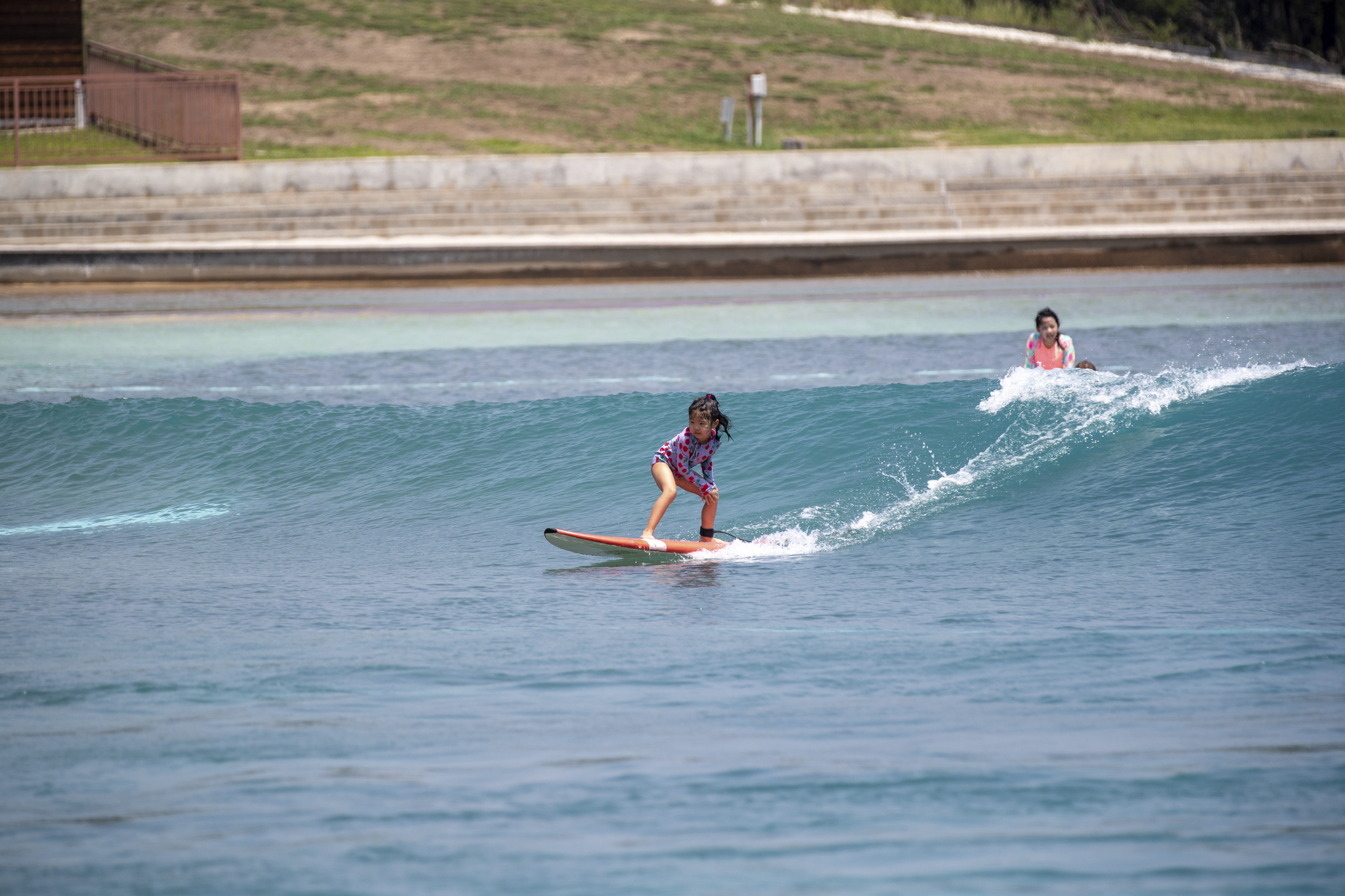
C&I: What else in the way of tips?
Ellison: Don't get frustrated with yourself. Surfing is generally not easy, but that’s part of the fun. It’s challenging, but in a great way. Watch clips of yourself after your sessions to see what you can improve.
C&I: Is there anyone you advise not to surf for reasons you can share (weight, age, health, etc.)?
Ellison: For the wave pool, you can do it at a steadier pace, which is good for almost everyone. However, that doesn’t mean it is not a very physical sport. You are paddling and pushing your own weight up on an uneven surface. It just takes hard work, patience, and dedication.
C&I: Any last thoughts before we hit the water?
Ellison: Surfing is an indescribable feeling. It can change your life, and it’s easier to get started in a more controlled environment like a wave pool.
PHOTOGRAPHY: (Feature photo) Rob Henson/courtesy Waco Surf; (All others) Jeff Wilson Photography/courtesy Waco Surf
For more information, visit Waco Surf at wacosurf.com. Read our story about it in the August/September issue.