





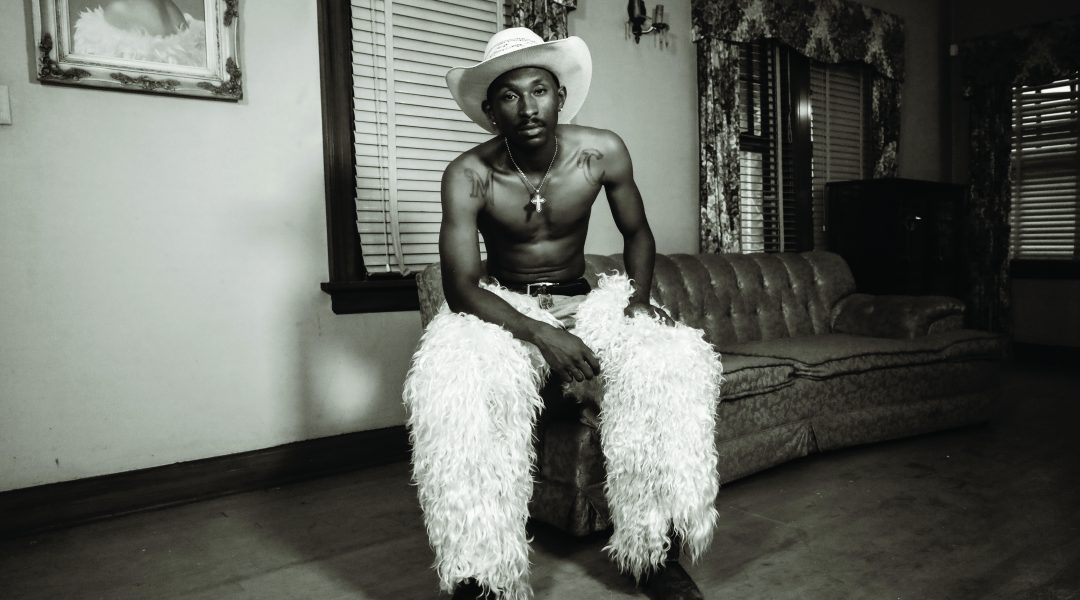
The visionary photographer explores the history of Oklahoma rodeo culture in The Black Land.
When Jakian Parks pulls out his camera at a Black rodeo, he isn’t just capturing a moment. The born-and-bred Oklahoman is encapsulating an identity, conveying a culture, honoring a way of life, highlighting a history that has often been overlooked.
“What began as a photo series has grown into a movement,” says the 24-year-old creative turned visionary. “The Rodeo Record was created to capture the untold stories of Oklahoma’s Black rodeo community — images rooted in grit, grace, and generational pride.” A snapshot of that movement is on view at the Oklahoma Contemporary Arts Center in Oklahoma City with Parks’ solo exhibition, The Black Land.
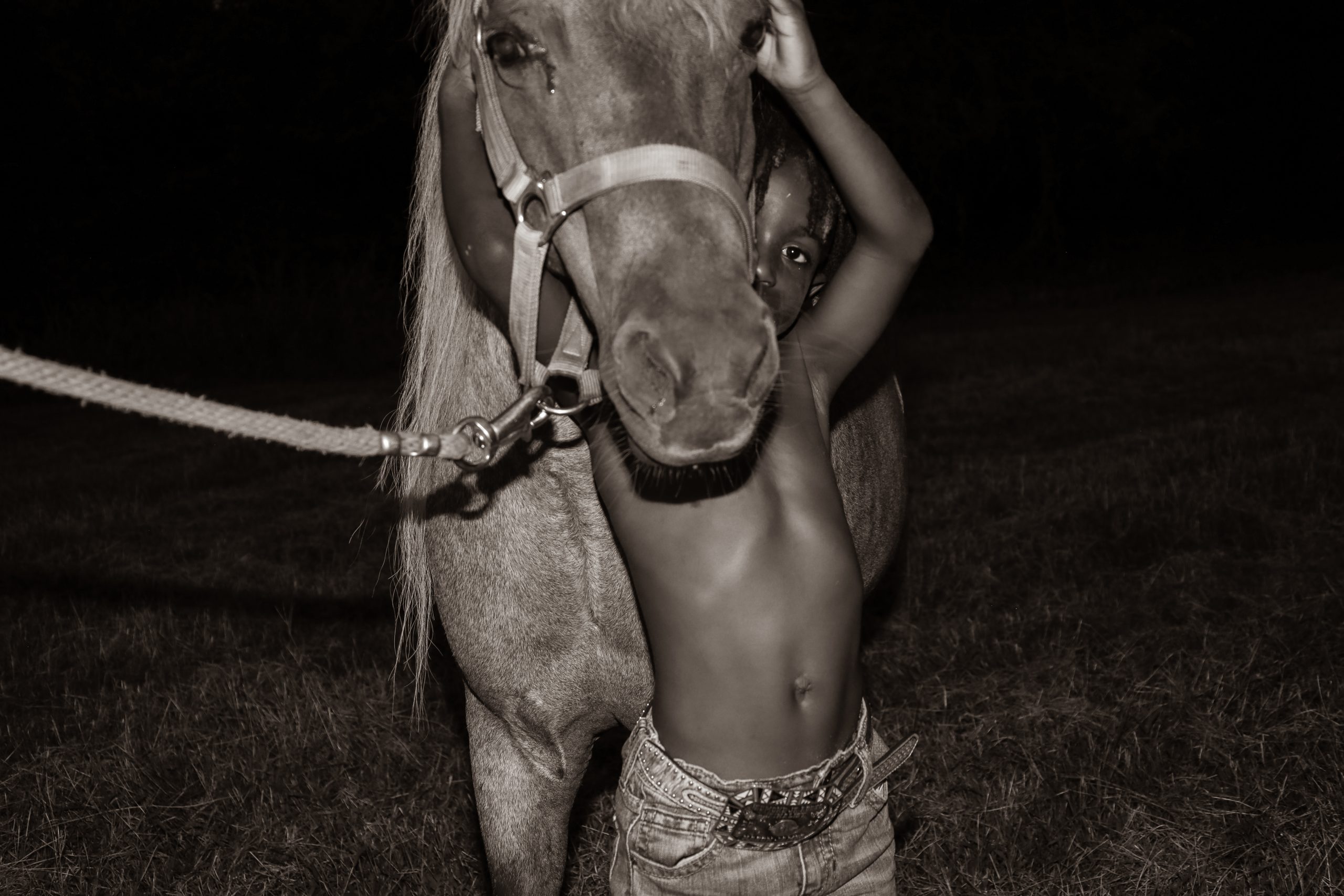
Adoration, 2025. Digital photograph.
Parks spent his childhood summers driving across the Sooner State alongside his late aunt, Shay Nolan, to attend rodeos in historically Black towns like Boley and Clearview. She also bought him his first pair of cowboy boots and got him in the saddle for the first time. That rodeo tradition tapered off after Nolan was diagnosed with cancer in 2017 and was hospitalized for more than a year before passing away in 2019. But Parks’ passion for Black rodeos never wavered.
In fact, he was at a rodeo in 2021 in Spencer when it dawned on him just how ignored Black cowboy culture is by mainstream media. He had already established himself as a rising documentarian of what he has called “real” Black culture when he decided to turn his attention — and his camera — to the world of contemporary Black equestrianism.
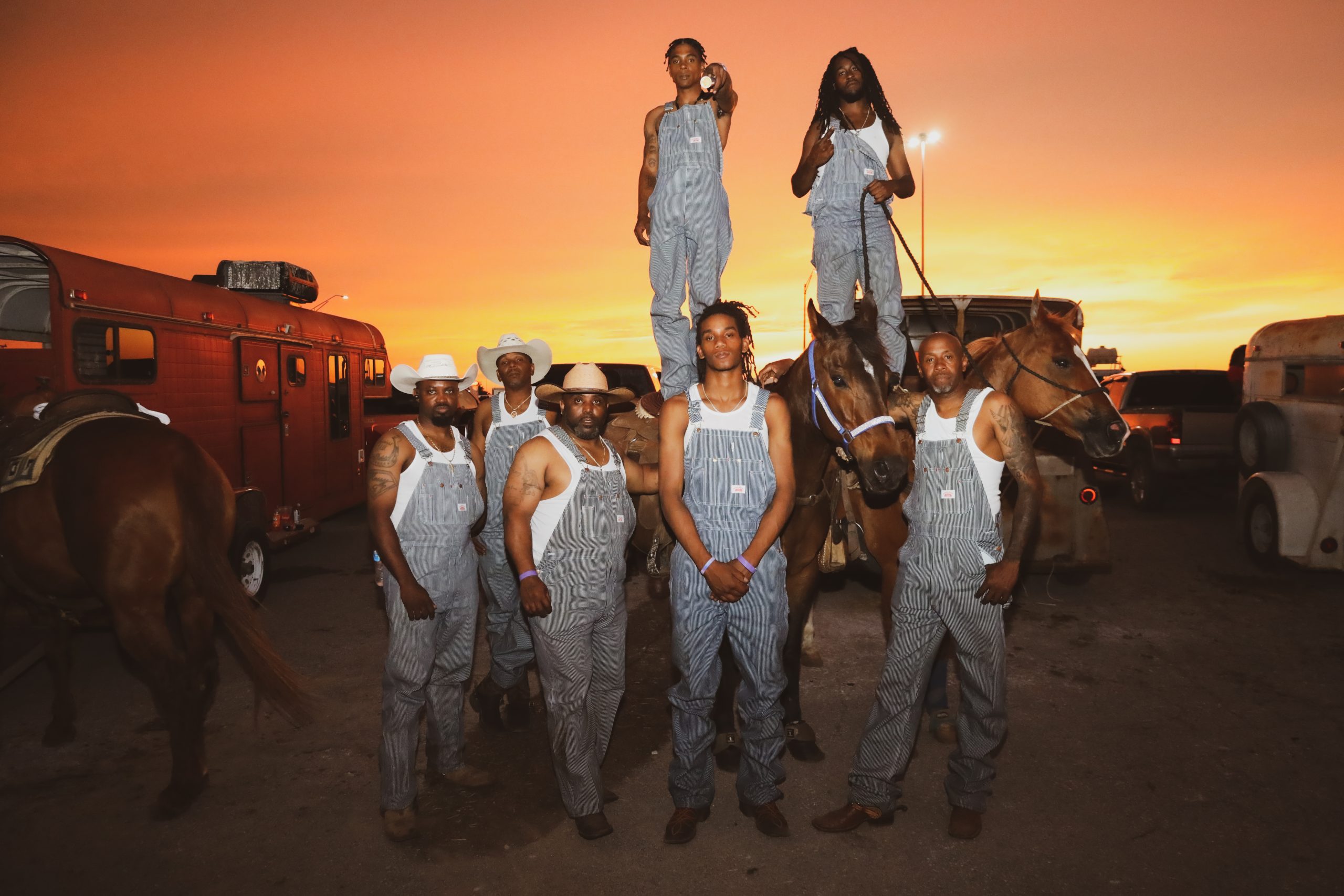
Spencer Country Boys, 2023. Digital photograph.
The black-and-white Rodeo Record series was Parks’ ode to his aunt and his first collaboration with Houston-based writer, archivist, and educator Chloe’ Flowers, who also served as guest curator for The Black Land.
“Jakian is a historian at heart,” says Flowers, who helps make his big-picture ideas a reality. “In tribute to his ancestors, he connects the past with the future, linking the cowboys of yesterday with the cowboys of today. But beyond just the idea of equestrianism, he is capturing a really powerful Black essence and a cultural movement. It’s more than just rodeo.”

Our Ancestors’ Dream, 2024. Film photograph.
It was while shooting the Rodeo Record that Parks had another epiphany: He felt compelled to do more than just pay tribute with his camera. He wanted to help safeguard this way of life. “I was out there doing photo shoots with these African American cowboys, and I realized there was a deeper need,” he recalls. “It wasn’t enough just to show up with a camera; I wanted to make a bigger impact.”
To address the lack of dedicated programming and resources, Parks founded the nonprofit Oklahoma Cowboys in 2024. Its mission is to ensure that the significant contributions of Black cowboys and cowgirls in Oklahoma are celebrated and that their legacy lives on to inspire future generations. Its work balances on four key pillars: education, preservation, outreach, and agriculture.
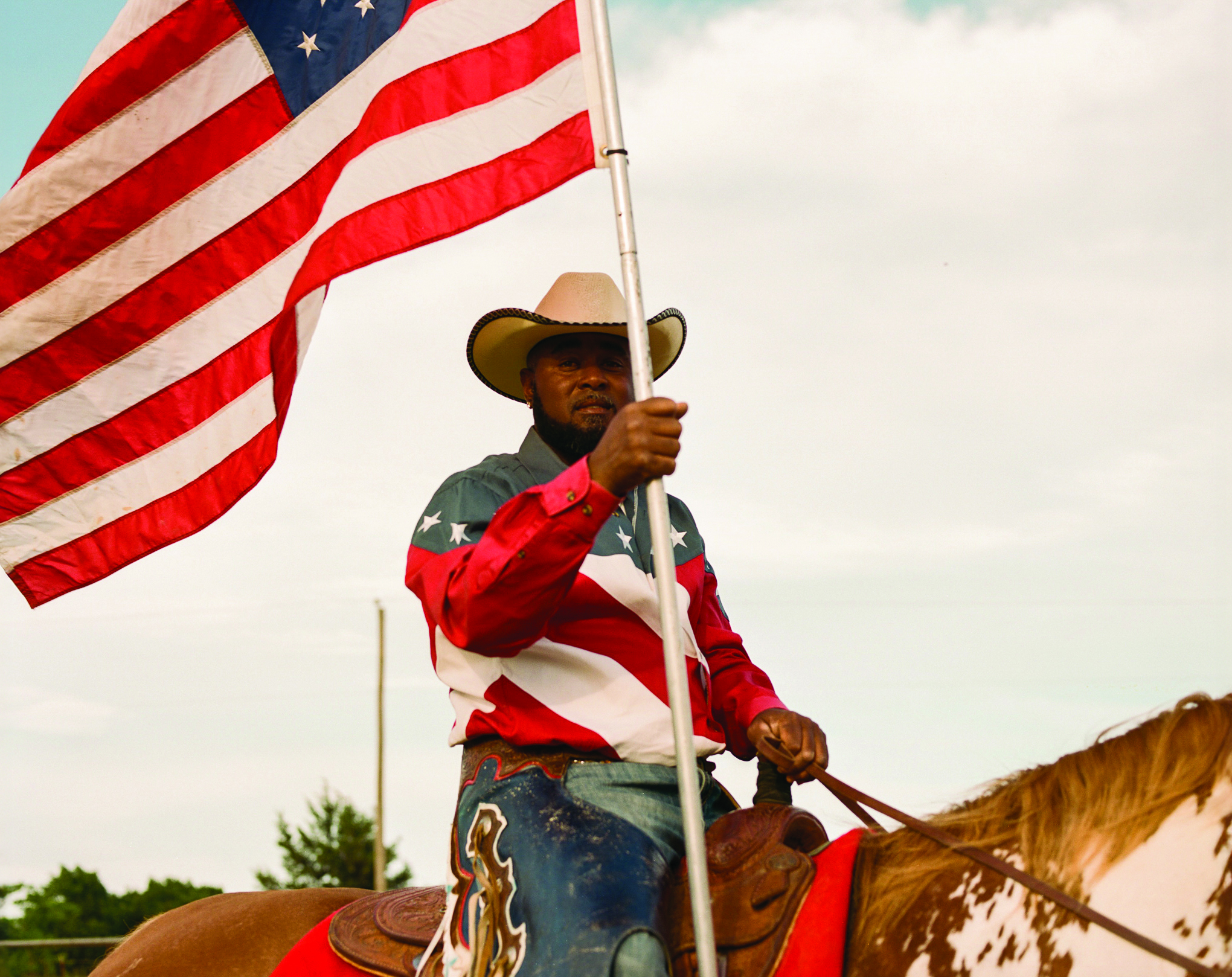
Star Spangled Ebony, 2025. Film photograph.
Along the way, Parks documents with stunning photography and videography that has gained the organization an impressive following. To date, the Oklahoma Cowboys have collaborated with top brands from Levi’s to Timberland and been featured on the Louis Vuitton runway at Paris Fashion Week and in a music video for rapper Travis Scott. Branded billboards that appeared last fall along Oklahoma highways made a bold statement: “We Are The West. Everything Else Is A Remake.”
But this is about more than Instagram likes. In 2024, the Oklahoma Cowboys debuted a youth summer camp to help kids develop skills and confidence around horses, and last year it added a youth cowboy clinic series (with an adult version in the works) as well as its Oklahoma Cowboys Outdoors division. For all these efforts, Parks last fall earned a spot on the Ebony 100 in the Generation Next category, which honors those under the age of 25 who are rewriting the rules of success.

8 Seconds, 2025. Film photograph.
A living archive of sorts, The Black Land showcases the complex symbolism behind Black rodeo culture, at once representing struggle and survival, resilience and resurgence. It also nods at the complicated nature of African Americans’ relationship to agriculture in this country, with its long history of forced labor and sharecropping and its ongoing challenges surrounding ownership and sovereignty.
“Too often, Black history is only portrayed through the lens of loss, defeat, pain, and other negative emotions,” Flowers says. “While those still exist, there are also beautiful things that can be felt with our history. The Black Land is a celebration of those more positive feelings while still acknowledging the depth of those heavier feelings as well. It’s about reclaiming our history in a way that feels beautiful, righteous, and godly.”
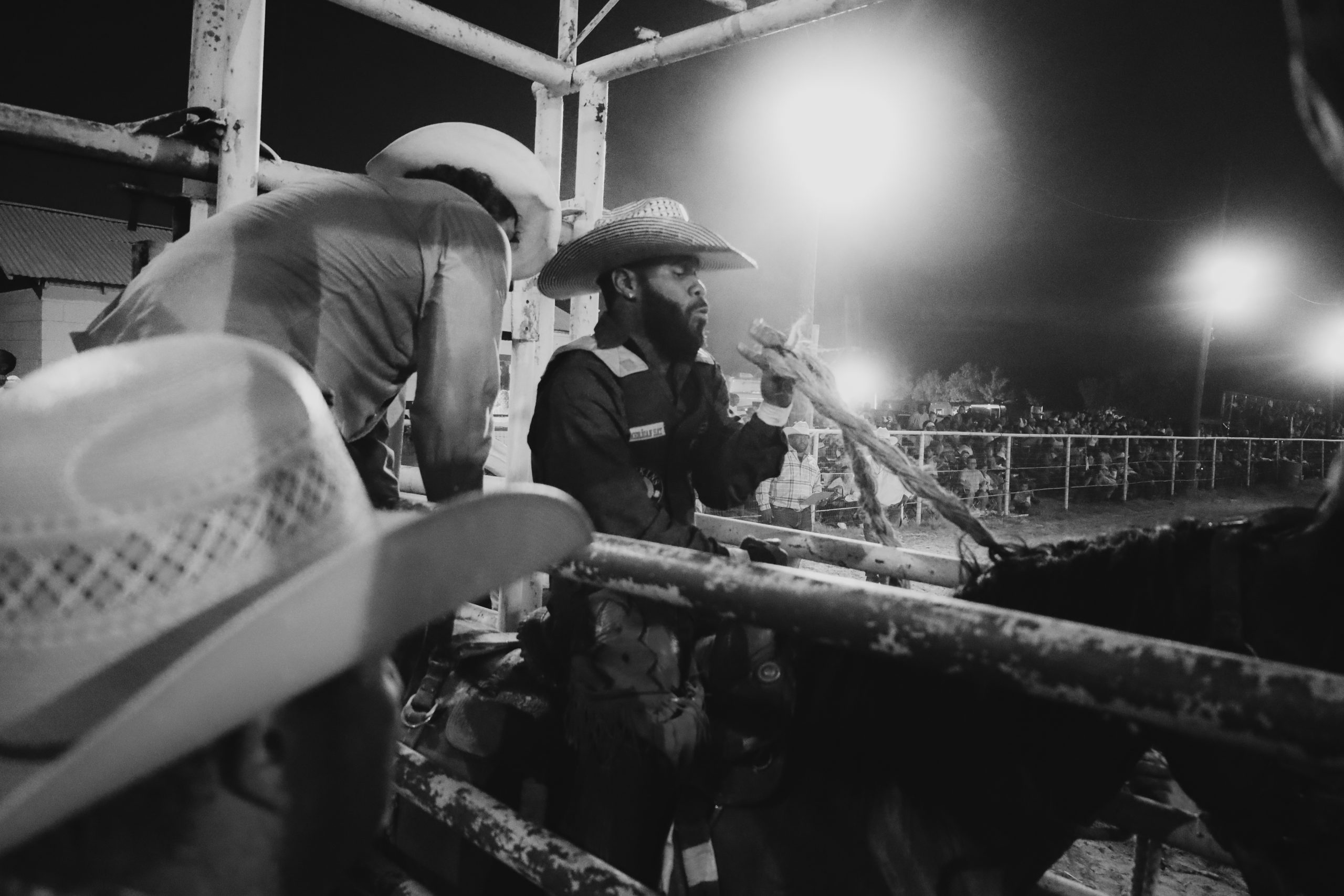
One Breath From Greatness, 2023. Digital photograph.
That reclamation is suggested by the title of the exhibition. “I always get so inspired by our Black historical towns in Oklahoma,” Parks says. “At one point there were more than 50 all-Black towns, and we currently still have 13. Black and Indigenous people are the originators of the land, which is where I got the title of the project.”
Although his work takes him outside Oklahoma, Parks’ focus is firmly rooted in his home state — and his community — and a connection to land and to place is ever-apparent throughout the exhibition. “Jakian is not creating from the outside looking in; he is of this community,” says Oklahoma Contemporary director of exhibitions Anna Vittoria Pickett. “The photographs he shares are grounded in real relationships, and what he invites us into is not a constructed narrative, but a lived reality. His practice is about preserving, uplifting, and giving back to the people and place that shaped him. There is a sense of care in every frame and a quiet insistence that Black rural life be seen in its fullness.”
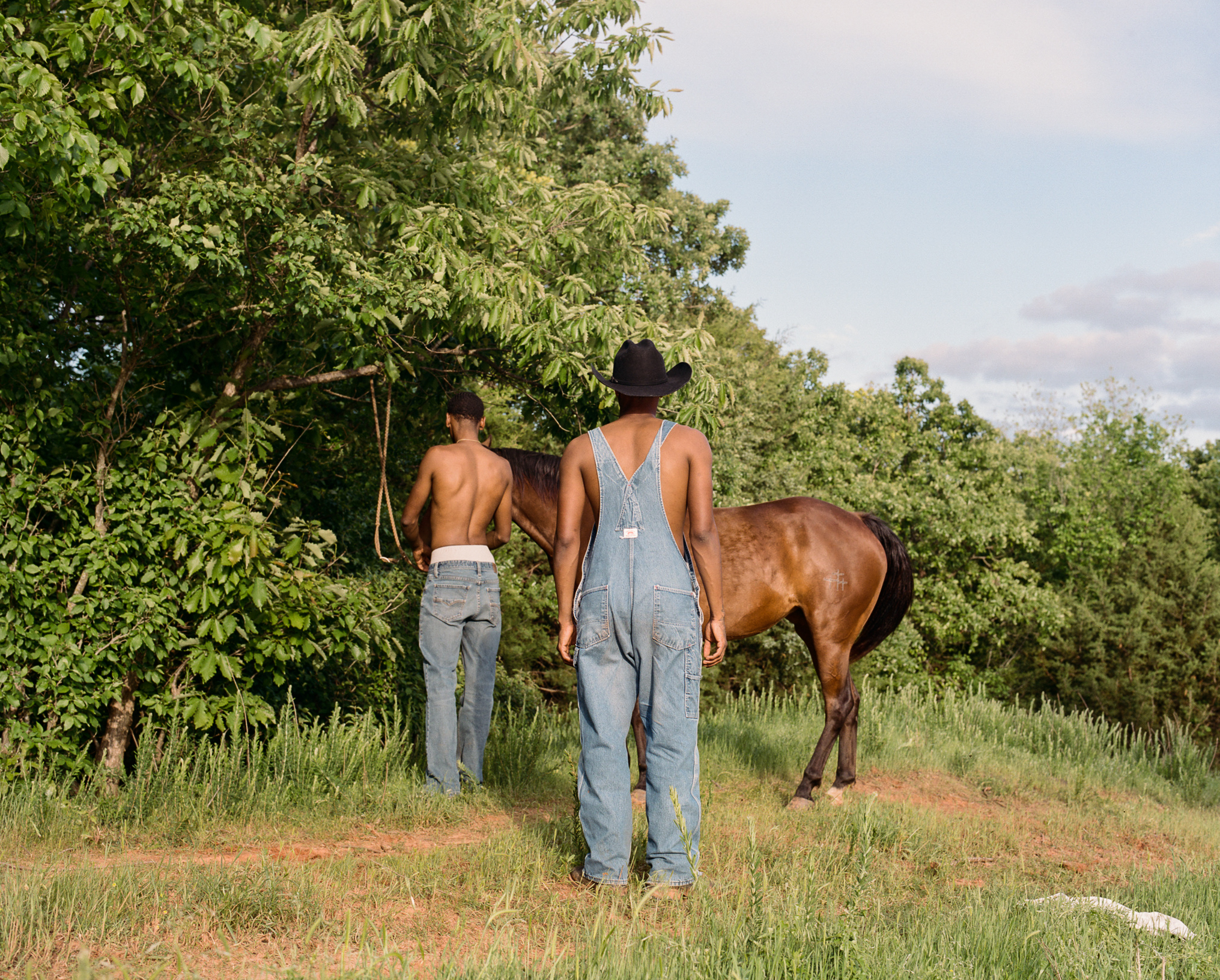
Brotherhood, 2025. Film photograph.
Parks has big dreams ahead, like developing a cowboy campus in Oklahoma and producing a Black rodeo in New York City. All of it honors the people he grew up admiring at those small-town rodeos and the aunt who gave him the appreciation for the horseback heroes who keep the tradition alive.
“The cowboys out here eat, sleep, and breathe the cowboy lifestyle,” he says. “They are out here working in the field, working at the stockyards, moving cows all day long. They travel up and down the road rodeoing. It’s a way of life.”
Jakian Parks: The Black Land is on view at the Oklahoma Contemporary Art Center in Oklahoma City through June 1, 2026.
From our February/March 2026 issue.
PHOTOGRAPHY: Courtesy Jakian Parks.
PHOTOGRAPHY (featured image): Grandma’s House, 2025. Digital photograph.