



Hell On Wheels
Where Civil War wounds meet the American West — AMC’s new period western.
Hell on Wheels isn’t just your teenager on a tear or your boss on a deadline. The expression actually originated in the Old West. When the Union Pacific Railroad was extending across the country in the 1860s, Hell on Wheels was, in fact, the last town on the line. Carried on freight cars (“wheels”) as the track was laid down, the town consisted of gambling houses, dance halls, saloons, and brothels (“hell”) that followed the construction gangs building the Transcontinental Railroad through the American wilderness.
Now, Hell on Wheels is also an ambitious period drama airing on the AMC cable network. Like many classic westerns of yesteryear, it is the story of a man on a quest for revenge. Hellbent on revenge, you might say.
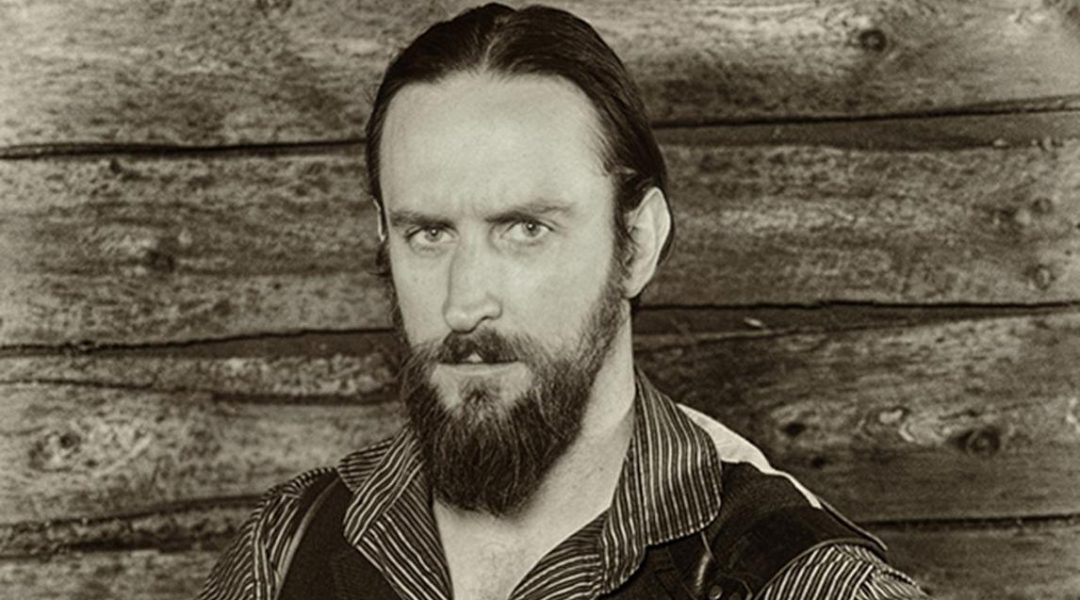
The plot focuses on Confederate army veteran Cullen Bohannon, whose search for the Union soldiers responsible for the wartime death of his wife takes him to the untamed frontier of the American West. That’s where he finds himself involved in the construction of the Transcontinental Railroad. That’s also where he might get a shot at redemption while helping to make history.
"If we do our job right,” says Anson Mount, the Tennessee-born actor cast in the lead role, “this show isn’t just about revenge. Or even just about the building of the railroad. It’s really about the building of a nation.”
For AMC, Hell on Wheels represents another chance to attract, and expand upon, the audience that enjoyed Broken Trail, the network’s award-winning western from 2006. For Mount — whose previous TV credits include Conviction, Third Watch, and Line of Fire, and who recently impressed critics and film festival audiences with his scary turn as an unstable drug dealer in the indie drama Cook County — the lavishly mounted AMC series offers a unique opportunity to ride tall as a straight-shooting Western hero.
We talked to Mount about history, horses, and dressing the part.
Cowboys & Indians: Until now, you’ve specialized in playing contemporary characters. How did you immerse yourself in the mind-set of Cullen Bohannon, who’s very much a man of the 19th century?
Anson Mount: There are creative choices you make as an actor that sometimes have absolutely nothing to do with logic. You just have to do something that allows you to play the role. And in this case, one of those decisions was, for me, Cullen is a horse.
C&I: A horse? How so?
Mount: Well, you see, the great thing about horses that I learned while working with them on the set is, there’s no separation between their behavior and their instinct. If they feel something, it will be exhibited right away on the outside by their body. It will be exhibited in their behavior. And there’s something in that that’s very much Cullen — because Cullen is led by his gut. And he thinks it’s not a choice. He just has a gut instinct for what’s right and wrong. And that’s also tied to his ideas about justice and vengeance. It’s like there’s a brutality, and at the same time a gracefulness, to a stallion. It’s a very nice mixture. And that’s something I wanted for Cullen.
C&I: Did you research the period?
Mount: [I read] about the construction of the Transcontinental Railroad and about Civil War leaders — how they encouraged the men in their outfits to work harder and walk straight into battle. When you get your script, you do your research. But at the end of the day, all you can do is play the script. You can’t play your research.
C&I: Some actors say they really can’t get into a character until they find the right costume. Or, in the case of a western, until they find the right hat ...
Mount: That’s absolutely true. In many cases, if you can find the one thing that works, that ends up informing all the rest of your choices. We are extremely lucky in Hell on Wheels because we have an amazing costumer named Wendy Partridge, who also worked on Broken Trail. And the funny thing is, if you go into Stephen E. Ambrose’s book [Nothing Like It in the World: The Men Who Built the Transcontinental Railroad 1863 – 1869] and you look at the photographs of people who actually worked on the Transcontinental Railroad, they look like stills taken on our set. Really. And that’s all because of Wendy Partridge. She’s convinced that, to a large degree, this is not a western.
C&I: Well, what is it?
Mount: Her argument is that this is an “Eastern.” It’s about the Eastern industrial complex moving into the West. If you do really research this period, you’ll find people going out West to work on the railroad and they’ve only got one suit of clothes. And they’re in a work camp. And if you leave your jacket behind in your tent, it could get stolen. So you wear it. So we’ve got some people out there in suits. There’s nothing romanticized about our costumes. There are no over-the-boot flared jeans. In fact, you have a lot of knee-high boots because, oftentimes, you’re in mud up to your knees.
C&I: But what about your hat?
Mount: When I got there, Wendy had about 30 choices of hats, and we spent an afternoon going through them until we came down to two. There’s one that I favored that I did not end up with. But I think they chose the more Clint Eastwood look. The way they got me to accept their choice was that they gave me the sample of the hat I liked. [Laughs.] So I got to keep that one.


Email
Print