



Zipping from Colorado to Utah through Lodore Canyon wasn’t always such a pretty endeavor. Now it’s a summer adventure worthy of marking a nation’s 250th anniversary.
Not much has changed in Lodore Canyon—at least in all the right ways—since the first fabled whitewater descent of this spectacular leg of the Green River happened many moons and Junes ago. Back in America’s pre-centennial days, pushing paddle here hung somewhere between uncharted ordeal and terror quest.
Today, as momentous summer rafting adventures go, there’s no 250th Anniversary-worthy riverine time machine quite like it.
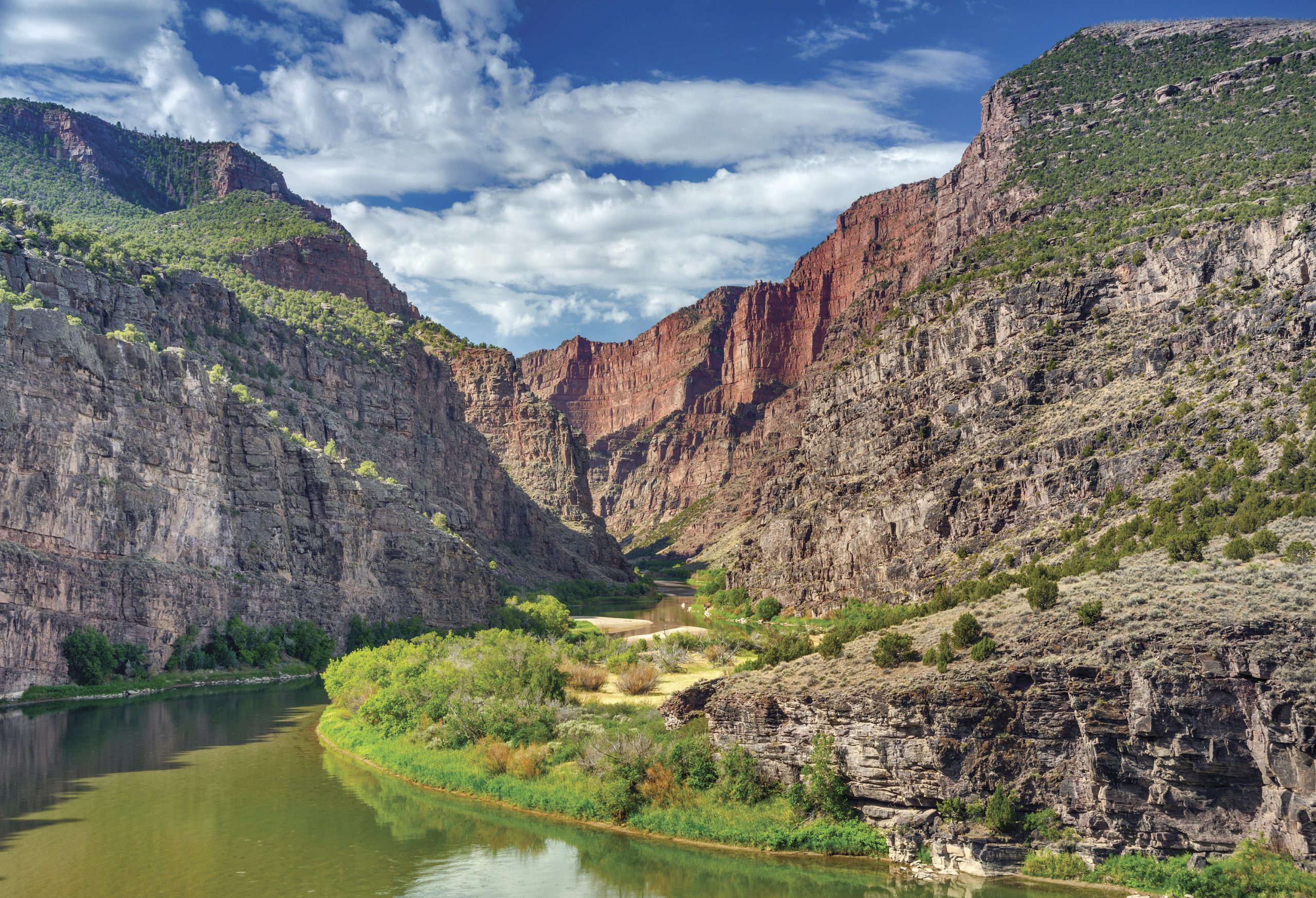
The three-night journey begins in Colorado at the Gates of Lodore—a massive pair of cliffs just upriver from Disaster Falls—and ends in Utah. Credit: Alamy.
Flowing between northwestern Colorado and Utah, Lodore Canyon is a 43-mile, cliff-flanked Class II-IV thrill ride complete with beachside campsites and uninterrupted beauty. This remarkable stretch of waterway cuts through Dinosaur National Monument, where it’s easy to overlook in favor of the monument’s famous dinosaur fossils and exhibits at the Quarry Visitor Center.
Commonly dubbed “The Little Grand Canyon,” there’s nothing little about Lodore Canyon — as explorer John Wesley Powell discovered on his maiden voyage through the broiling gorge at a time when remote river expeditions were far less comfortable than they are today.
On June 8, 1869, the famed Western explorer and cartographer led a 10-man crew through the canyon’s dramatic entrance, marked by a pair of 2,000-foot quartzite cliffs they named the Gates of Lodore, inspired by an English poem. Reality struck almost immediately. That same day, one of their four wooden rowboats was smashed to pieces in a stretch of rapids later named Disaster Falls, taking with it a third of the expedition’s food supplies and valuable surveying instruments.
Five miles downstream, Powell would christen another intimidating section of whitewater Hell’s Half Mile.
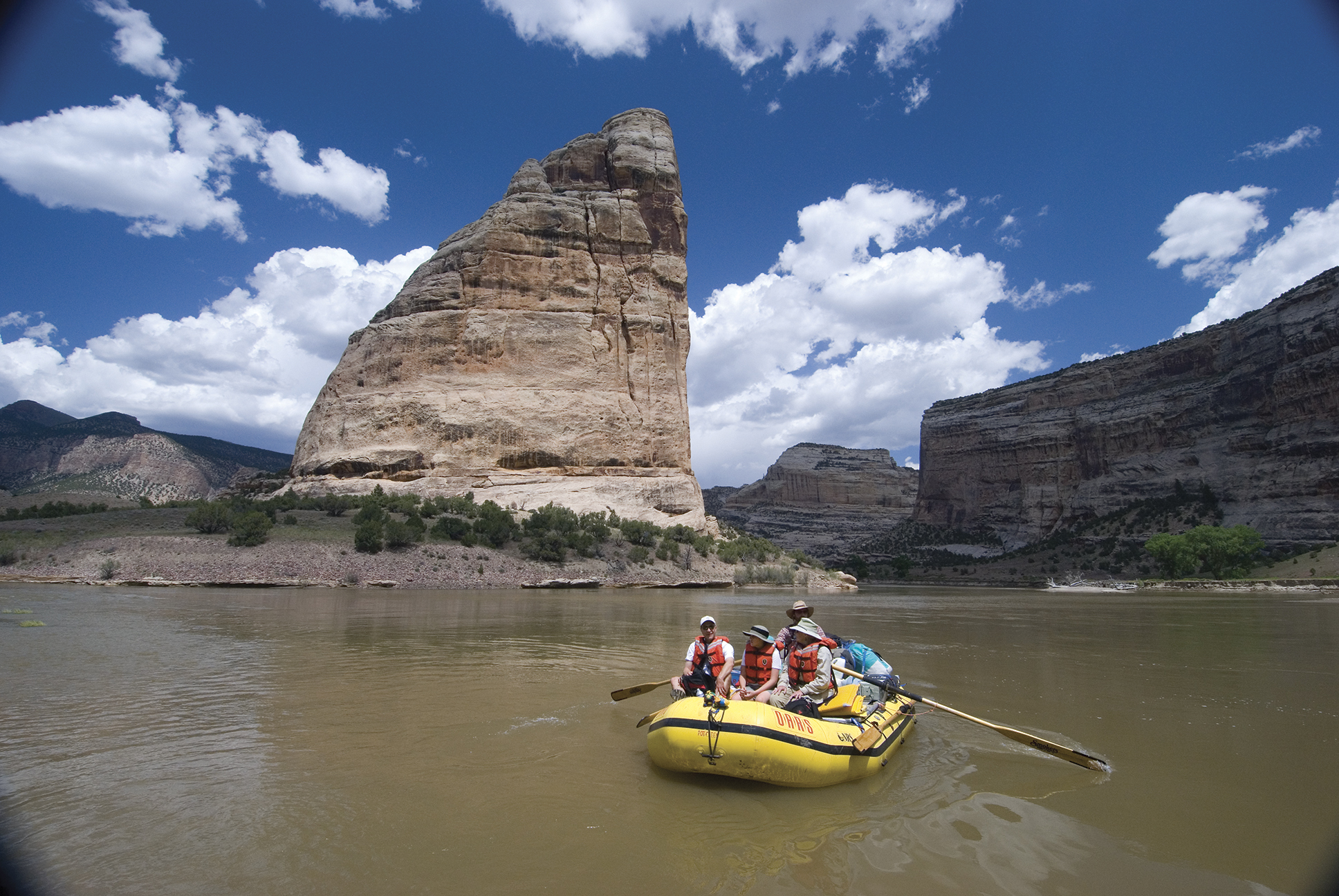
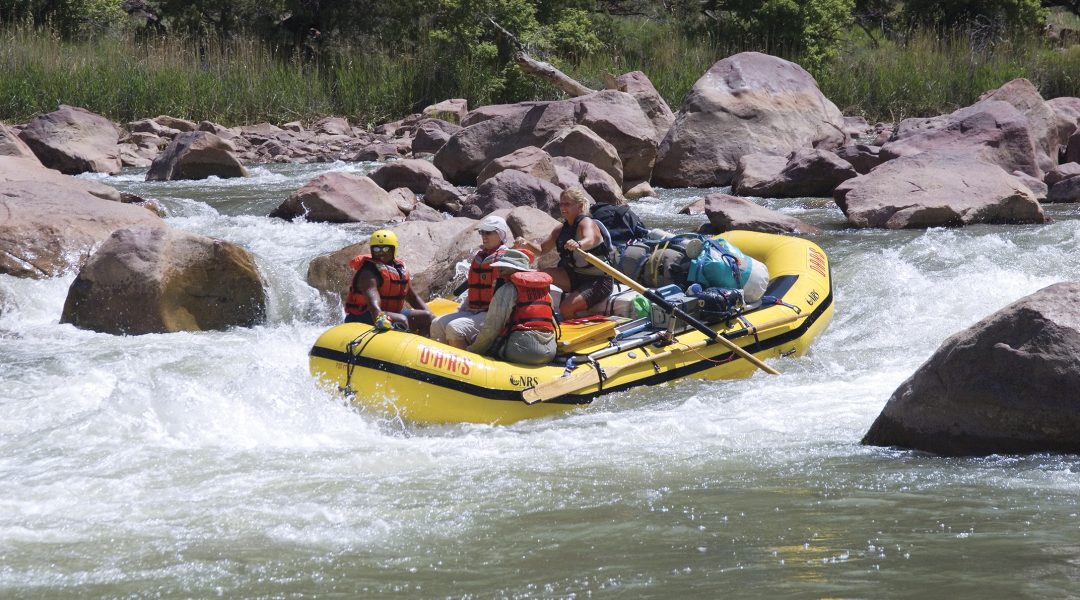
As multiday summer rafting adventures go, there’s no riverine time machine like the Green River through remote Lodore Canyon. Credit: James Kaiser; courtesy of OARS.
More than 150 years later, those colorful names remain. Fortunately, modern rafters experience Lodore’s ancient geological wonderland under much different circumstances. Guided multiday trips now feature self-bailing inflatable rafts, experienced river guides, sturdy camping gear, titanium cookware, and even satellite phones—luxuries Powell and his crew could scarcely have imagined.
So why does this spectacular destination still feel so untouched?
“The current river management plan and permit system work to preserve the natural and cultural resources along the river—and part of that resource is the solitude and wilderness character of the place,” says Dan Johnson, program manager for interpretation, education, and visitor services at Dinosaur National Monument.
The canyon’s geology also limits visitor numbers.
“When river flow rates are high, campsites are only available in places that are slightly wider—and those are extremely limited,” Johnson says.
During peak season, from May through early September, Lodore Canyon receives roughly 17,000 rafting permit applications for only 300 noncommercial launch slots. That makes the park-regulated river corridor one of the most difficult whitewater lotteries in the country to win.
For most visitors, the easiest path to the canyon is through an authorized outfitter.
Based in Vernal, Utah, OARS has been guiding whitewater expeditions throughout the American West since 1969. The company’s multiday Lodore Canyon trips include side hikes, riverside camping, and plenty of opportunities to experience the canyon’s remote beauty.
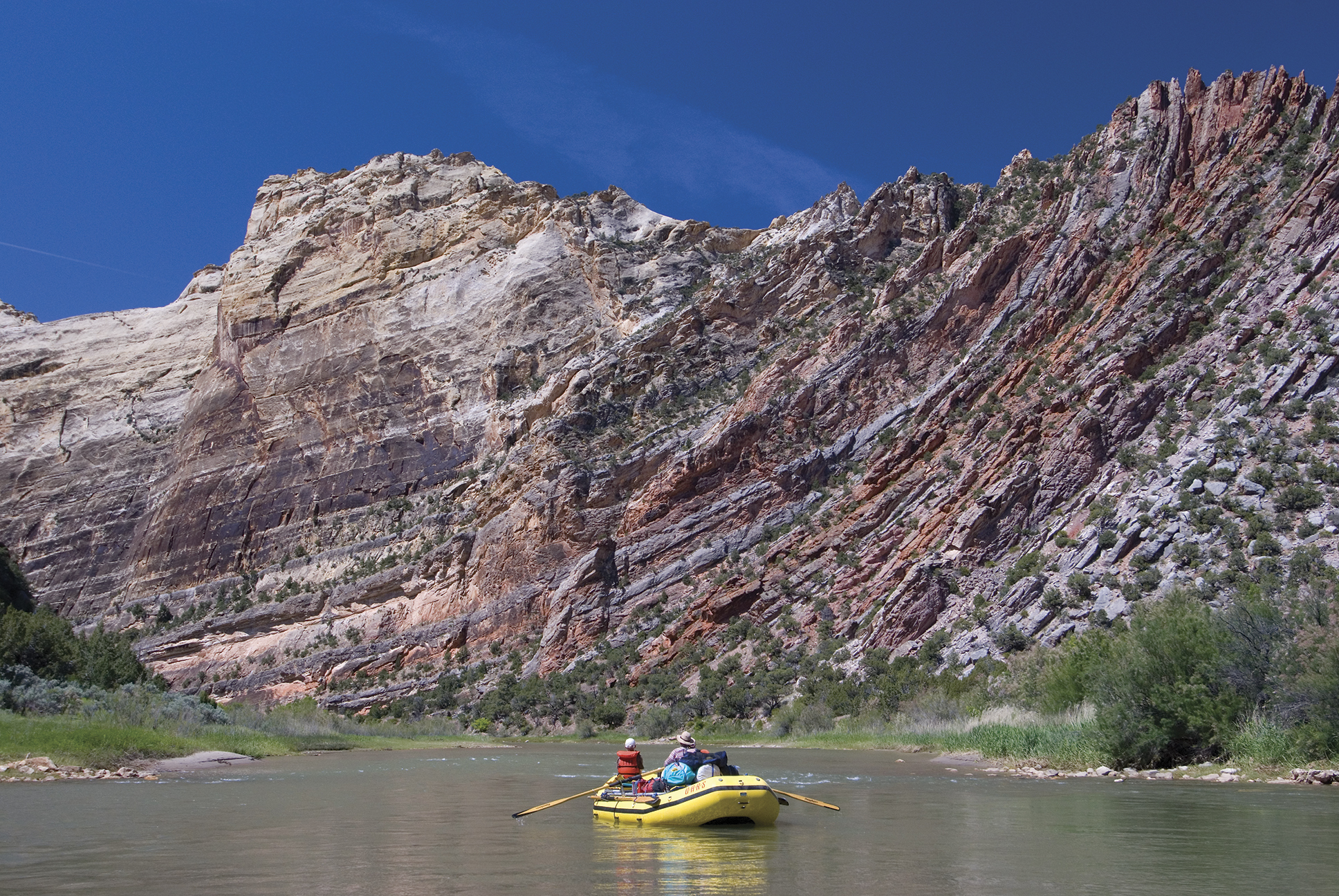
Credit: James Kaiser; courtesy of OARS.
“A rafting trip on the Green River through the Gates of Lodore is such a fun and easy way to get completely off the grid and experience the dramatic scenery of Dinosaur National Monument,” says OARS Vice President Steve Markle.
Markle recommends booking the company’s signature three- or four-day trips several months in advance, especially during this historic anniversary season.
“We’re definitely seeing a surge in interest this year,” he says.
My own first journey through Lodore Canyon began with a splashy lesson in history shortly after passing through the Gates.
“Here’s where Powell lost his first boat,” my seasoned river guide casually remarked while steering our wide-eyed, water-soaked crew through the churning waters of Disaster Falls.
Later that day, while navigating a chaotic rock garden featuring a notorious ledge that has trapped boats for generations, he pointed to the canyon wall above.
“Up there’s where he got stuck on a ledge and had to hoist himself all the way down on a leather strap—with one arm.”
The southbound Green River eventually joins Colorado’s west-flowing Yampa River at Echo Park, the geological centerpiece of the journey. The natural amphitheater is defined by towering cliffs, dramatic fault lines, and the massive formation known as Steamboat Rock.
Just when the scenery seems incapable of becoming more dramatic, a thunderclap echoes through the canyon and a rare rainstorm bursts overhead. Within minutes, waterfalls cascade down canyon walls that moments before appeared bone dry.
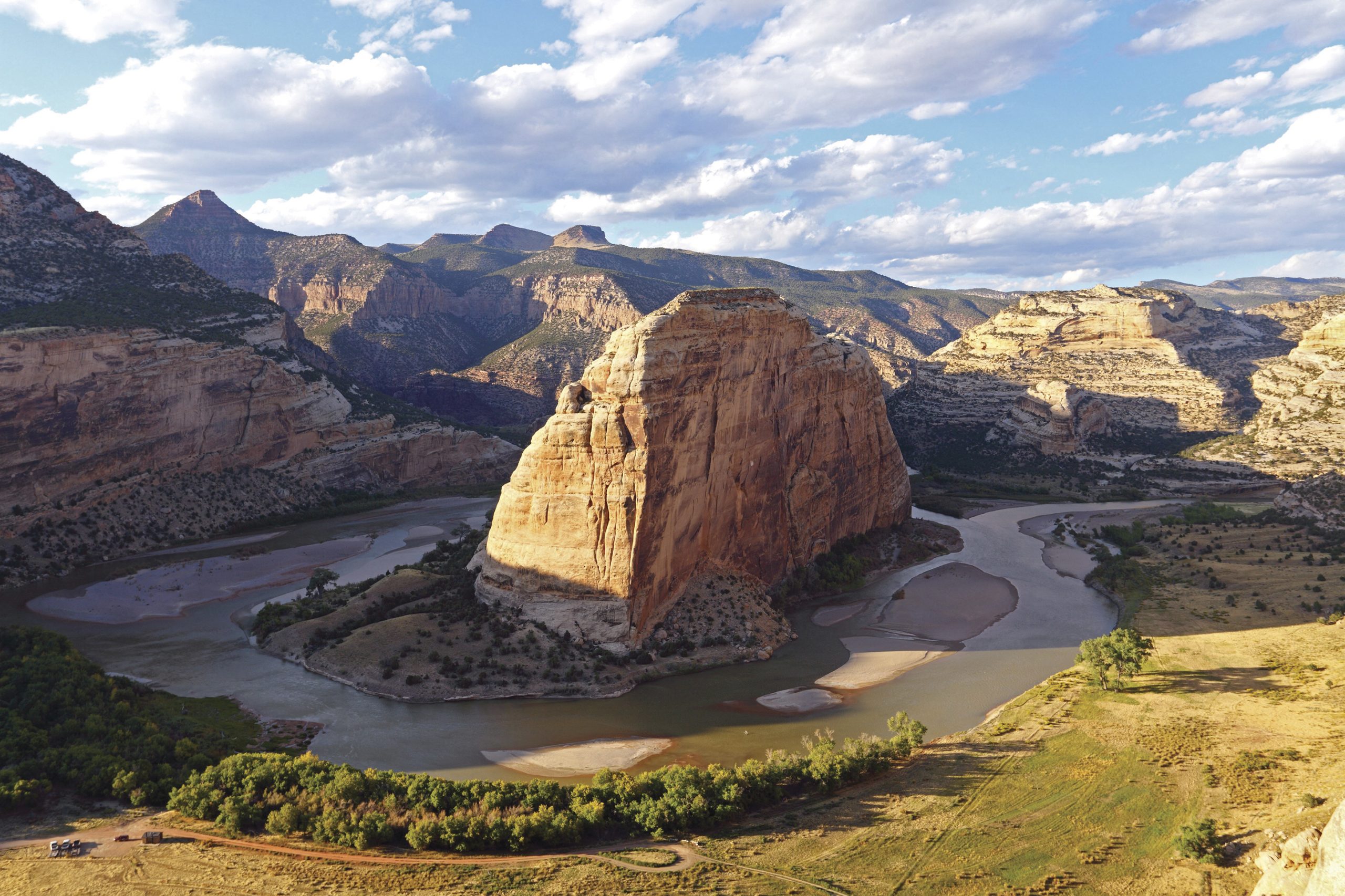
Echo Park with its colossal Steamboat Rock centerpiece marks the trip’s geological opus. Credit: Alamy.
A few drizzly miles later, the clouds part and the sun returns, casting a fleeting rainbow across the canyon before fading into the evening sky.
That night, we settle into camp on a sandy riverside beach beneath a canopy of stars, warming ourselves with bowls of elk chili.
Tomorrow, we’ll continue toward Utah and the takeout point at Split Mountain.
And if we somehow miss it?
Eventually, the Green River joins the Colorado River, and about 800 miles downstream lies the Grand Canyon—just as Powell discovered during his legendary three-month expedition.
We’ll sleep on that.
From our June/July 2026 issue.
For guided trips from the Gates of Lodore on the Green River and numerous other river adventures throughout the West, visit OARS.
PHOTOGRAPHY: (Header image): James Kaiser, courtesy of OARS.