




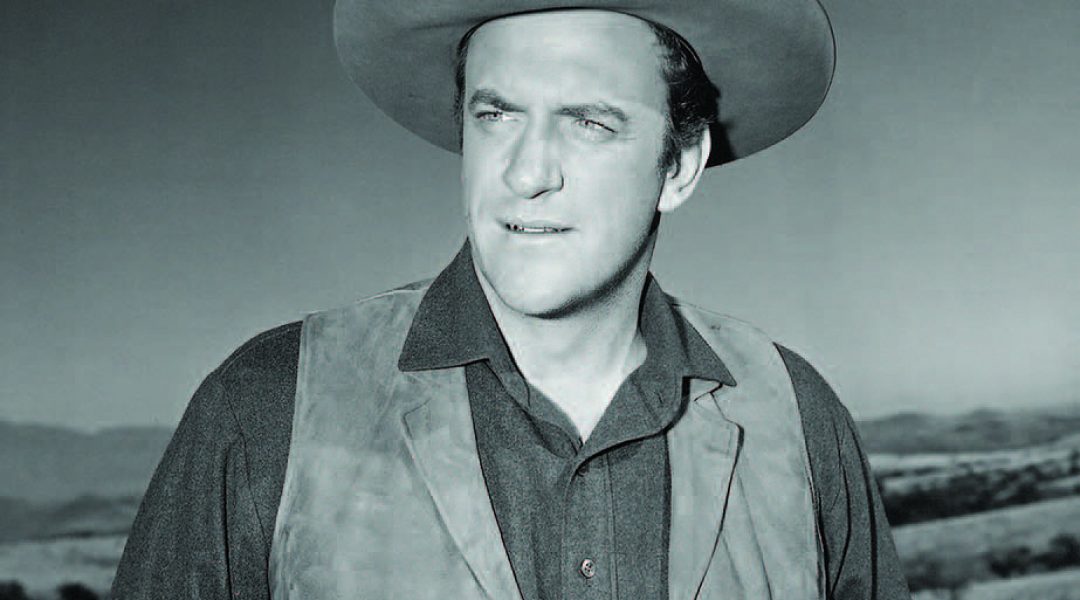
Gunsmoke, Cheyenne, and The Life and Legend of Wyatt Earp still ride tall on cable and streaming channels.
We would be remiss if we let 2025 slip by without celebrating the 70th anniversary of three classic TV westerns: The Life and Legend of Wyatt Earp (which premiered September 6, 1955), Gunsmoke (September 10, 1955), and Cheyenne (September 20, 1955).
All three dramas remain available on various cable and streaming channels — according to the Nielsen number-crunchers, Gunsmoke still routinely ranks in the weekly Top 10 for streamed series — and continue to attract new audiences as well as please longtime fans.
So if you’re looking for something to binge with the entire family during the holiday season — or at any time, really — check out one or more of these enduringly popular shoot-’em-ups.
The Life and Legend of Wyatt Earp (1955-61)
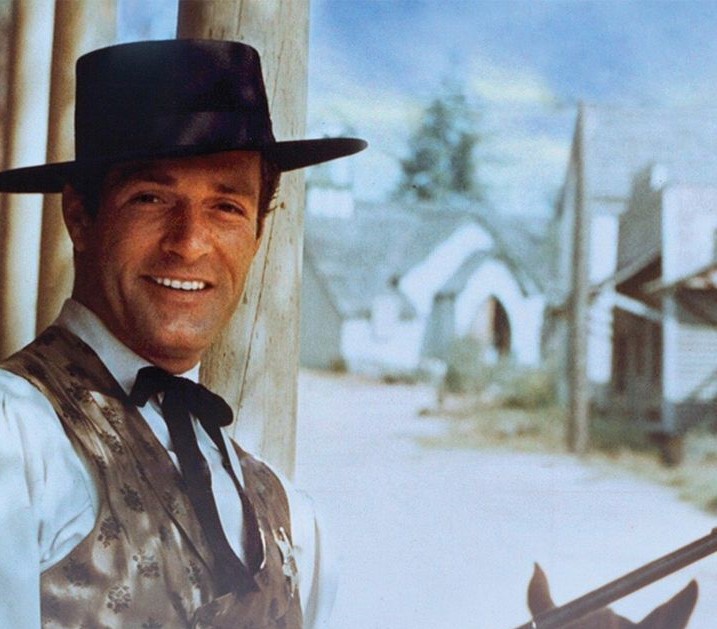
Henry Fonda, Kurt Russell, Burt Lancaster, James Garner and Kevin Costner are among the notables who have worn the badge of Wyatt Earp in movies. But if you’re of a certain age — or a younger western fan raised on reruns — Hugh O’Brian will always be the first actor you associate with the larger-than-life figure. Throughout six seasons of half-hour episodes, O’Brian made an indelible impression as the “brave, courageous and bold” lawman in what is widely recognized as television’s first “adult western.” Given the broadcast standards of the time, however, it was safe for kids to watch, too.
When he was first cast as the legendary lawman, O’Brian recalled in a 2005 interview with the Archive of American Television, “I wanted to be as proficient as possible with the pistol. I practiced and practiced and practiced, about a thousand hours or more, on the quick draw. When we were on the set, they didn't have to cut away [when Earp drew on a rival] — they could stay with me, and all of a sudden [the gun] was out.” Unfortunately, there was a downside to O’Brian’s obsession with authenticity: “The noise from the gunfight scenes ruined my hearing," he told the Los Angeles Times, explaining his eventual reliance on hearing aids.
Gunsmoke (1955-1975)
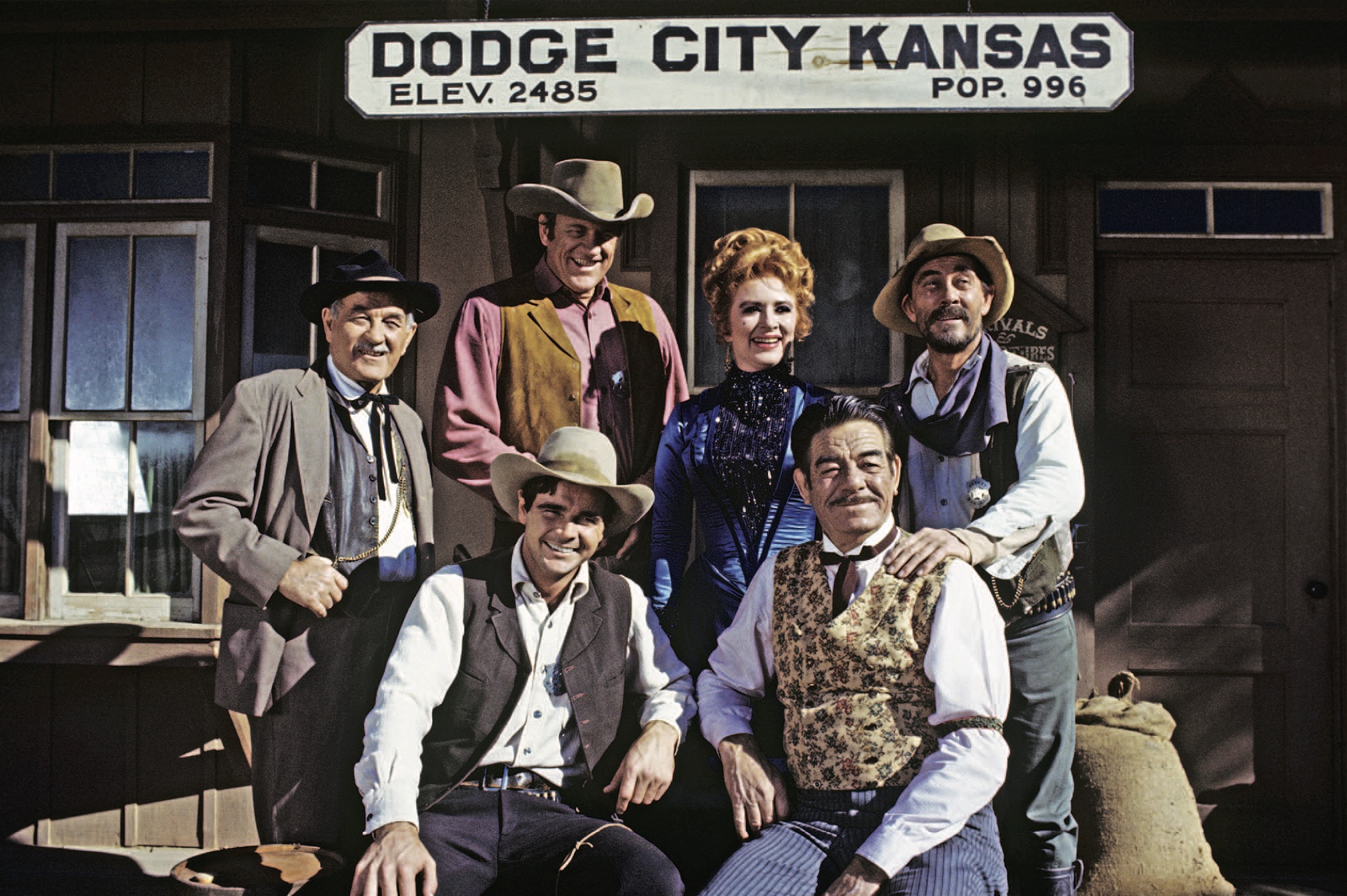
The longest-running western in the history of American television – and, along with Law & Order, Law & Order: Special Victims Unit, and NCIS, one of the longest-running TV dramas of any sort – Gunsmoke almost immediately transformed James Arness into a home-screen superstar for his portrayal of Matt Dillon, the straight-shooting marshal of 1870s Dodge City, Kansas. But Arness wasn’t the only attraction. He was backed by a colorful array of supporting players – most notably, Milburn Stone as the crusty Doc Adams; Amanda Bake as saloon owner (and implied love interest) Miss Kitty; Dennis Weaver and Ken Curtis as, respectively, deputies Chester B. Goode and Festus Haggen; and, for three seasons, Burt Reynolds as half-breed blacksmith Quint Asper.
When the show finally moseyed over to TV’s equivalent of Boot Hill in 1975, Los Angeles Times columnist Cecil Smith noted its cancelation with an eloquent tribute to its high quality and lasting impact: “Gunsmoke was the dramatization of the American epic legend of the old west. Our own Iliad and Odyssey, created from standard elements of the dime novel and the pulp western as romanticized by Buntline, Harte, and Twain. It was ever the stuff of legend.” Sounds right to us.
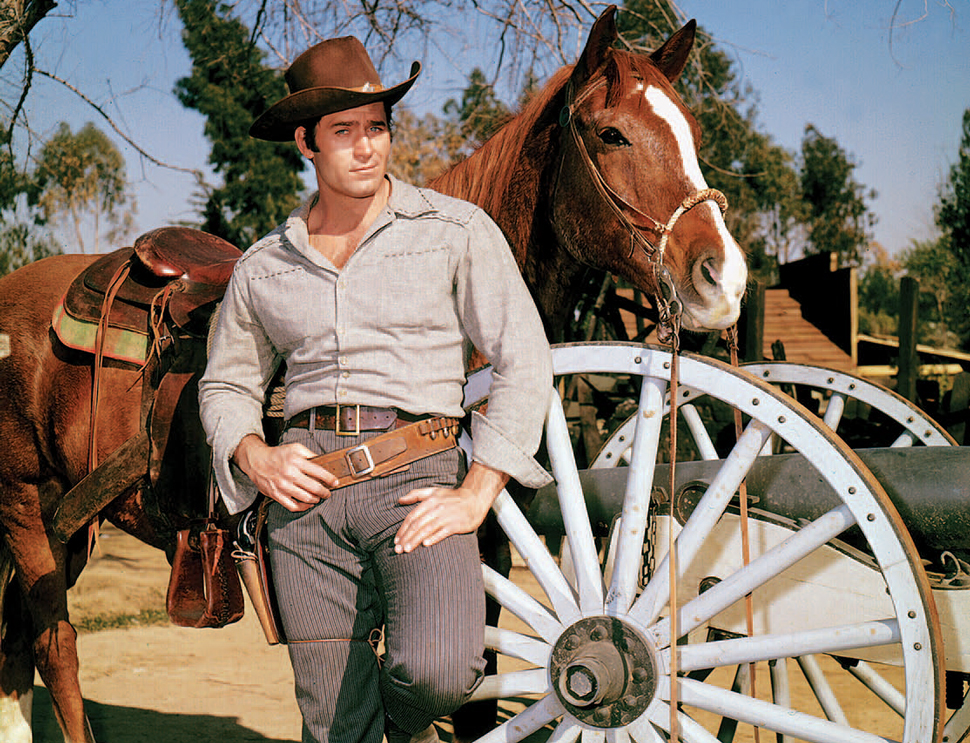
Cheyenne (1955-63)
The first hour-long western in television history — Gunsmoke didn’t expand to 60 minutes until 1961 — Cheyenne showcased the late, great Clint Walker in an irresistibly appealing portrayal of the title character, a broad-shouldered, good-humored cowboy who was raised by Cheyenne Indians, and dedicated himself to doing good while wandering the post-Civil War West. The series remains enormously popular after seven decades, with most episodes coming off as well-cast and intelligently written “mini-westerns” that hold up much better than many sagebrush sagas released in theaters during the same era. Of course, for many viewers — and don’t try to be coy about it — it also helps that Walker takes his shirt off a lot.
“I was blessed by being with Warner Bros.,” Walker told C&I in 2015, “and them being willing to make it an hour-long program. I had a big advantage over the guys that were doing Gunsmoke and some of the others, because they were doing only a half-hour. In a half-hour, you can’t develop your characters adequately. And these characters make your story. Without them, and without sufficient background so people know who and what they are, you don’t get the significance of that individual like you should. We had the time to do that. It makes a far more interesting story.”