



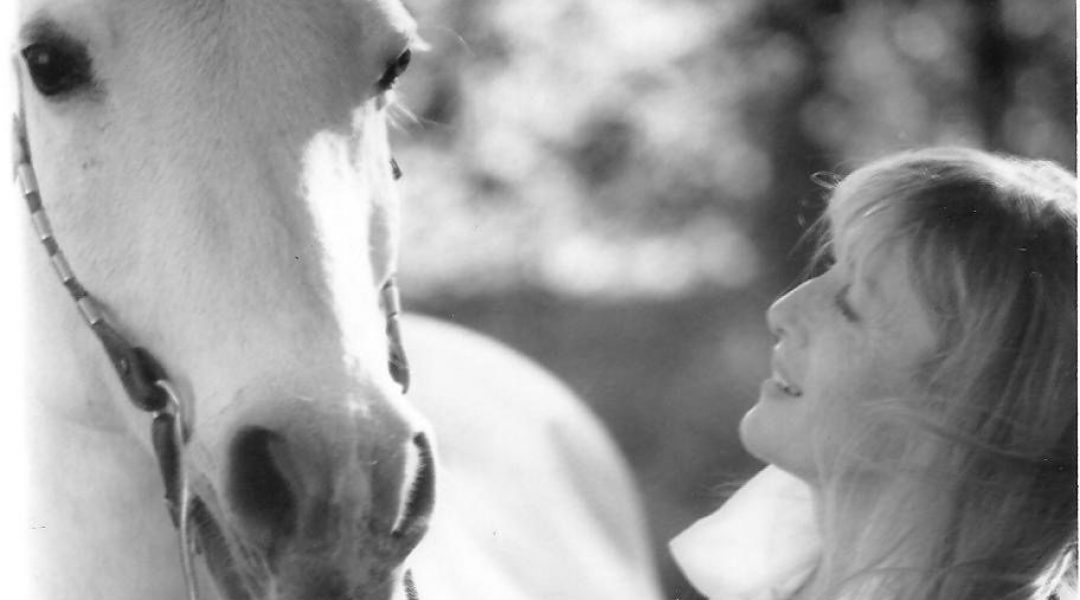
We talk with award-winning author Karin Winegar about her new book that delves into the widespread phenomenon of girls and women loving horses.
Cowboys & Indians: Your new book takes a deep dive into the widespread phenomenon of girls and women loving horses. What’s the scope of female interest and participation in enjoying horses, equestrian activities, and clinics?
Karin Winegar: According to the American Horse Council, some 38 million American households contain a horse enthusiast. Of those, 1.3 percent own a horse, 16 percent participate but don’t own, and 13.2 percent spectate but don’t own or participate. Depending on the source, I learned that females constitute anywhere from 70 to 85 percent of those 38 million. Those are some of the facts; however, I wanted to explore the nature of the love we have for horses, the benefit to us, our psychology and the effects horses have on us whether we have one or not.
C&I: Who are some of the experts featured in Horse Lovers?
Winegar: My adventure resulted in lots of punchy and candid thoughts from psychologists, psychiatrists, cowgirls, veterinarians, cultural anthropologists, endurance riders, saddlery owners, masters of foxhounds, horse rescuers, wild-horse advocates, novelists, filmmakers, scientists, poets, horse trainers, breeders, and competition riders. And, of course, little girls and big girls.
C&I: As a rider and journalist, were you able to combine in-saddle time with your work investigating female horse craziness?
Winegar: Regularly! I did a week of The Western Challenge, riding with Lynn Lloyd, her hounds, and dozens of women at her Red Rock Ranch. In Scotland I took part in the Common Riding, a 500-year-old tradition only fairly recently open to women. Women from Europe and America met and stayed in a historic hunting lodge and enjoyed days of fast riding over the hills and on the beach. I rode with the Blue Ridge Hunt in Virginia, jumping fences and splashing through creeks. And I went up in the Pryor Mountain Range watching mustangs with PBS filmmaker Ginger Kathrens who documents wild-horse families.
C&I: We know quite a lot about how dogs and humans have been partners for centuries. How does our partnership with and care for horses show up in this book?
Winegar: Today, women far and away dominate in the practice of equine medicine. Women constitute the bulk of rescue organizations getting equines out of the slaughter pipeline. And 97 percent of students majoring in the new discipline of anthrozoology are female. As a founder of that study, Dr. Anne Perkins, put it: “Horses and women are completely intertwined.”


C&I: How do women enjoy and benefit from horses if they don’t ride?
Winegar: Many women are taking up driving for both recreation and competition. I was lucky enough to stay with the late Gloria Austin in Weirsdale, Florida, at her ranch, where she teaches driving single, pairs, and four-in-hand. She has written books about driving and has a fabulous collection of vehicles ranging from genuine Conestoga wagons and stagecoaches to a state carriage once belonging to the emperor of Austria.
C&I: Is the boom in riding clinics, master classes, and riding vacations an expression of the female need to be on horseback? What do they enjoy that keeps them coming back?
Winegar: I was recently on Cowboy Up, a podcast from the White Stallion Ranch in Arizona with owner Russell True. He credits the success of his business to groups of women taking riding vacations. We experience freedom, large and small thrills, closeness and bonding to a horse, and find new friends. It also gives us a sense of competence to learn to ride or to improve skills with our own horse or the ranch horse.
C&I: What do art and science say about the attraction girls and women have to horses?
Winegar: Dr. Elizabeth Lawrence, a veterinarian and cultural anthropologist, studied it for years. She told me, “Something in females, something about the essence of femininity, is answering and interacting strongly with a horse.” And in her images of cowgirls and horses, renowned Texas artist Donna Howell-Sickles, who did the cover of Horse Lovers, portrays joyous images of horses inspiring women with self-reliance, fun, competence, and courage.

Find out more about Karin Winegar and Horse Lovers at horsefeedpress.com.
Winegar will be one of the keynote speakers at A New Vision in Horsemanship: The Partnership Between Horse & Human in Missoula, Montana, September 11–14. Keynotes also include Dr. Temple Grandin on “Animals, Autism and Emotions”; Rupert Isaacson, well-known for The Horse Boy book, film and horsemanship program; Dr. Rebecca Bailey, an early pioneer in animal-assisted therapy; the Native American Humane Society’s Dr. Michael Yellowbird and a number of other leaders in the equine and animal welfare, science, research, and horsemanship realm.
PHOTOGRAPHY: Courtesy of Judy Olausen and Karin Winegar