



A crash course in backstage production taught our correspondent that setting the stage is equal parts muscle, teamwork and organized chaos.
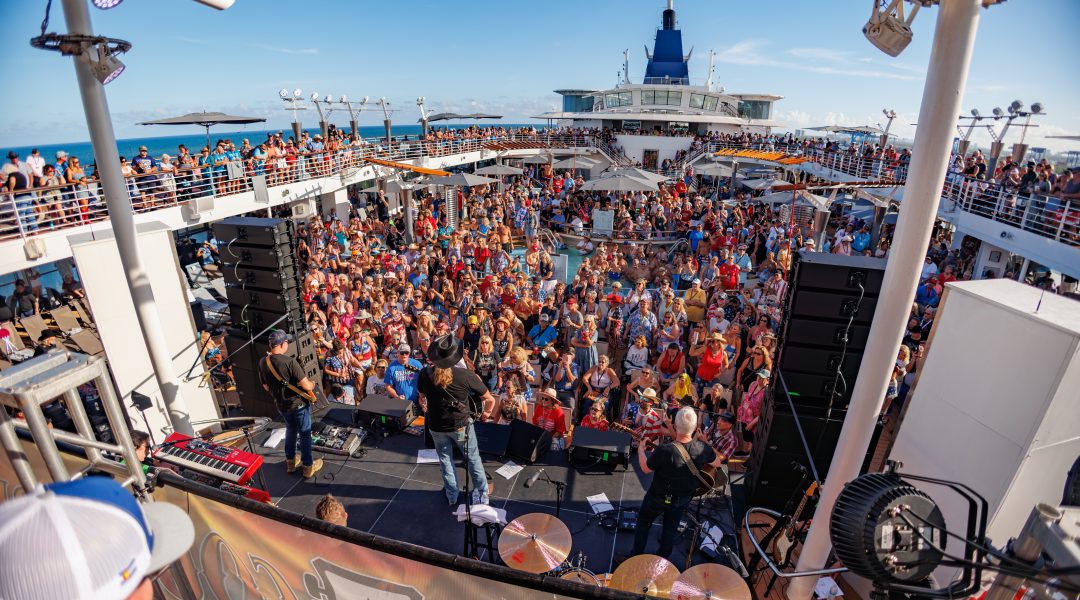
It’s probably organized chaos for everyone else. But for me, working as a roadie before a couple country music shows, it’s just chaos. The stage is small and fall-off-able. I bump into the drums and a riser and lighting techs, sound techs, stage managers, etc. “It’s a lot of cooks, for sure, and every cook has their own thing they’re doing,” says Dane Hagen, the stage manager and my boss for now.
I know that the frenetic dash to set up the stage is not the time for me to ask 10,000 questions as I usually do on these Working the West assignments, when I perform uniquely western jobs. We’re on deadline to get one band’s gear off the stage and Canaan Smith’s on to it. Still, old habits die hard, and when someone tells me to grab a cymbal case, I instinctively blurt out, “what’s a cymbal case?”
I don’t know why I ask that. Surely I could have figured out on my own that a cymbal case is a case in the shape of a cymbal, right? I find one leaning against a box. I carry it up the stairs and to the drum set where somebody else does something with it — put a cymbal in, or more likely, take one out, I don’t know, that’s not my job as a roadie.
I probably shouldn’t even call myself that. The term roadie has fallen out of fashion in the music industry. It’s like calling someone who performs menial tasks a grunt. The job that used to fall broadly under roadie is now a whole bunch of different jobs, most of them specialized. Lighting tech, sound tech, drum tech … I could have asked the big boss — production manager Joey Fairchild—to let me work as one of those, but the answers would have been no, no and no.
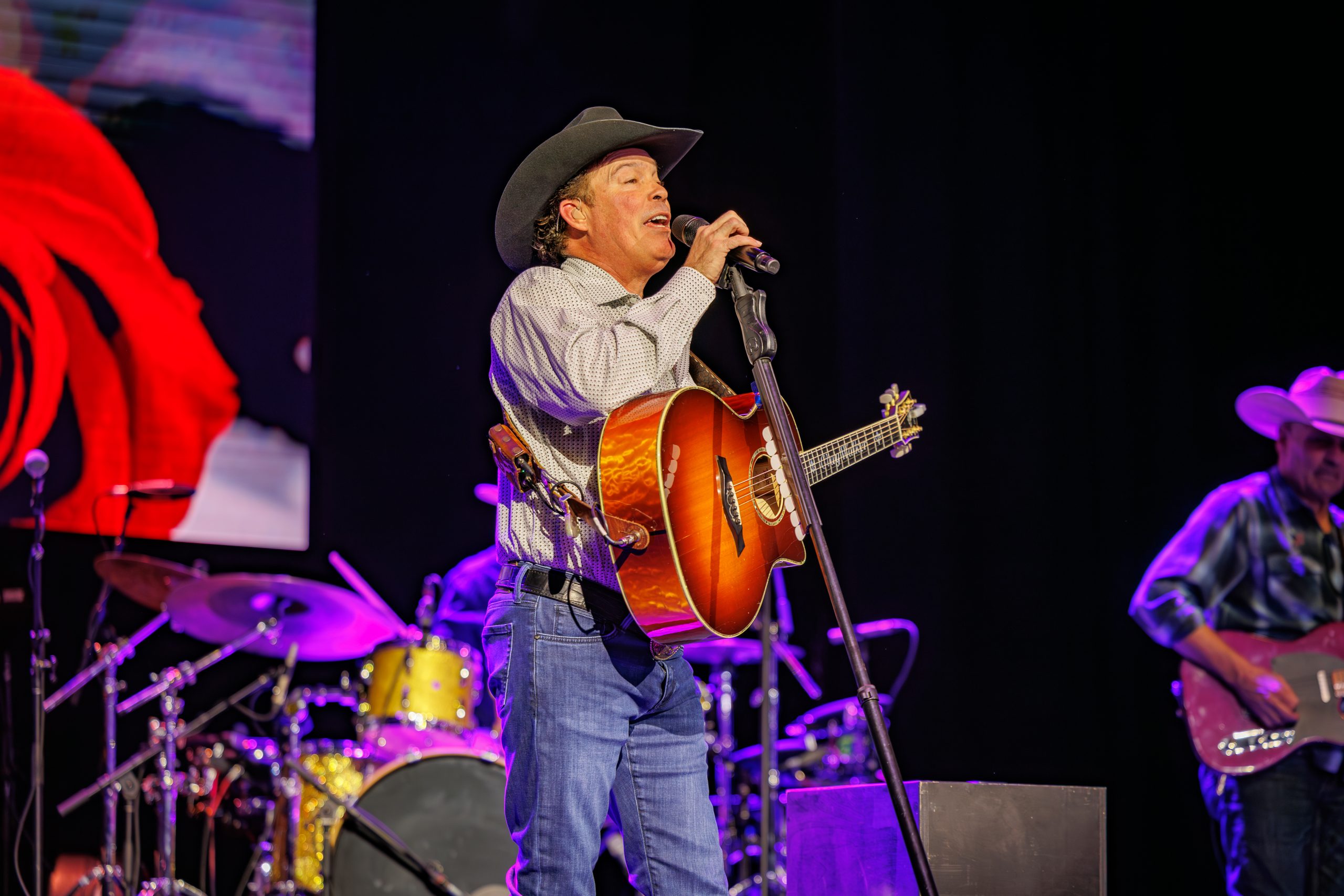
Those are too complicated to learn in a day. So I just do (ahem) grunt work – carry stuff, pile stuff, roll stuff and in my grand finale, I carry a guitar across the stage during a live performance by the band LOCASH and hand it to Preston Brust, half of the LOCASH duo.
But I have to earn that stripe; it’ll be like an encore after what I do right now. I hustle across the stage, grab a thing, turn around and hustle back down the stairs, put it among all the other things.
Then I do that again.
And again.
And again.
I make a Tetris pile of guitars and basses and fiddles, plus a guitar stand and even a throw rug. These shows take place on a cruise ship that is hosting Country Cruising, which featured 1,700 country music fans and 30-plus performers who gave more than 70 performances while sailing from Fort Lauderdale to Key West to the Bahamas and back. The unique setting adds the complication of making sure the wheels on the boxes are locked, or the boxes are placed wheels up, so they don’t roll away when the ship heaves.
My instructions are once we’re done with the stage, I’ll carry all the stuff in the pile downstairs, from the 10th floor to the 3rd, and drop it off in a storage office on the other side of the boat.
I’ve never been so grateful for elevators.
By now I’m sweaty. Hagen tells me to fold towels, put one on stage for Smith and each of his band members, and place a bottled water on top of each towel. I start to ask a question – here I go again! – and Hagen jokingly bites my head off.
He’s playing up the stereotype of the deadline stress involved in this work, but in the real world he tries very hard to be the opposite of that. He would never work harder for someone who chews him out, so he’s not going to chew anybody else out.

Good to know, and yet the totality of the work sounds unenviable — physical labor, technical know-how and deadline pressure to say nothing of the fact that once you’re done, your work is in full view of the public. If you screw up, everybody knows (though they might not know it was you).
When I ask Fairchild about stress, he shrugs it off. “It’s the greatest job there is,” he says. “You can have your worst day ever. And when the house lights go out, and you hear the roar of the audience, it all makes it worthwhile.”
By the time I’m ready to take all that gear downstairs, almost all of it is gone. I throw the throw rug over my shoulder and carry the guitar stand like a folding chair.
An hour later I’m in a theater helping to build the stage before a LOCASH show. Now I have a new boss – Lyle Kuhner, the stage manager for the theater.
“Do you want to stack a four-twelve guitar amp?” Kuhner asks, and when I look it up later I learn I should write that as 4 X 12.
“Sure,” I say. “Show me what one is.”
Not to brag, but that wasn’t a question! I’m learning! We roll the 4 X 12 amp from backstage to the stage. Lyle shows me a picture on his phone of what he wants the stage to look like and where this amp will go. It belongs on the drum riser, which is waist high. I don’t want to lift the 4 X 12 amp that high, and thankfully, I don’t have to.
I had no idea you could lift and lower drum risers with a push of a button; that’s what someone does BEFORE we put the heavy stuff on it.
That saves our backs from having to lift any number of heavy things.

Eventually the stage looks pretty close to the photo Kuhner showed me.
I hang out backstage before and during the LOCASH show. I have one more job to do: bring Brust a guitar.
I walk out, holding the strap out wide with one hand and the neck of the guitar in the other, so he can slide into it, like a costume change. During the handoff, he looks me straight in the eye—dude looked right into my soul!—which I was not ready for.
“Do you know what to do?” he asks, a question I was also not ready for.
Do?
I already did it! I handed you the guitar!
“Nope,” I say, and then I remember that I actually do know what to do because I saw someone else do it earlier.
I put my hands together in front of me, fingers pointed up.
He does the same.
We bow to each other.
Country Cruising 2027 sails April 11, 2027–April 18, 2027, departing Tampa, Florida, with stops in Cozumel, Mexico; Belize City, Belize; and Costa Maya, Mexico. Headliners include Randy Travis’ More Life Tour, James Dupré, and Craig Morgan. Double-occupancy rates start at $1,599 per person.
PHOTOGRAPHY: (All images) Nick Taveras / NTP Photography.