



The curated Santa Fe affair combined Native artistry, style, music, food, and more.
For 104 years, the Southwestern Association For Indian Arts (SWAIA) has been shining a light on Indigenous design, including its annual Native Fashion Week. Now in its third iteration, the Santa Fe, New Mexico, style extravaganza embraced a highly curated format this year, including a bustling marketplace and a headlining gala aptly dubbed A Taste of Native Fashion taking place at the historic Eldorado Hotel and Spa. Enjoyed by hundreds of style aficionados, the sold-out Saturday night fete engaged all the senses. It combined couture fashion presentations, live musical performances, and inventive cuisine—all important elements of Native culture, courtesy of Native creatives. As the official media partner for the event, C&I was on the scene to take in all the fashionable action, plus we got the exclusive behind-the-scenes scoop from producer Peshawn Bread (Comanche/Kiowa/Cherokee).
As for the gala inspiration, it was modeled after fashion shows of yore put on by couture houses. “When we were developing this event, we went in with the mindset that we were focusing on couture, so this should be more of a fashion showcase, rather than a fashion show,” says Bread, who is a creative director, a filmmaker, and the designer behind House of Sutai. “Sometimes with fashion shows these days, you don’t really get to marvel at the creativity. This format was intended to be very engaging and let people see all the designs and the details up close.”
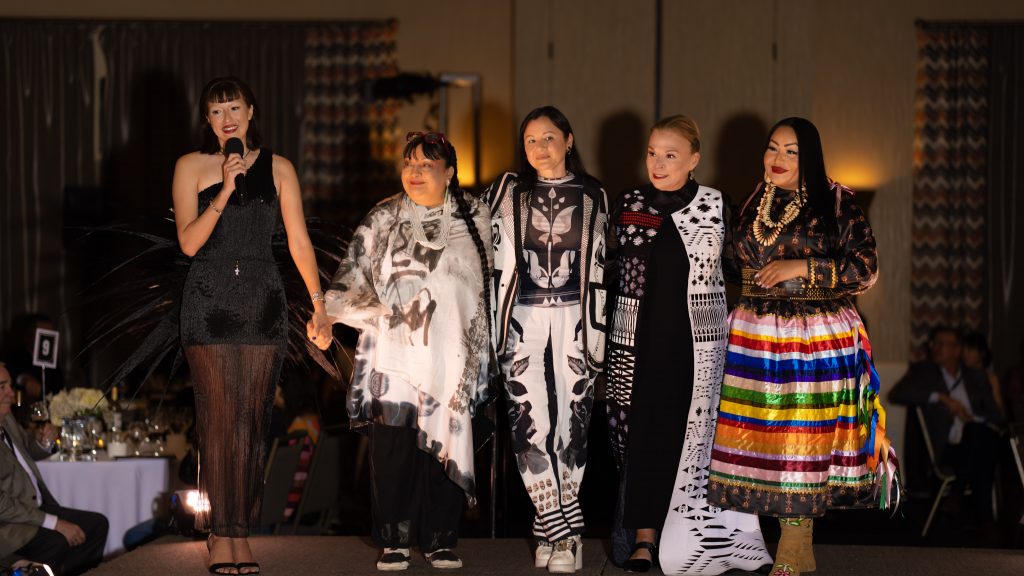
Instead of strutting down a standard runway, models rotated between five platforms peppered throughout the ballroom to give guests a more intimate, immersive experience of never-before-seen garments handcrafted by five renowned Native designers, including Jamie Okuma (Luiseño/Wailaki/Okinawan/Shoshone-Bannock), Patricia Michaels (Taos Pueblo), Jontay Kahm (Plains Cree), Himikalas Pamela Baker (Squamish/Kwakiutl/Tlingit/Haida), and Lauren Good Day (Mandan/Hidatsa/Arikara). Their custom creations underscored the impressive range of Indigenous creative expression.
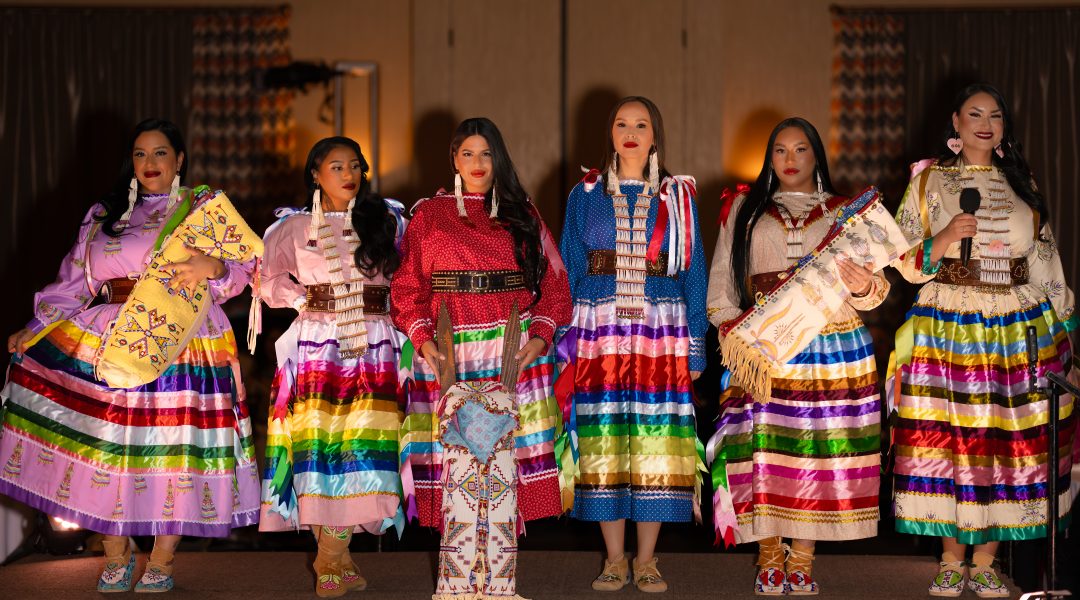
Setting the tone for the evening, Okuma kicked things off with an exploration of feminine materiality, including a scene-stealing lace-up parfleche gown. Michaels’ hand-painted silk dresses took their inspiration from the sacred rhythm of the harvest. Kahm’s technicolor, plumed frocks reflected a return to home and his imaginative childhood dreams. Baker’s structured, statuesque designs honored the bonds between ceremony, land, and lineage. Closing out the show, Good Day celebrated the power of Native matriarchy and motherhood with handmade ribbon skirts and cradle boards.
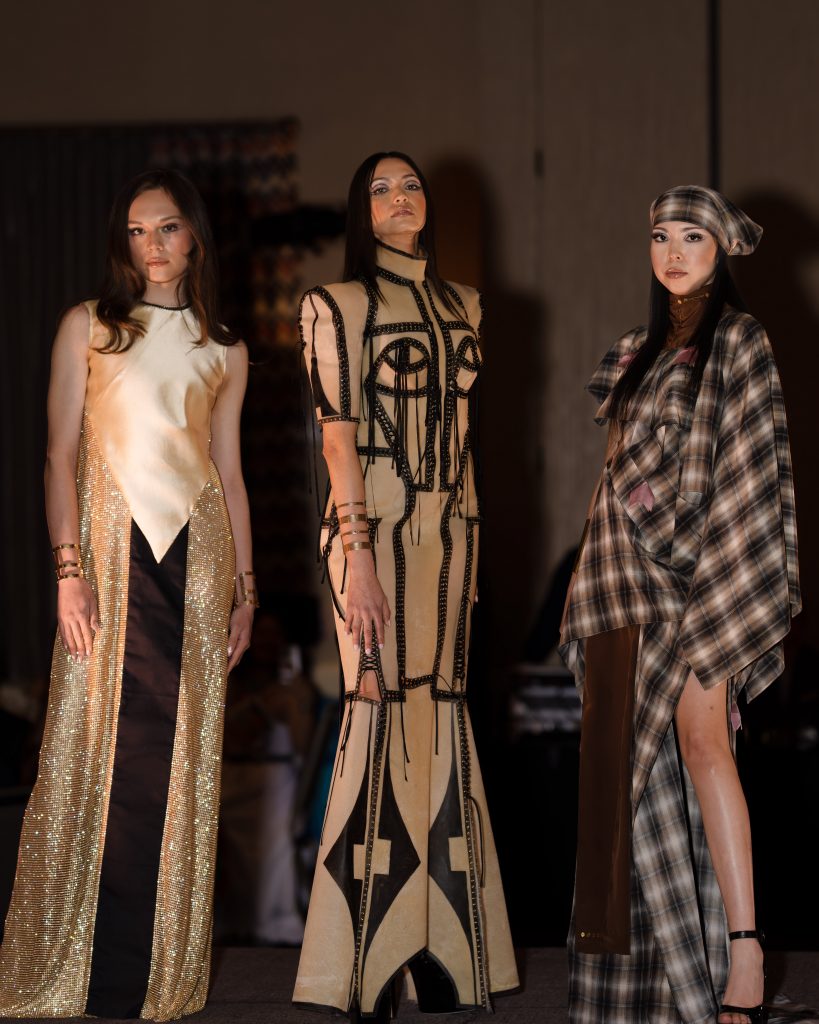
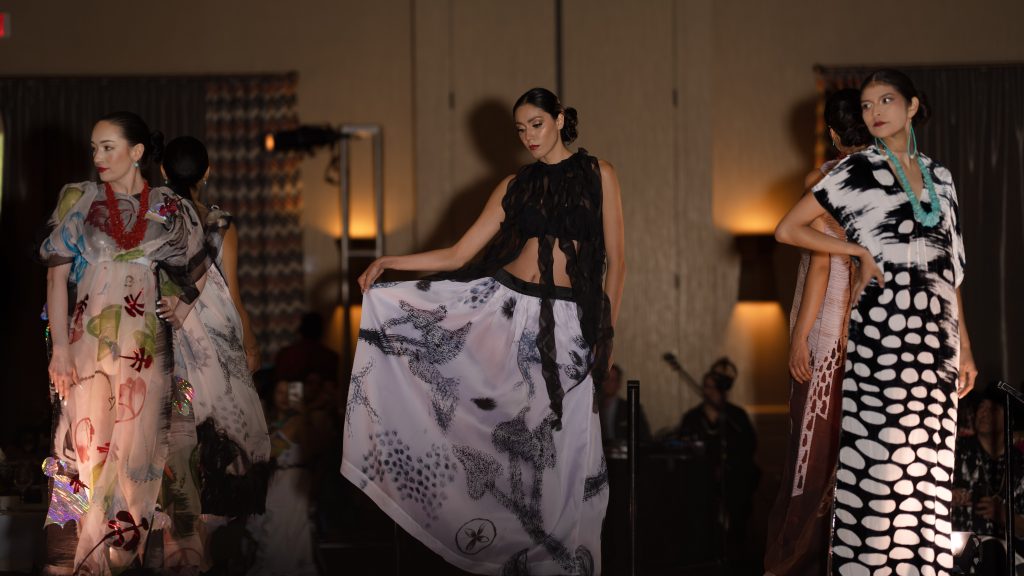
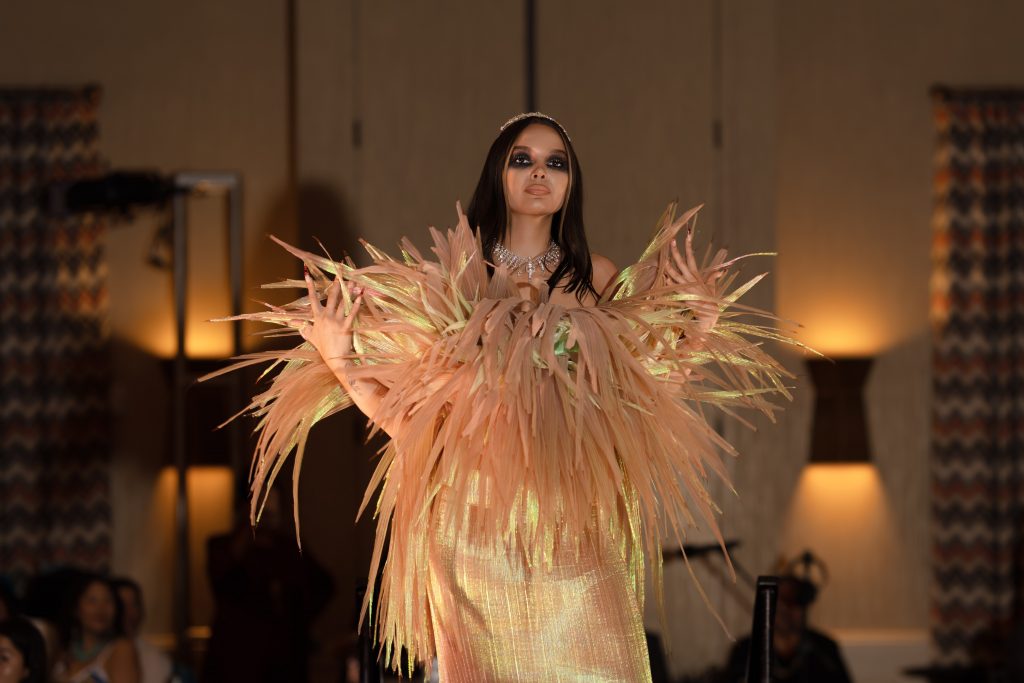
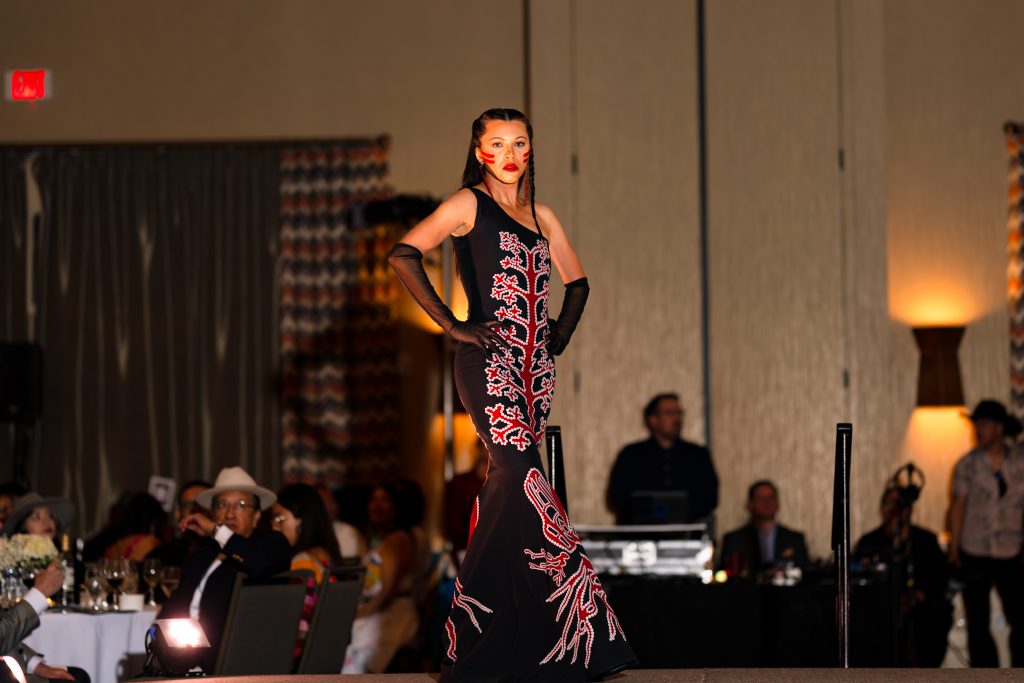
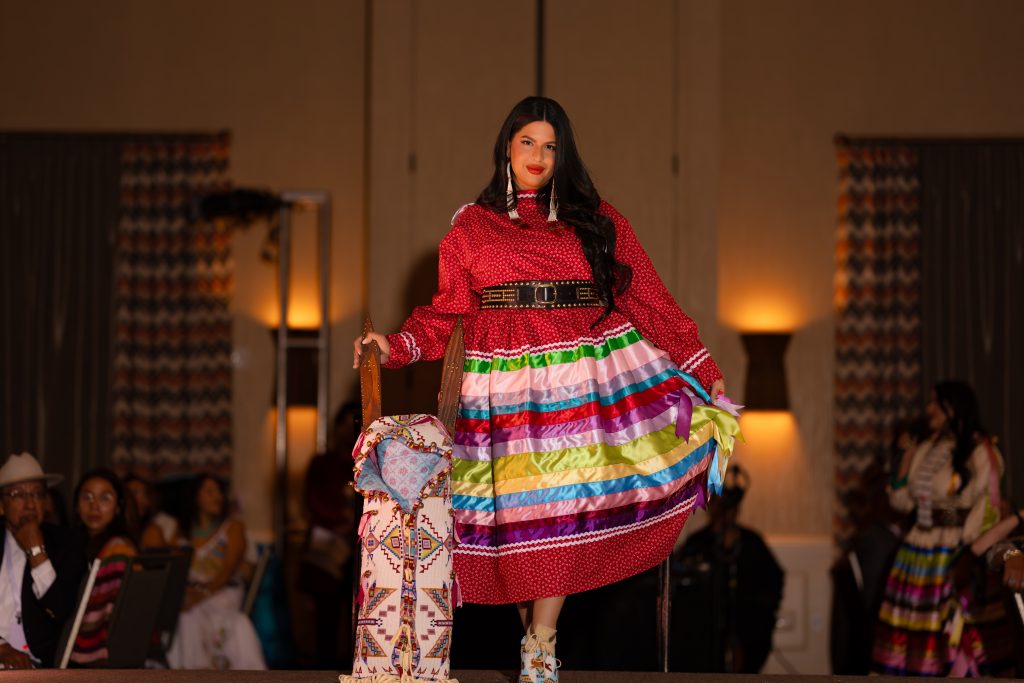
“It’s so important to highlight Indigenous couture, because it’s something we do in our everyday lives,” says Bread. “The fashion industry doesn’t always recognize Indigenous people as couturiers, but it’s very apparent we have designers of that caliber who deserve recognition. Everything we make is with intention.”
Much like the singular styles being showcased, the gala itself was a one-of-a-kind affair. The fashion highlights were complemented by live performances from Native musicians including opera singer Bo Shimmin (Acoma Pueblo), violinist Aspyn Kaskalla (Navajo), and singer Tiana Spotted Thunder (Lakota) as well as lively tunes courtesy of DJ Breakawaay (Picuris Pueblo).

Throughout the evening, guests noshed a three-course dinner from chef Ray Naranjo (Santa Clara Pueblo). He served up delectable dishes including sage sourdough with osha-scented whipped butter; roasted wild plums with spring evergreen shoots; slow-braised buffalo short ribs with roasted acorn squash rings, pine posole, and a bright maple gastrique; and prickly pear cactus crème brûlée for a sweet finale.
Taken altogether, the evening emphasized that Indigenous artistry across all mediums—from fashion to music to food—is thriving. “I hope attendees walked away understanding that Indigenous fashion isn’t just something that walks up and down a runway,” said Bread. “It’s a living, breathing process, and we wanted to show these designs coming to life. I hope that people can see themselves potentially wearing some of these outfits and that they are inspired to support Indigenous creatives, including designers, performers, models, hair stylists and makeup artists, and event producers. We’re everywhere, and we aren’t going anywhere.”
PHOTOGRAPHY: Courtesy Veronica Huerta-Lanza | Viisual Photography
Cover Image: Designs by Lauren Good Day