



A weighty new hardcover book documents and details everything about the treasured Nashville stage of the Opry, and the stories from behind the scenes, from Day 1 back on November 28, 1925.
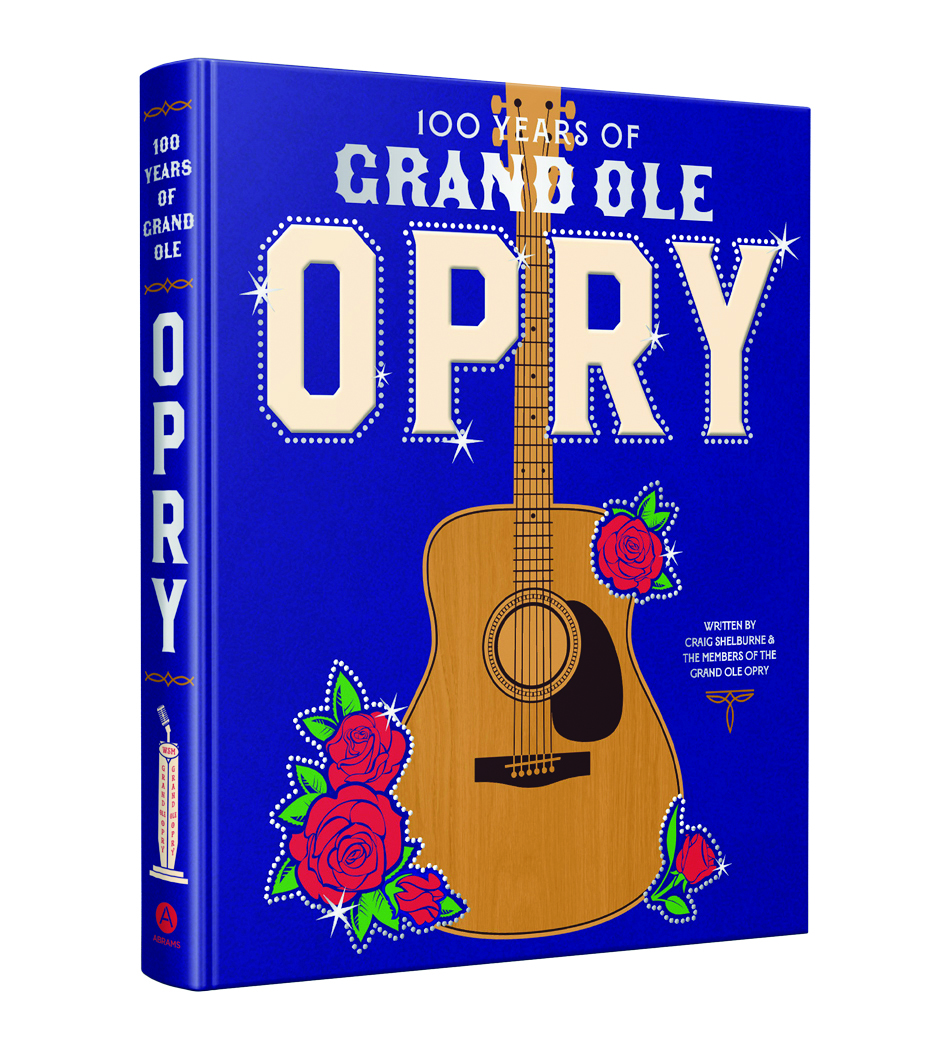
With a history as rich and enduring as the Grand Ole Opry’s, it makes sense that a book about it would be very, very heavy. This one celebrating the centennial of the storied institution — 100 Years of Grand Ole Opry — weighs four pounds. Any less, and it wouldn’t begin to do the Opry justice.
The tome’s 351 pages are packed with carefully archived photos, most of which have never been seen before, along with stories from the more than 60 Opry members who took part in the making of this very special guidepost for country music’s ground zero. And all that it’s become in the century since it began. This book is bound to become a treasure for all country fans and collectors who hold it in their hands.
What started 100 years ago as a radio broadcast is now the longest-running live broadcast show in the world. What the Opry’s always stood for, since its first show in 1925, is a commitment to traditional country from the show’s members who create the music and the fans who tune in and show up in Nashville to watch and hear it live.
From the very first chapter, you’ll hear the untold stories from every era’s most avid supporters. Veteran country music journalist Craig Shelburne — no stranger to the Opry shows himself — dedicated his heart and soul to authoring this book alongside Opry members. He sat down at the venue with dozens of artists, from those who paved the way in the beginning to the ones holding the door open for the next generation. As the Opry explains on its website, “Often, the Opry seeks out those who seek out the Opry.”
Shelburne sought out those who wanted to participate, reminisce, and help chronicle what their own Opry experiences were like. Among those eager volunteers taking part in the book: Garth Brooks, Clint Black, Alan Jackson, Barbara Mandrell, Vince Gill, Bill Anderson, Jeannie Seely, Dolly Parton, Patty Loveless, Marty Stuart, Lorrie Morgan, Reba McEntire, Pam Tillis, Trisha Yearwood, Terri Clark, Dierks Bentley, Josh Turner, Carrie Underwood, Craig Morgan, Ashley McBryde, Blake Shelton, Keith Urban, Darius Rucker, Luke Combs, Carly Pearce, Sara Evans, Scotty McCreery, Lauren Alaina, Connie Smith, Ronnie Milsap, Ricky Skaggs, Lainey Wilson, Trace Adkins, Crystal Gayle, Chris Young, Chris Janson, Kelsea Ballerini, Jamey Johnson, The Oak Ridge Boys, and so many more.
All of their honest assessments of the big feelings they have for this stage and this show they revere so much makes for a big book that’s every bit the treasure that the Grand Ole Opry is itself.
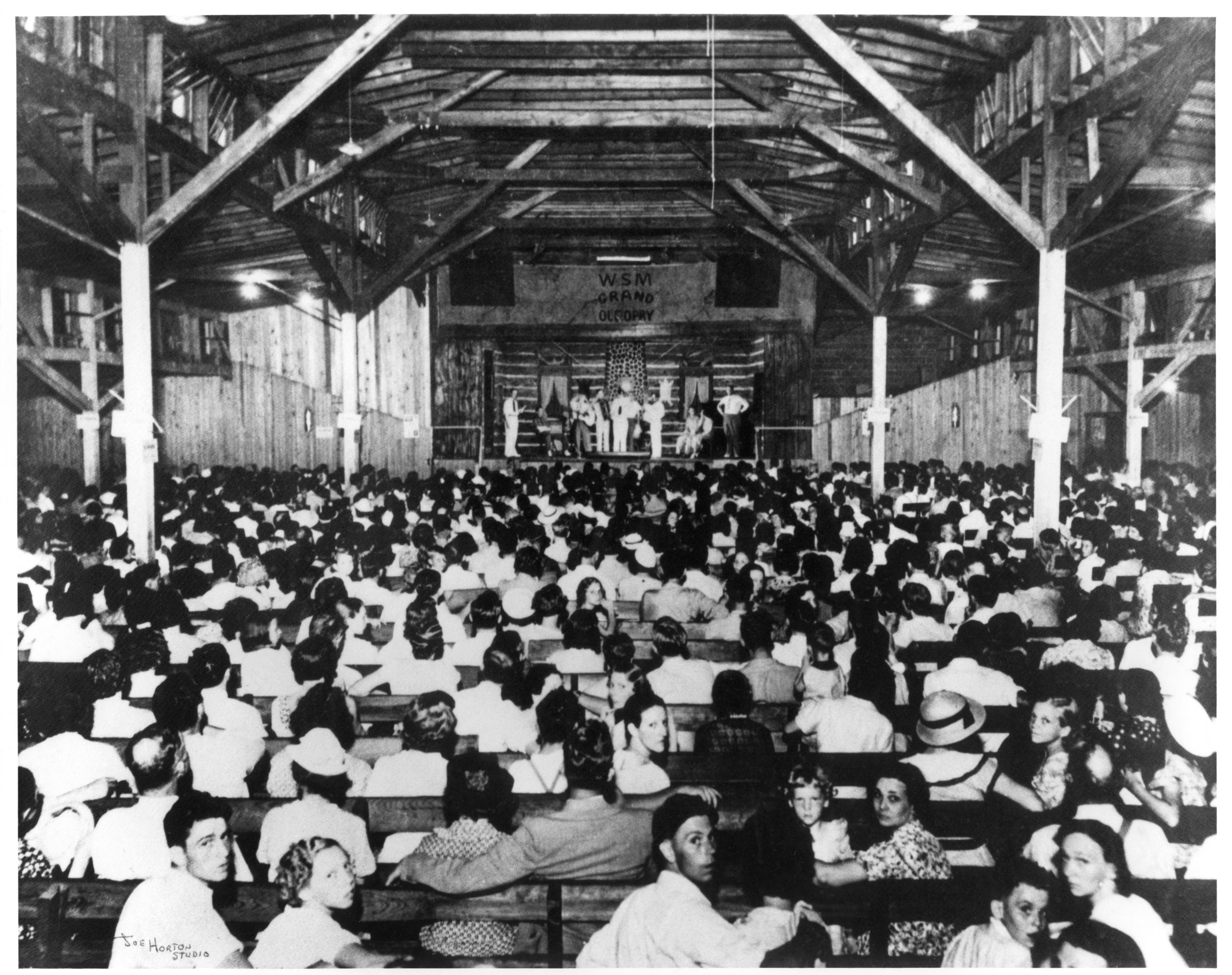
The Grand Ole Opry at Dixie Tabernacle, late 1930s.
Exclusive Excerpt — The New Tradition ushered in from 1990–1999
As a brand-new artist with his first radio hit, Garth Brooks held it together pretty well at his Opry debut on June 24, 1989 — that is, until Johnny Russell came over. After singing “Much Too Young (To Feel This Damn Old),” Brooks stood thunderstruck onstage. “So, this is the Grand Ole Opry?! Yeah, I can handle this,” he said as he scanned the balcony. “It’s very nice. Is anybody out there as scared as I am, by any chance? It would help a lot.”
To conclude his two-song set, he previewed his next single, a philosophical ballad titled “If Tomorrow Never Comes.” Tipping his hat to the audience and heading toward the wings, Brooks spotted Russell, the segment host, beckoning him back to center stage. Russell gently put his arm around Brooks’s shoulders and told him, “Stand out here and enjoy this, son. You’ll remember it for the rest of your life.” As TNN went to commercial, Brooks dissolved into tears.
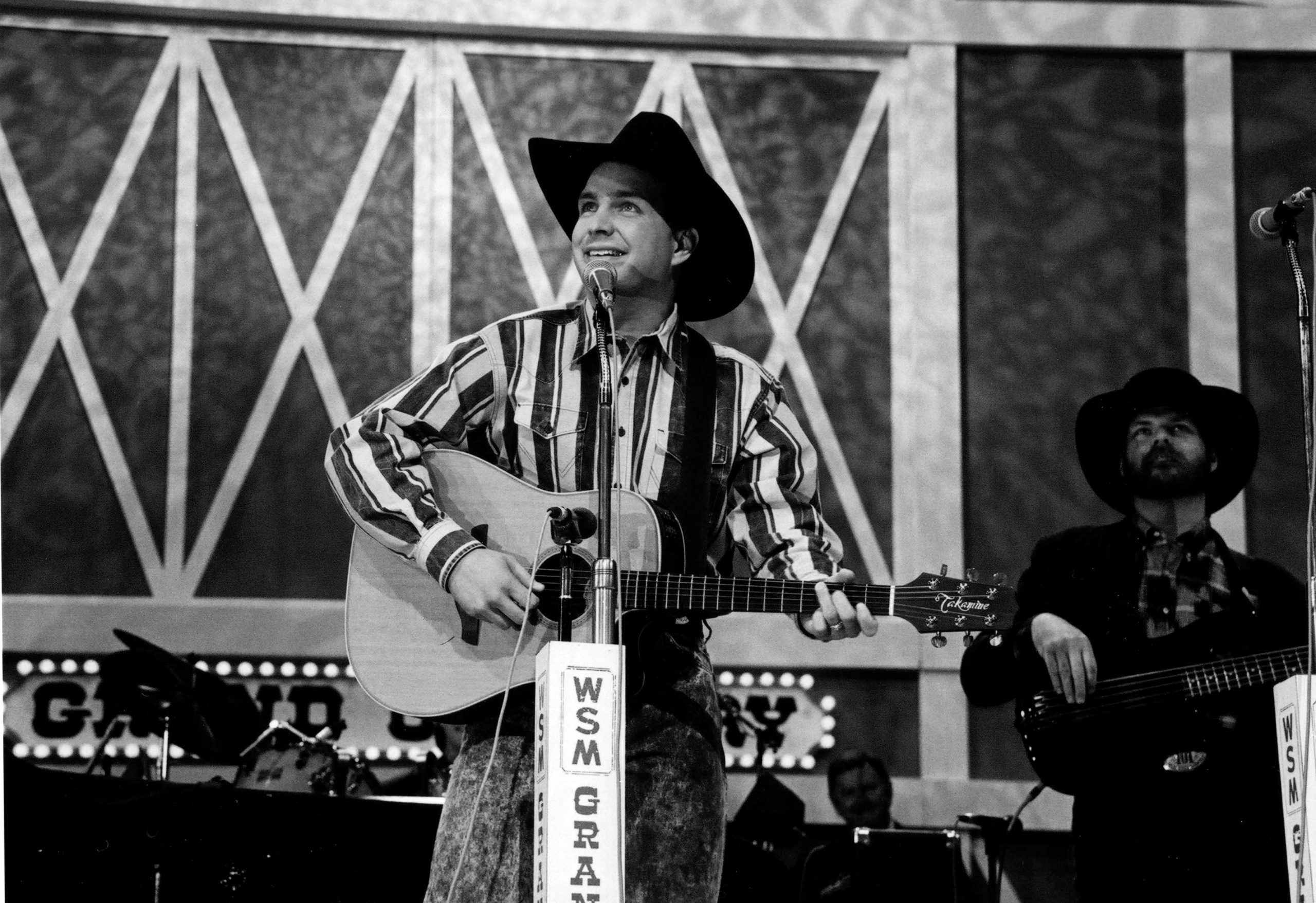
Garth Brooks singing onstage during first night as a regular member of Grand Ole Opry October 6, 1990
“I think a lot of times with fear, if you dig into the ingredients of what makes you scared, one of them might be the realization of what you’re going through,” Brooks said. “You’re on the Grand Ole Opry. The last thing you want to do is embarrass the Grand Ole Opry. Johnny Russell’s out there. He’s talking to me. He’s making me feel welcome.”
Within a year, Brooks was pulling out all the stops on an arena tour, singing songs such as “Not Counting You,” “The Dance,” and “Friends in Low Places.” Undoubtedly the most charismatic entertainer of his generation, Brooks absorbed his audience’s manic energy and radiated it back tenfold. Brooks still made it a point to return to the Opry stage and joined the cast on October 6, 1990, inducted by none other than Johnny Russell. “We all want to take the adventure but we’d all love a guide with us,” Brooks said. “Johnny Russell was mine.”
Brooks could be spotted among the stars singing the gospel song “Turn Your Radio On” during the opening number of the 1991 CBS special The Grand Ole Opry 65th Anniversary Celebration: The New Tradition. Viewers would have quickly noticed Kitty Wells, Earl Scruggs, and Loretta Lynn in the front row, not to mention Roy Acuff, Grandpa Jones, Bill Monroe, and Minnie Pearl. Later in the special, Opry legends including Chet Atkins, Little Jimmy Dickens, and Pee Wee King joined them in a circle to swap stories. Near the end of the two-hour show, Brooks introduced the Opry’s newest member, Clint Black.
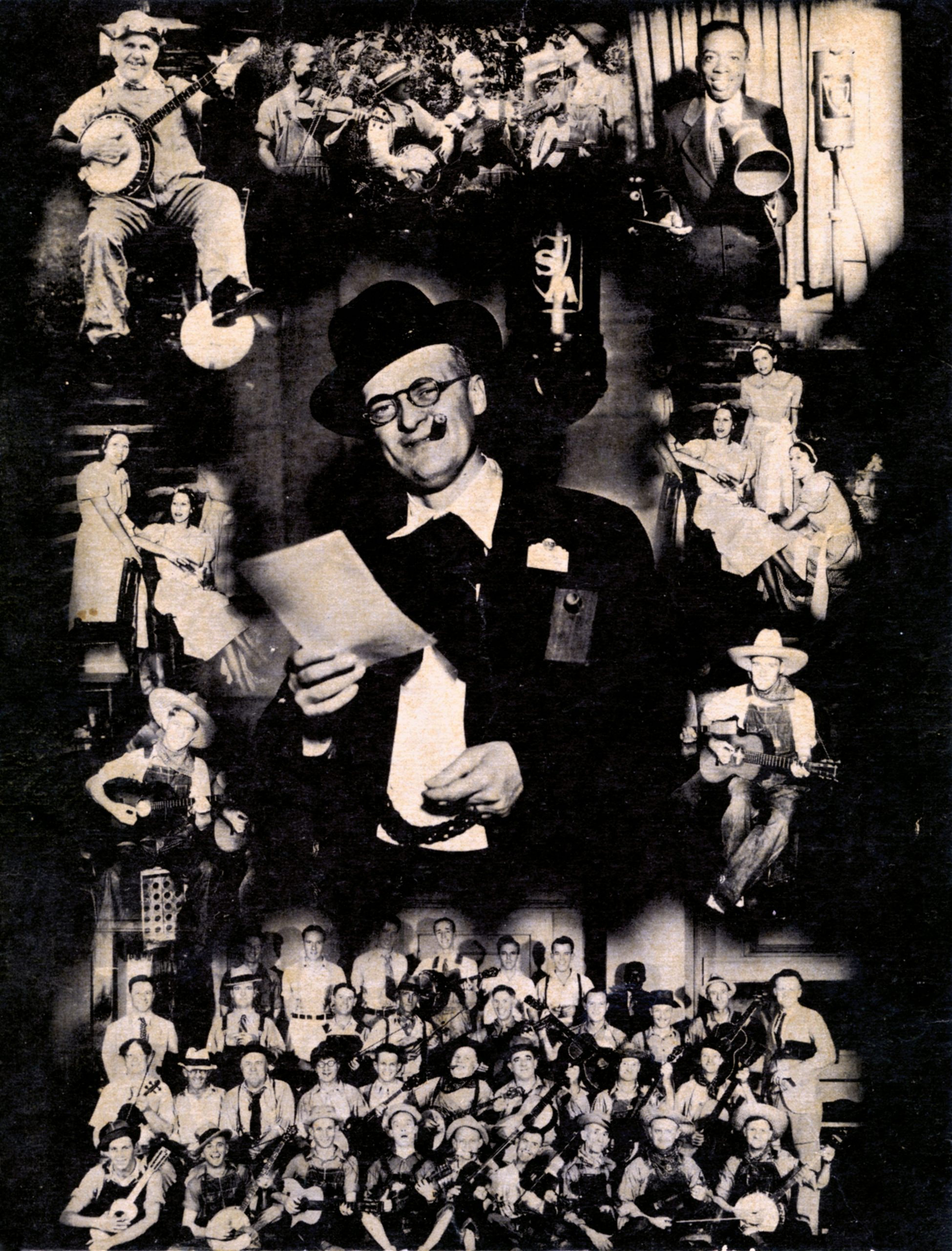
Advertising postcard depicting Grand Ole Opry creator George D. Hay, surrounded by images of early performers, mid-1930s.
Hailing from Houston, Texas, and rooted in traditional country music, Black quickly sold a million copies of his 1989 debut album, Killin’ Time. By the time the anniversary show was taped, the album had yielded four number one hits and sold two million copies. His follow-up album, 1990’s Put Yourself in My Shoes, reached platinum sales in just two months. Because he joined the Opry at the height of his popularity, Black didn’t have much spare time to get acquainted with the cast.
“I got invited to be a part of some small, personal gatherings, but I was gone. My manager and my agent had me on a bus most of the year,” he said. “It wasn’t until I could get my arms around it all and start carving out some time ... but even then it wasn’t much, unless we were all there for an anniversary taping, and then I was just hanging out with them. I clung to them and wanted their stories. But the problem with it back then, and for several years into my career, I was moving too fast to really soak that up as much as I should have.”
Though he was onstage with Black and Brooks for the sixty-fifth anniversary show, Alan Jackson wasn’t yet an Opry member, despite an already established relationship with the Opry staff. In 1985, stage manager Tim Thompson owned a house nearby with a downstairs apartment that had never been used. Jackson, a new employee in the TNN mailroom, had just moved to Nashville to try to make it as a country artist. He noticed an ad for the basement apartment posted in a well-traveled Opry House hallway, and asked if he and his wife, Denise, who was working as a flight attendant, could come by and take a look. Thompson was happy to lease them the space.
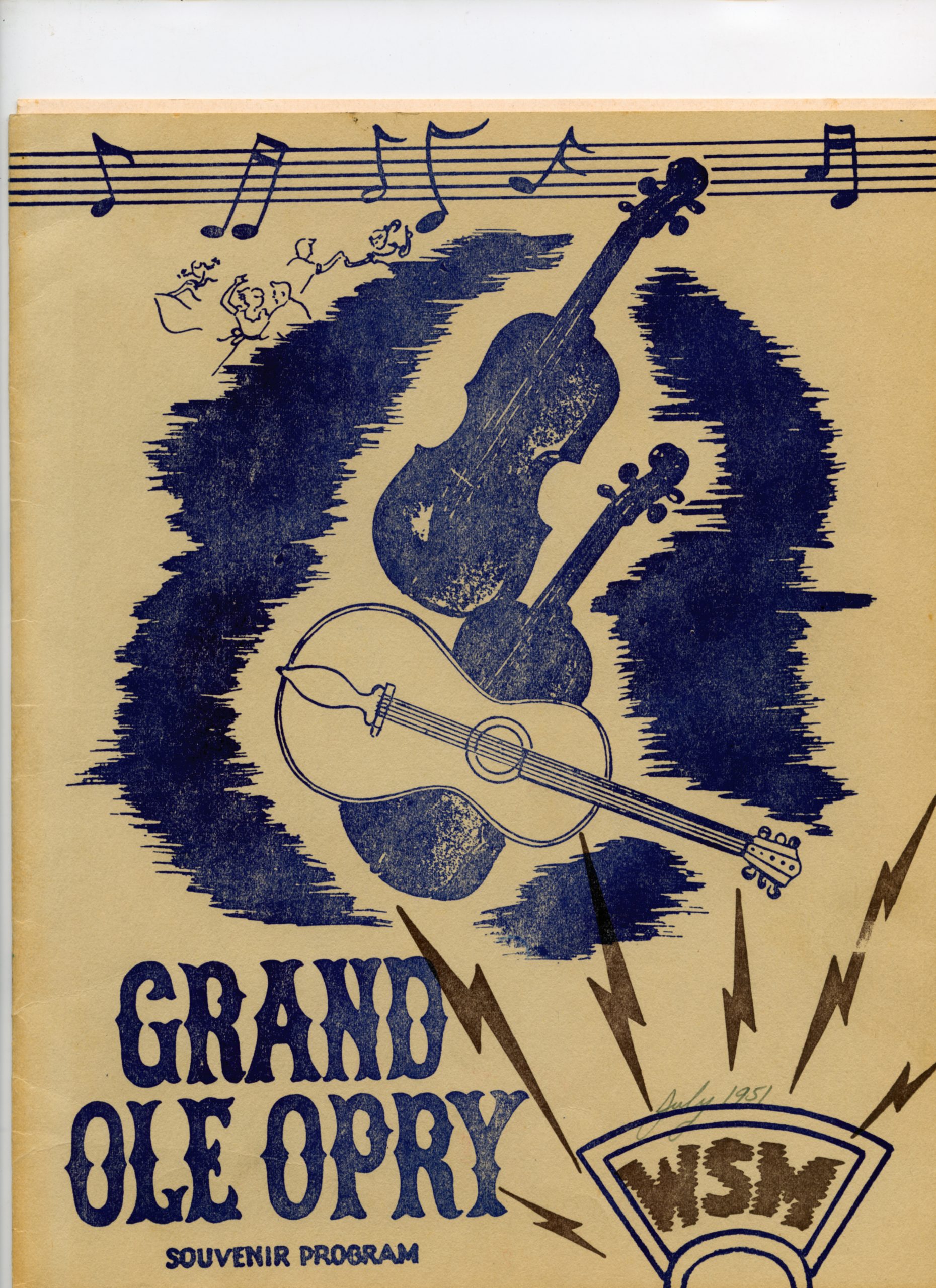
A souvenir program from the 1950s.
“I was proud for him, and I thought he would make it,” Thompson recalled. “I remember trying to go to Mr. Durham in the office back there and saying, ‘Hey, I got a guy you really need to put on.’ And he’d say, ‘What do you know about that guy?’ I said, ‘I’m telling you the guy’s good. He’s a country singer, too.’”
Jackson stayed on at TNN from September 1985 until July 1986, when he earned a song publishing contract; a few years later he signed a record deal. Though his first single failed to catch on, a second release, “Here in the Real World,” fared better, and Durham booked him for an Opry debut on March 3, 1990. “Wanted,” a heartbreak song structured around placing a classified ad, kept his career momentum going. By this time, all the furniture in the Jacksons’ apartment was being moved out to the driveway to accommodate band rehearsals. After that, there was a van with a trailer, then a little motor home with a trailer. Even when their first daughter was born and a tour bus showed up in the driveway, the Jacksons stayed in the apartment until the fall of 1990.
Jackson generally shied away from interviews at the time, but he made his musical intentions clear with his sixth single, “Don’t Rock the Jukebox,” which was on its way to number one when he joined the Opry on June 7, 1991.
“Randy Travis was the host that invited me out, which was very cool because Randy was a big inspiration that sang real country music and opened the door for a lot of artists like me in the mid-to-late eighties,” Jackson said. “When I walked out there, I don’t even remember it. I was so nervous ... I’m standing there with Randy Travis, and Roy Acuff is standing beside me. I’m pretty tall and [Roy] wasn’t that tall. He was just looking up at me, right beside me the whole time I was singing ... I think I was just in shock. It was so crazy and everything was going wild at that time anyway with my career. It was just a big moment and a very cool part of my early days especially. And to have somebody like Roy Acuff there and have that memory forever, that’s very cool.”

Opry memorabilia from the early days.
Reminiscing on that era, Thompson also mentioned Minnie Pearl and her husband, Henry Cannon, who would often sit just behind the curtain and crack his own jokes while Minnie and Roy were onstage. On November 3, 1990, in a show celebrating the fiftieth anniversary of Minnie Pearl’s induction, Thompson had to figure out what to do with a surprise delivery from country singer Dwight Yoakam: fifty bouquets of roses, with a dozen flowers in each one. Thompson retrieved the poinsettia tree used at Christmas and quickly stocked it with six hundred stems. The beautiful gift was wheeled out to the Opry stage for all to enjoy.
Minnie Pearl gave her final public performance the following summer in Joliet, Illinois, as part of a Grand Ole Opry tour. Two days after that June 15, 1991, show, she suffered a stroke and never returned to the Opry. A large photograph of Minnie Pearl, positively beaming in the Opry circle, now hangs in the artist entrance of the Grand Ole Opry House, welcoming every performer and backstage guest.
From our November/December 2025 issue.
Excerpted from the new book 100 Years of Grand Ole Opry: A Celebration of the Artists, the Fans, and the Home of Country Music by Craig Shelburne and the members of the Grand Ole Opry. Text copyright © 2025 OEG HoldCo, LLC dba Opry Entertainment Group. Published by Abrams. Excerpt used by permission.
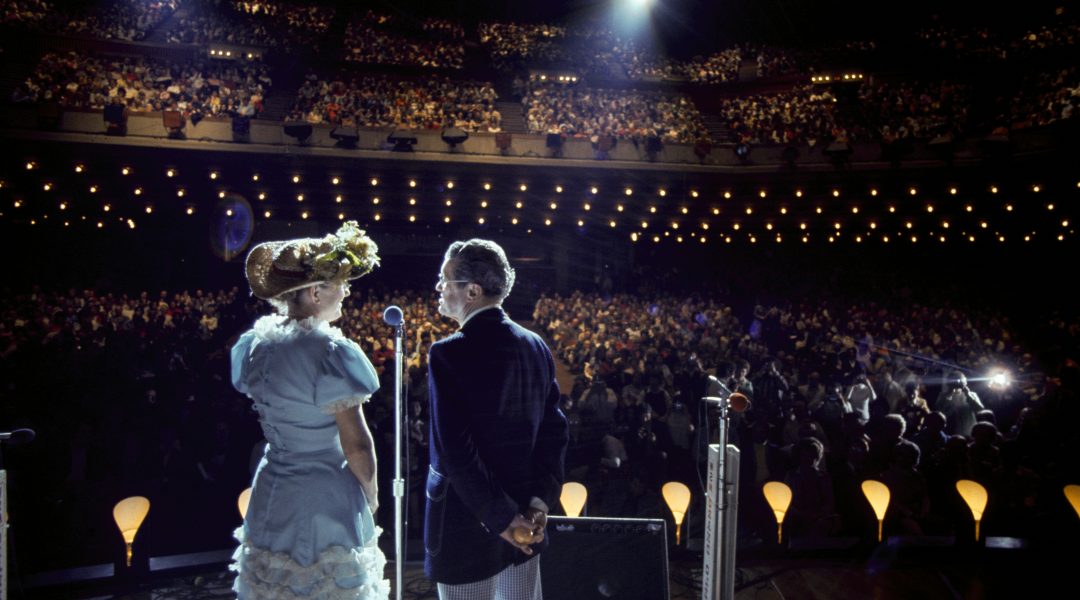
PHOTOGRAPHY (header): Minnie Pearl and Roy Acuff on the new Opry stage, shot from behind. March 16, 1974. Photograph by Jim McGuire