





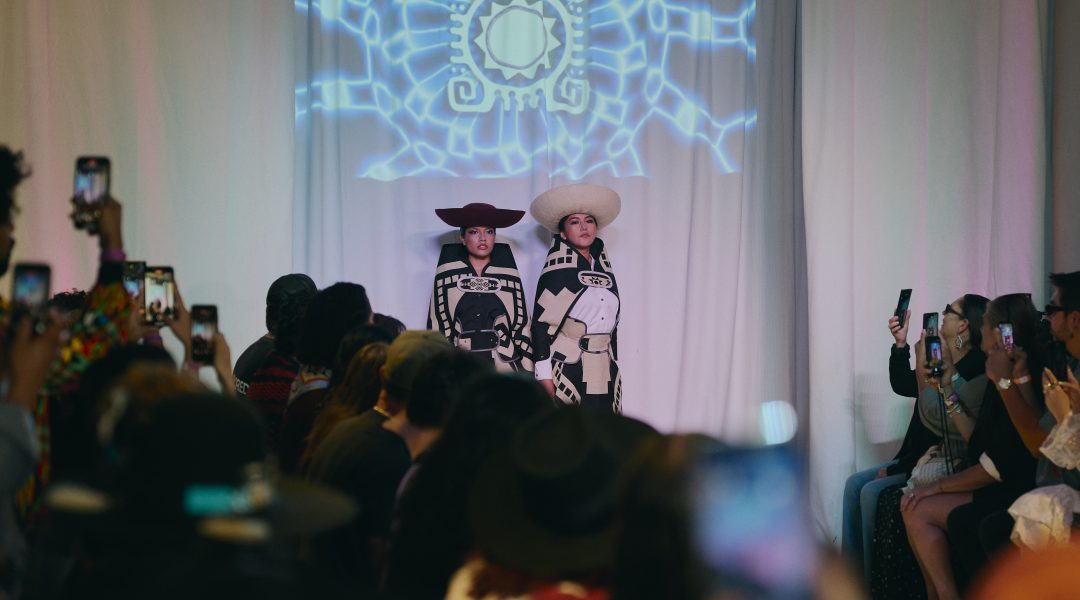
Go behind the scenes with exclusive backstage dispatches from C&I Editor-at-Large Kate Nelson.
Beneath the surface in an East Village event space, excitement was swelling for the inaugural Indigenous New York Fashion Week (INYFW), which took place September 11-15. The unseasonably warm autumn weather made for a sultry setting, but it was the dozens of Native designers, models, hair and makeup artists, production crew, and volunteers who had assembled to partake in this historic event who really brought the heat—and the authentic representation.
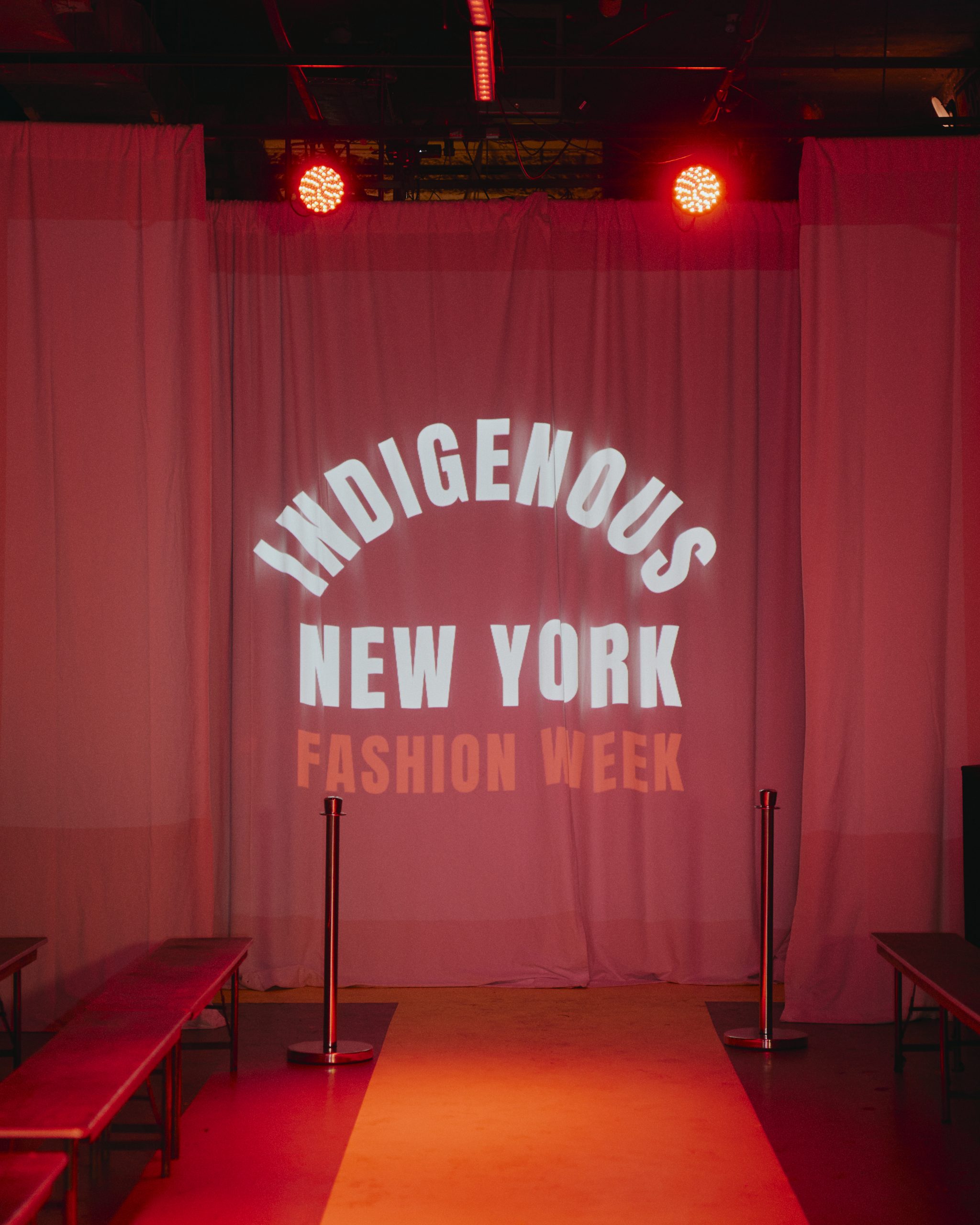 PHOTOGRAPHY: Courtesy Denis Gutierrez-Ogrinc
“Bringing INYFW to life was an exhilarating honor and a huge responsibility,” says event organizer Korina Emmerich (Puyallup), herself a fashion designer and cofounder of Relative Arts NYC, the Native-focused New York City shop that produced INYFW. “I hope it gave people a deeper understanding that Indigenous fashion is not rooted in the past—it’s living and evolving. The work of every designer carries ancestral memory while pushing boundaries in contemporary design. Our stories are not just relevant but essential to shaping the future of fashion.”
I was there to witness every moment of this first-of-its-kind fashionable affair, and it was apparent from the minute I arrived for my first model fitting that we were a part of something special. Here are the top five takeaways from my time at INYFW.
1. Jewelry is a crucial component of Native style
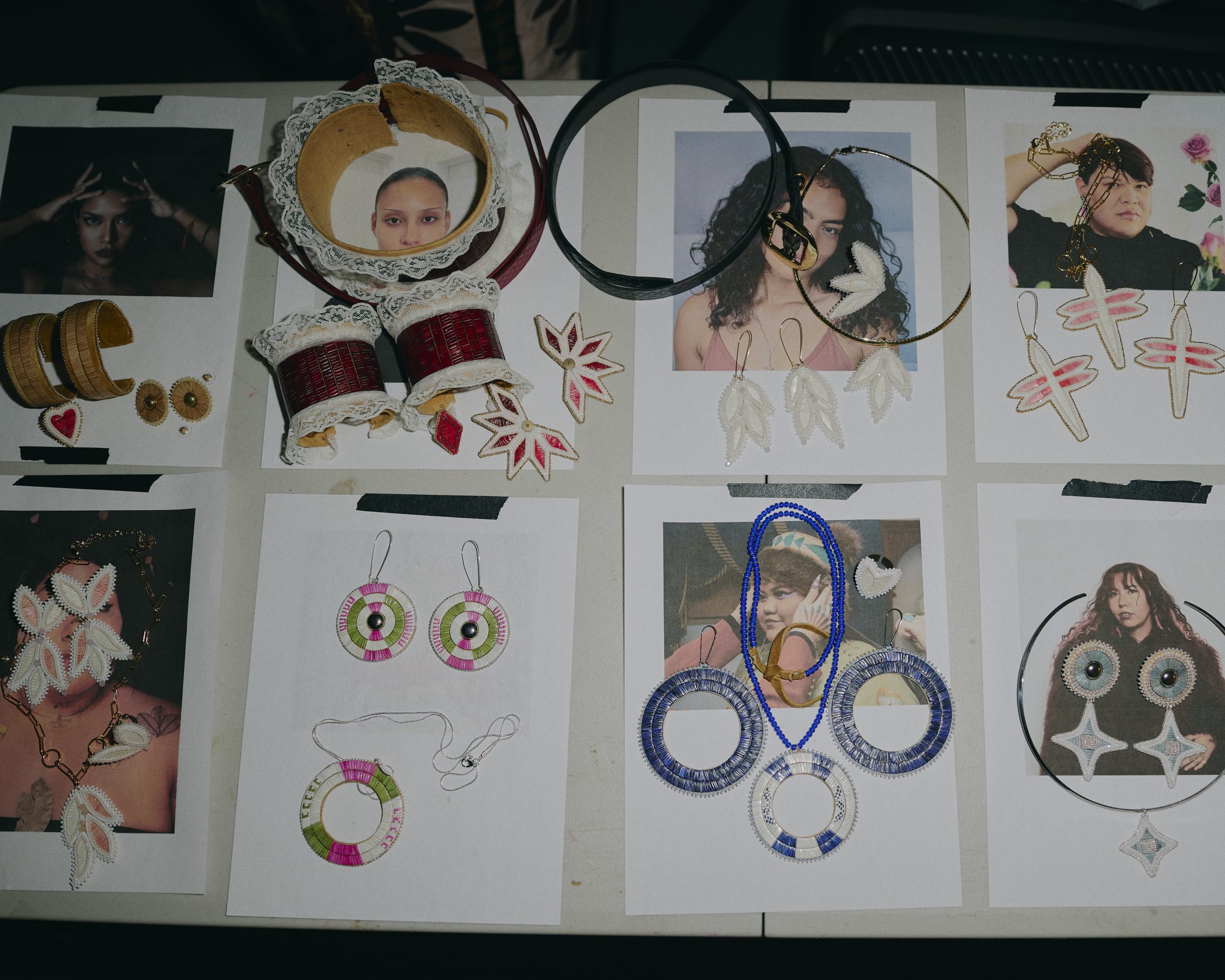
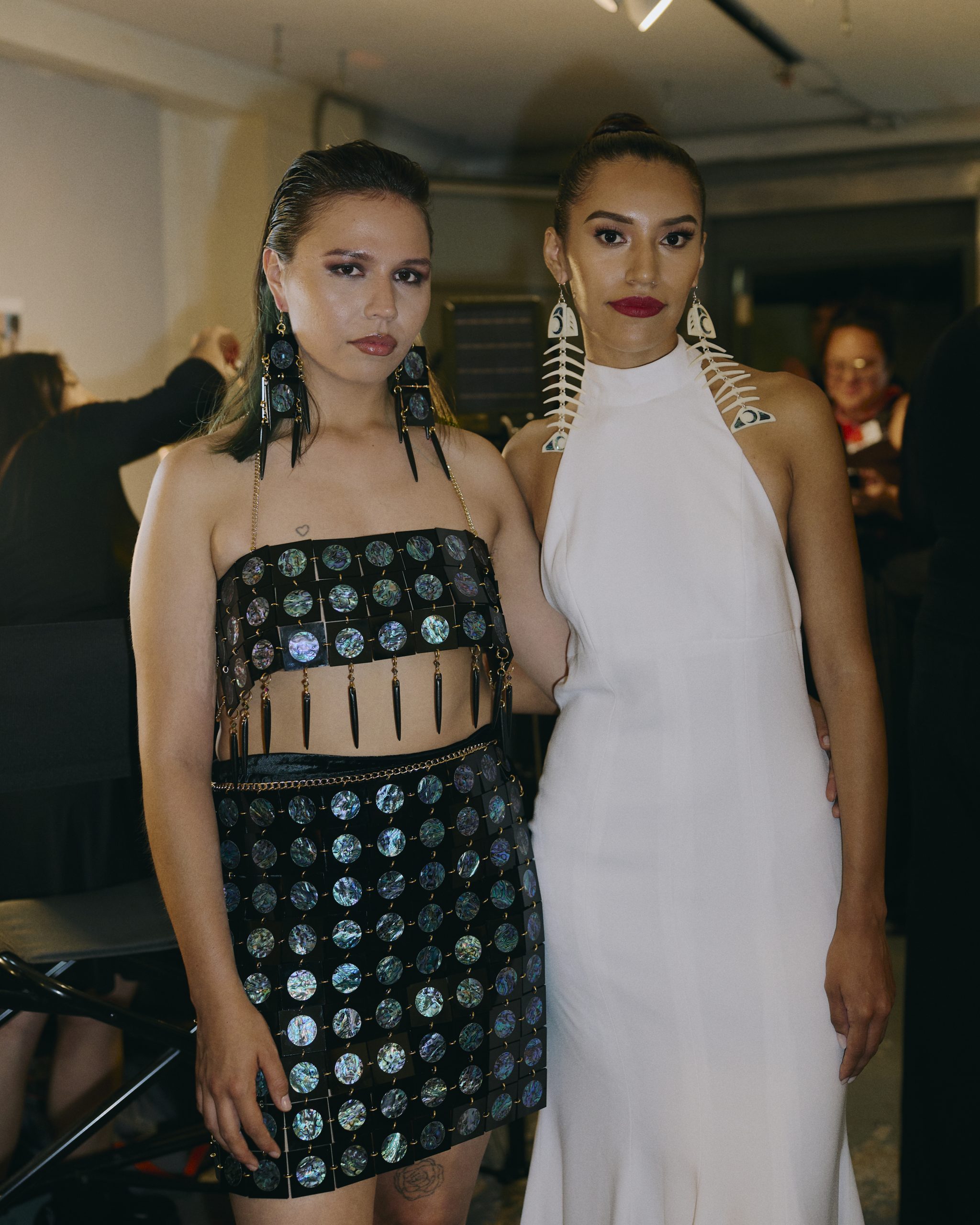
The runway shows kicked off with a dedicated jewelry showcase curated by Omar Monroy (Ñuu’savi) of El Techichi, highlighting the importance of adornment within Native communities. “For generations, Indigenous designers have been overlooked or misrepresented,” says featured designer Vina Brown (Haíłzaqv/Nuučaanu̓ɫ) of Copper Canoe Woman. “To stand alongside other Native creators on such a visible stage is a moment of reclamation, joy, and responsibility. It feels like we’re opening the door wider for the next generations of Indigenous artists.”
 PHOTOGRAPHY: Courtesy Denis Gutierrez-Ogrinc
2. Indigenous expression comes in all forms, shapes, and sizes
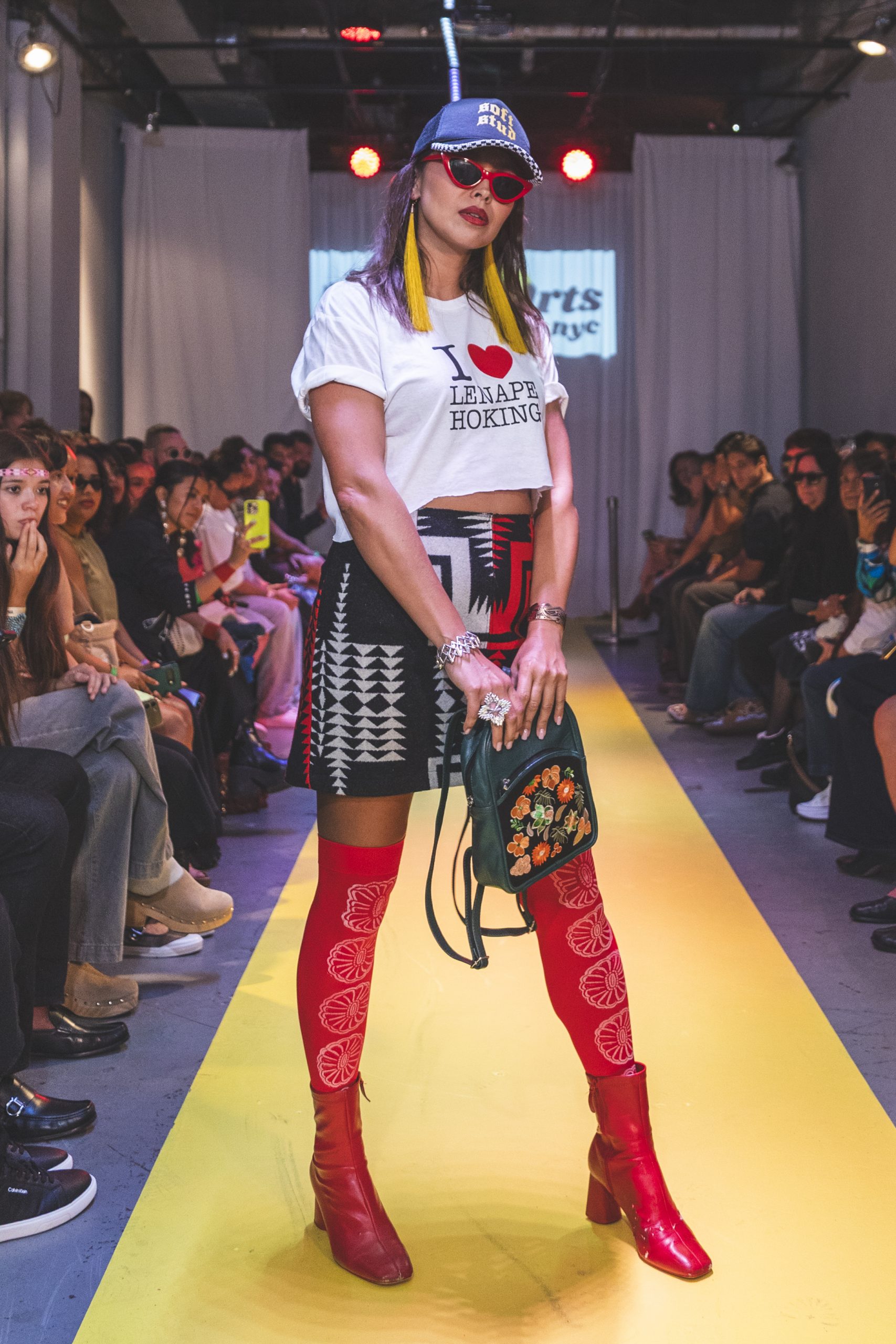
Bringing together diverse collections from 25 designers from across North, Central, and South America, INYFW underscored that Native style is not monolithic. From the Navajo Nation, Diné weavers Naiomi and Tyler Glasses unveiled their eponymous Southwest-imbued collection. From Ecuador by way of Toronto, Pacha Arts designer Kinoo Arcentales (Kichwa/Mestizo) showcased striking structural Andean silhouettes in black and white. And from New York City (also known as Lenapehoking, the ancestral homelands of the Lenape peoples), Relative Arts NYC presented upcycled styles with Indigenous flair, modeled by the likes of Oglala Lakota musician Mato Wayuhi (known for the Reservation Dogs soundtrack) and yours truly.
 PHOTOGRAPHY: Courtesy Shayla Blatchford
3. Native design incorporates bold statements and rich storytelling
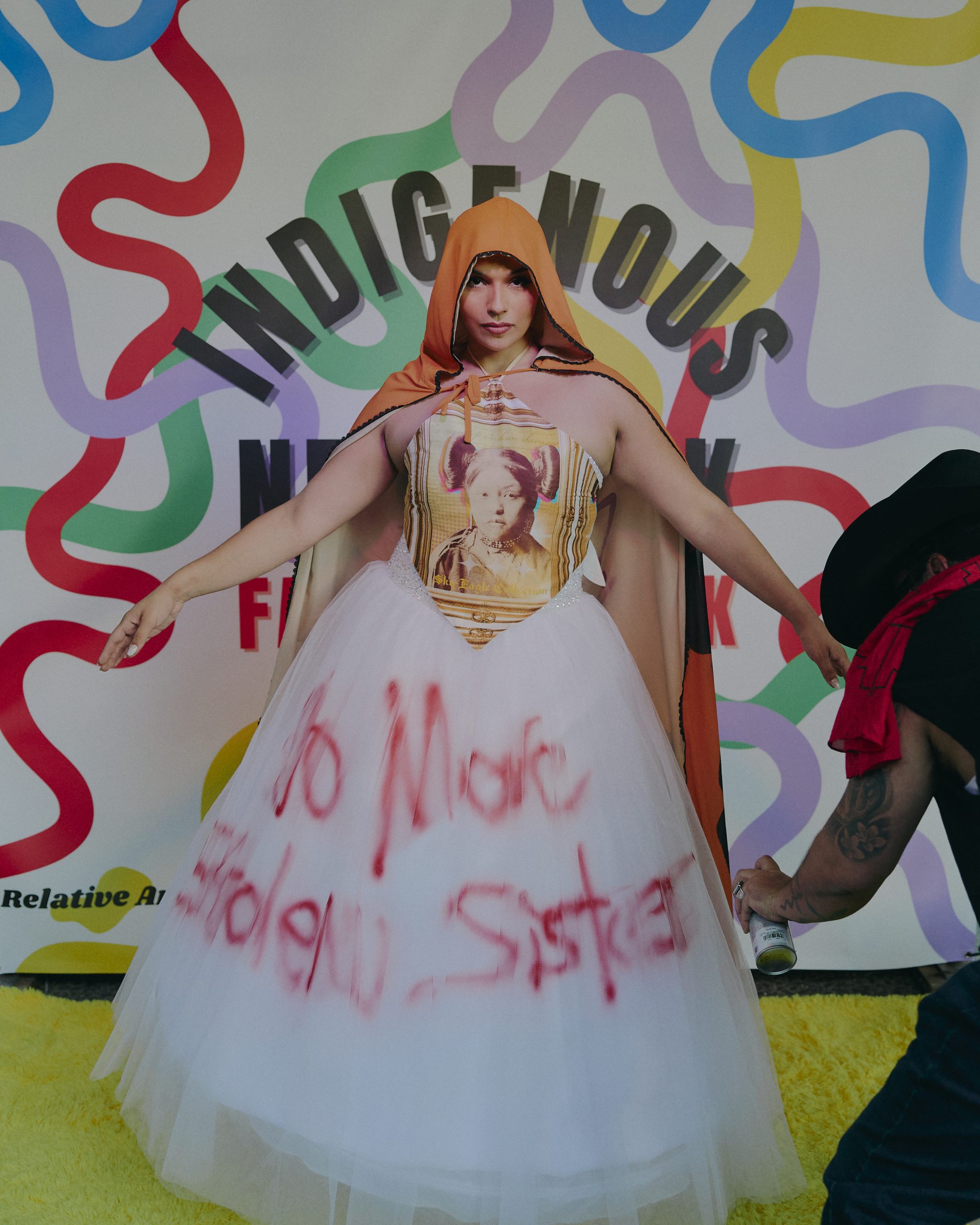
INFYW showcased more than just style. Designers tapped Native artists and musicians to perform during runway presentations; they also integrated elements touching on important Indigenous issues into their collections. For example, to bring attention to the Missing and Murdered Indigenous Women epidemic, Dante Biss-Grayson (Osage) of Sky-Eagle Collection spray painted “No More Stolen Sisters” onto a white gown in an act of performance art, while Michelle Luna (Diné) of Bitterwater For Redhouse closed out her show with a dress made from missing person posters. Both looks emphasized that Native design inherently incorporates Native storytelling.
 PHOTOGRAPHY: Courtesy Denis Gutierrez-Ogrinc
4. Authentic representation in the fashion industry is vital
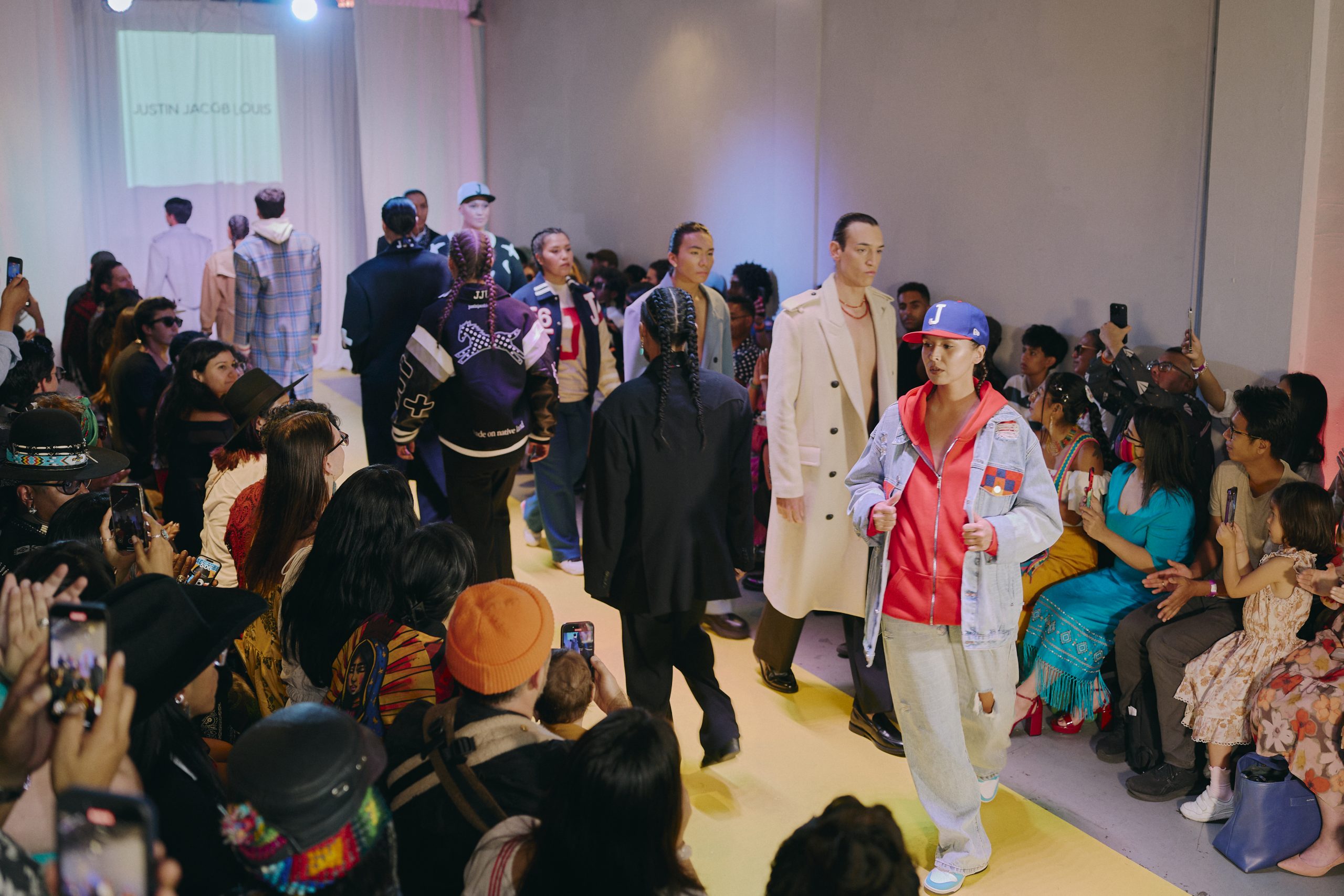
For far too long, the American fashion world has overlooked Indigenous creatives while also appropriating tribal designs. INYFW was all about carving out dedicated space for Native talents. “This is about our voices, our stories, our bodies, our art, our safety, our power,” says Jason Baerg (Red River Métis) of Ayimach Horizons. “Only we can share and contextualize fashion for ourselves and for audiences beyond our own Indigenous nations.”
 PHOTOGRAPHY: Courtesy Denis Gutierrez-Ogrinc
5. At its heart, Indigenous style is about unity and inclusivity
Above all, INYFW welcomed attendees, livestream viewers, and social media followers to recognize the beautiful breadth of Indigenous style. It invited both Native and non-Native fashionistas to celebrate the joy, resilience, and creativity that lies within tribal communities. And it served as a salient reminder that we have more connections and commonalities than we do divisions. “The conversations, mentorship, and reciprocity between designers created a sense of kinship that extends far beyond the runway,” Emmerich concludes. That sense of enthusiast unity was felt at every turn at INYFW and continued to reverberate long after the final fashion show.
 PHOTOGRAPHY: Courtesy Denis Gutierrez-Ogrinc
Cover Image: Courtesy Denis Gutierrez-Ogrinc