





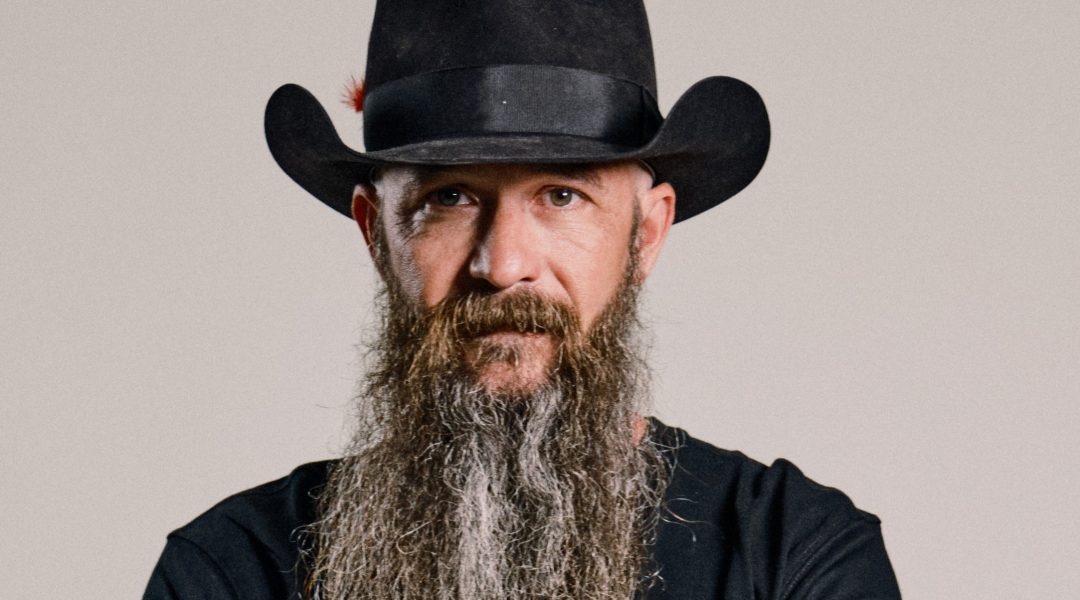
The Texas-born singer-songwriter once again blends traditional country, Southern rock, and outlaw spirit in songs ranging from stripped-down ballads to full-throttle anthems.
When we last spoke with Cody Jinks, back in Spring 2024, the Texas-born singer-songwriter sounded very much like a man who had taken very much to heart the title of his latest album, Change the Game.
“I quit drinking whiskey about three, four years ago,” he told us. “And I was just drinking beer. But I just drank a lot of beer. So I was on my way to cutting that out just as well. I’ve been in this business long enough to know that if you don’t stop doing habitually the things that are bad for you, you’re not going to make it through your fifties. And by the time you’re in your late thirties, early forties, you really need to grow up.”
Yes, he admits, “I partied. We all partied when we were young doing this. I’ve been doing this 25 years. I went really hard for a really long time — but I had enough. And I’m really glad. See, I think everything happens for a reason. Happens at the right time, and I believe that.
“I think that me taking over my business, getting to re-know my family, getting to re-know myself — all this has happened at a really great time for me, and I’m super excited. Everything’s on the uptick right now and I just have much to be thankful for.”
This weekend, Cody’s many fans and admirers also have something to be thankful for: In My Blood, his latest album, has dropped into wide release, with a slew of memorable songs that once again reflect his signature outlaw country spirit with a new level of artistic maturity. He’s continuing to delve into sensitive topics such as his journey with sobriety and the need for redemption and accountability. And he’s doing so while making pretty damn good music.
We recently spoke with Cody Jinks about the current status of his career — and his life. Here are some highlights from our conversation.
Cowboys & Indians: Your last album, Change the Game, was very much a transitional album for you. You described it as “the most open and honest record I’ve ever recorded,” where you “laid everything out.” Would you say your latest album, In My Blood, is very much a continuation of that revelatory approach?
Cody Jinks: Yeah. Change the Game was, as I often tell people, the storyline of my life. It was me getting over a lot of things — getting over myself in a lot of ways. It was me getting over a lot of things I needed to let go, and my battles with alcohol. Just that, I think in hindsight, realIy changed the game.
So Change the Game was the closing of the first part of the book. And In My Blood I think is the starting of the second part of the book. That’s a really long answer, I know. But yeah, I’m doing really well. I feel like I’m in a much better place at this point in my life.
C&I: There’s a line in “Outlaws and Mustangs,” a song from Change the Game —“We pay a price for going our own way.” There are several cuts on In My Blood that seems to express the idea that now you’re looking back on your life with your buddies and you’re thinking, “Well, we did outrun the Devil and the plans that he had.” But at the same time, you’re thinking you’re only one false step away from going back into that dark corner of the woods.
Cody: For sure. Yeah, I think that specifically is touched on in one of the last songs on the record. It’s called “Monster.” I wrote it with Ward Davis, and that’s exactly what that song’s talking about. Every day is a chance to get up and try to make great decisions. But sometimes we’re not making great decisions.
C&I: On another In My Blood song, “Found,” there’s another memorable line: “How far can a road keep going? How deep can a hole go down? How lost is a sinner like me gonna have to be before he gets found?” Do you feel like you’ve been found?
Cody: I do. I don’t ever feel like I was really lost, but I touched on the subject the other day in a conversation I was having. I mean, I never felt like I had given up on God, or God had given up on me. He’s always been with me when I was making good decisions, or bad decisions. But I look at what I do for a living as good and necessary. And how I’ve taken care of myself hasn’t always been good or necessary.
I’m striving to be a more consistent version of myself these days for my family, and my band and crew, which is my road family. But mainly for my family —my wife and kids, mom and dad and cousins and all that. So I have found a peace I didn’t have before. I don’t ever really feel like I was lost any more than anybody else at any particular moment. I think we all kind of wander around for periods of time. But I found something I didn’t have before.
C&I: One more line in another song, “Lonely Man” — “Got drunk in ’99, and I just sobered up last year.” You’ve mentioned that, while of course you’re not glad COVID happened, the lockdown did sort of force you to spend more time with your family than you had in the past. Do you think that may have been a major turning point in your life?
Cody: Absolutely. Before COVID, when I was drunk all the time, I would be home for very short amounts of time — a week or two, three weeks at the most — and then be back on the road for weeks or months at a time. So when I got home and stayed home, it was very evident after the first few months that [drinking] was a problem. And that’s when we as a family started making changes as well.
So I’m glad you pointed out that line specifically. I started writing that song a long time ago, four or five years ago, and I had to go through some more things and quit drinking in order to finish that song. And that’s why that song’s on this record. I hadn’t lived enough to finish that song, until I did. And then when I finally did — Matt Nolen, our piano player, quit drinking some years ago. And when we were recording that song, he was like, “Man! That line…” And I was like, “Yeah, yeah. I know.”
C&I: I was listening to “See The Man,” and you’re talking about, well, yeah, there’s a guy, a scruffy guy getting drunk at the bar, but there’s also a guy in a coat and tie, a businessman with perhaps the same problem, trying to drink his demons away. And I have to say for a minute, I was thinking of Bob Dylan’s “Gotta Serve Somebody.”
Cody: I love it. I also could draw correlation to “Bartender’s Blues,” which was originally a James Taylor song that George Jones made famous. But yeah, I can see the Dylan influence.
C&I: Who would you say are your greatest musical influences?
Cody: Merle Haggard and Metallica are probably my biggest. Mike Ness of Social Distortion is one of the biggest as well. Rodney Crowell wrote a record called Fate’s Right Hand that I think is my favorite body of work as a complete album. I mean, I could go on and on and on, but there’s a handful for you.
C&I: Are you ever a little bit leery of people maybe reading too much autobiography into your art? I mean, are there times when you think, well, that was just a song, that wasn’t a confessional there.
Cody: No, not really. I think that people can take anything too far in that. But like I say, my records are reflections of my life, of my journey. So I’ve given people the front door key in that regard with my songs. Now, sometimes people think they know you a little better than they actually do, and that’s something I think a lot of people in my position and a lot of artists deal with. But I mean, like I said, I think that I’ve put it out there for people. For sure.
C&I: One last question. I’d be a liar if I didn’t say that as much as I enjoyed this album, and as much as I enjoyed Change the Game, I’m waiting for you to record a song that’ll be such a happy song, you’ll do a music video with you wearing a loud Hawaiian shirt and leading a conga line of hula girls on the beach or something.
Cody: [Laughs]: You may not be that far off. I am in a good place right now. Yeah, Ward Davis and I went to Hawaii for the first time last year to work, and I’ve taken my family back twice since. Your surroundings definitely influence your writing. So who knows, I may do something in a Hawaiian shirt one of these days because life is good, man. Maybe that’s in the cosmos. Maybe you were picking up on that.