



In Memoriam: Peter Graves

Peter Graves by Sam Sisco
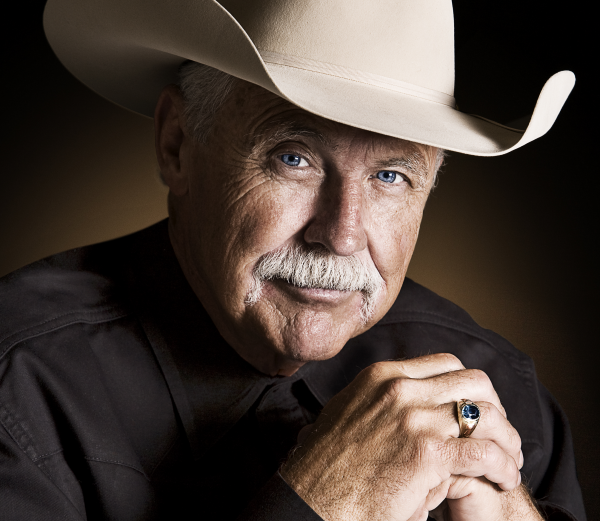
Just a few weeks before his March 14 death, Peter Graves sat down with C&I to talk about his life and his 60-year acting career. He was especially enthusiastic while recalling his work on two western TV series—Fury (1955–60) and Whiplash (1961)—and his co-starring performance as Morgan Earp, opposite Joel McCrea’s Wyatt Earp, in Wichita (1955). But he also agreed that, for most folks, he’ll always be best remembered as the steely spymaster of TV’s Mission: Impossible and the peculiar pilot of Airplane! Graves credited his older brother James Arness, the iconic star of Gunsmoke, with helping him kick-start his acting career, but more importantly he credited Joan, his wife of six decades, for making his off-screen life even more enjoyable and rewarding. Thanks to Graves for sharing his life, on-screen and off, with us in this final interview.
Cowboys & Indians: This is a mighty big year for you, sir. You’re celebrating the 60th anniversary of your career in Hollywood—and the 60th anniversary of your wedding to Joan, your college sweetheart.
Peter Graves: That’s something, isn’t it? Out here, not too many people have a marriage or a career that has lasted that long.
C&I: So which one has been harder for you to sustain?
Peter: [Laughs.] Oh, the marriage has not been difficult at all. It just gets lovelier the older we grow. Show business is a little different, though. You’ve got to start slowly, perhaps. Some good things happen, and then you have rest periods or whatever. I think it’s a matter of persistence and sticking to it. And a hell of a lot of good luck.
C&I: You’ve got some very impressive credits on your resume, from Mission: Impossible and The Winds of War to Stalag 17 and Airplane! But a lot of us still remember you from Fury. Or, as they used to say every week back in the ’50s: “The story of a horse and the boy who loved him!”
Peter: That was a lovely show. When I was first approached to do it, I assumed it was going to be one of the evening prime time shows. But then NBC made the decision to do it as a Saturday morning thing—which was probably even better, because it got the attention of a lot of young people. A lot of folks—baby boomers, usually—still ask me about it, but also people of my generation. And if you look around the world, it’s still playing in reruns in a lot of places.
C&I: You played a rancher who adopted an orphaned youngster, who in turn became very close to one of your horses, a great black stallion named Fury.
Peter: The horse’s real name was Beauty. And the man who owned him and trained him was a wondrous, wondrous man named Ralph McCutcheon. McCutcheon was a genuine horse whisperer—he loved horses, and they instinctively loved him. But, you know, some mornings we’d come to work and Beauty was supposed to do some particular gag or trick, or go open the latch on the corral and walk in, something like that. And he wouldn’t do it. Ralph would have to coax him and try to get him to do whatever it was. I suppose, just like you and I, the horse came to work some mornings not feeling like working.
C&I: So Beauty was one of your more temperamental costars?
Peter: [Laughs.] Actually, Ralph would love to show him off when he’d have parties at his ranch out in the [San Fernando] Valley on a Saturday night. After people would have a drink or two and get warmed up, he’d open the front door and invite Beauty in. Beauty would walk through the house—through the living room and the dining room and the kitchen and out the back door—kind of nodding at people as he passed them by. He never knocked over a glass or a table or anything. Then Ralph would say, “Beauty, go to bed.” And off he’d go to his stall. That’s the last we would see of him for the evening.
C&I: You also spent a lot of time in the saddle when you did a western-style series in Australia, Whiplash, back in the early 1960s. Do you still do much riding?
Peter: I haven’t for some years. I have a little arthritis problem now that keeps me from that. But I loved horses, and I became a pretty good rider. Fortunately, if you made friends on a film or a TV show with the stuntmen and the wranglers, they would bend over backwards to help you become a better rider. And I learned a lot from them. In fact, Ralph McCutcheon once told me I was the second-best actor-rider in motion pictures after Joel McCrea. And that was high praise, indeed, because Joel was a cowboy at heart.
Issue: June 2010

Print