




This summer’s competition marks 100 years of Olympic equestrian events.
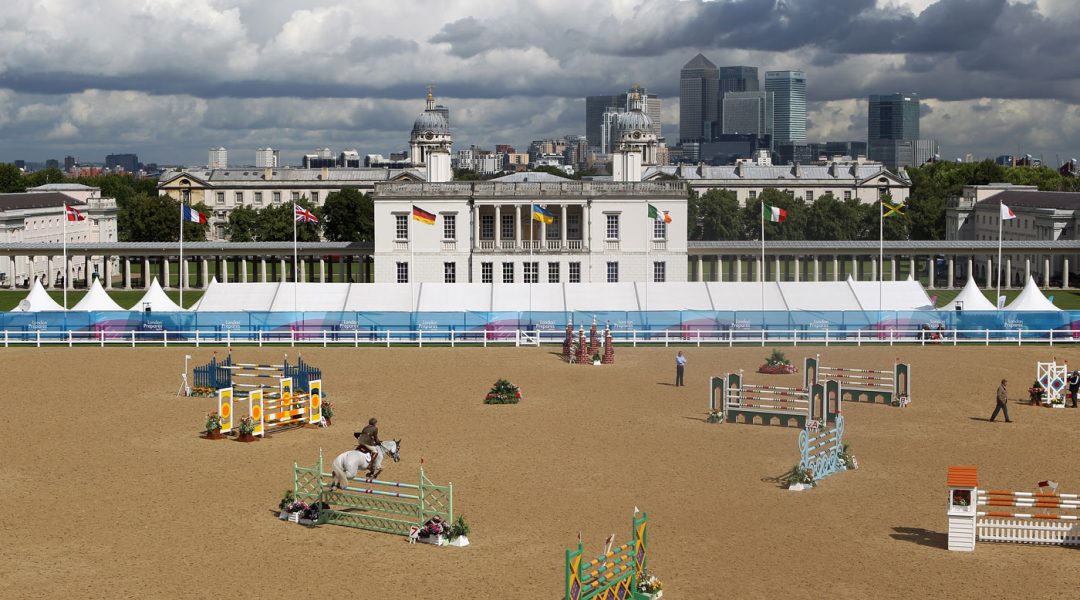
The 2012 Olympics kick off July 27 in London, marking 100 years since equestrian competition became part of the modern games. In a country rich with horse-related history, it will be the ultimate showcase for a crowd that is knowledgeable about equestrian sport. Even the location of the events makes a statement about their importance to the host nation: For the London games, temporary facilities have been constructed not in a remote location but within the city limits, in historic Greenwich Park — on which the queen has bestowed the status of Royal Borough for the occasion. And riders will be able to stay in the Athlete’s Village, truly making them a part of the Olympic experience.
Here’s what you need to know and who you need to watch when the games get underway.
The History
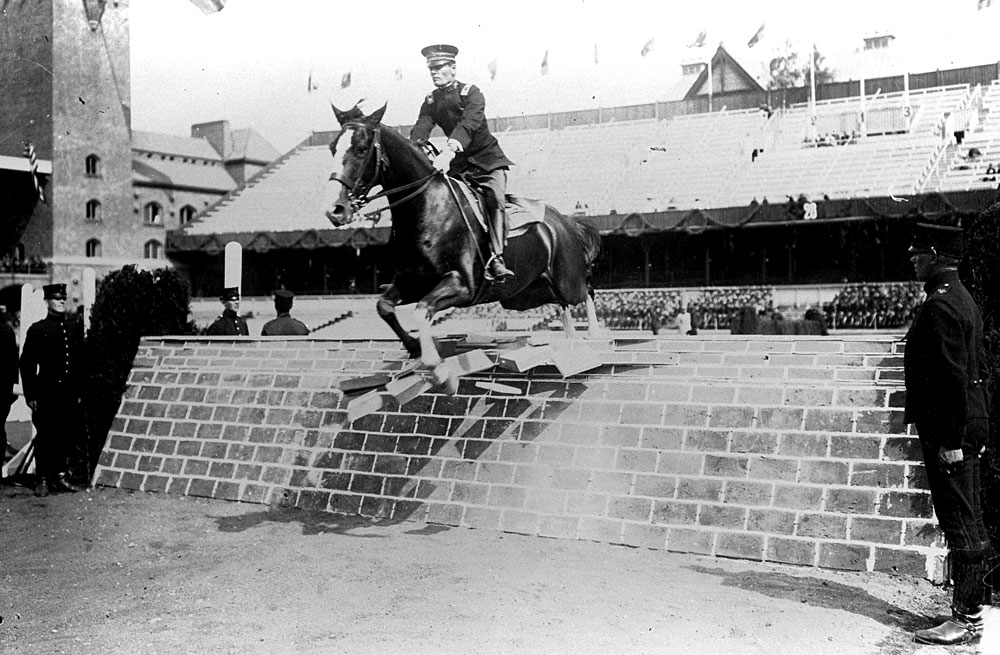
The modern Olympic Games were founded by Pierre de Coubertin in 1896, but it wasn’t until 1912 that equestrian events were routinely included. Led by Capt. Guy Vernor Henry Jr. (the son of Brig. Gen. Henry, who fought in the Civil War and Indian Wars and later served as the military governor of Puerto Rico), the first U.S. team was fielded from the U.S. Cavalry. In fact, until the cavalry was disbanded in 1948, every single U.S. equestrian Olympic team was made up of members of the cavalry or U.S. Army equestrian team; civilians were not invited to take part until the Helsinki games in 1952, the same year women were first allowed to compete in Olympic equestrian events.
Capt. Henry’s team had precious little time to prepare — just six months in rough winter conditions in Fort Riley, Kansas, with three of the recruits fitting in Olympic training for an hour and a half per day in between normal cavalry duties. Nonetheless, the newly minted U.S. equestrian team brought home the bronze from Stockholm. Capt. Henry himself rode his Army mount Chiswell in all three equestrian competitions, placing 11th in dressage and fourth in jumping in addition to serving on the bronze-medal eventing team.
Despite the early success, World War I intervened and the program languished for nearly two decades before the Army decided to refocus its efforts. The Remount Service, which was founded to ensure an adequate supply of horses for wartime, instituted a new breeding program to develop superior mounts, and an elite one-year course in advanced equitation was added to the curriculum at the Cavalry School to groom officers and Olympic team members.
In 1930, Capt. Henry was promoted to major general and named chief of cavalry. Under his experienced tutelage, the newly committed team prepared for the 1932 Los Angeles Olympics. Although the event took place in the midst of the Great Depression and turned out to be the least-attended Olympics in history, the team brought home five medals, including the first team gold in eventing, led by Lt. Earl Thomson on Jenny Camp. The team’s success would be unmatched for more than 50 years, until the U.S. Equestrian Team (USET) earned five medals in 1984.
Col. John W. Wofford, a member of the 1932 team, went on to serve as the first president of USET and to coach the first team with civilian riders in 1952 (his 19-year-old son Jeb won bronze that year). From 1955 to 1980 Bertalan de Nemethy coached the team, with Jack LeGoff hired as eventing coach in 1970. At the USET facilities in Gladstone, New Jersey, these men trained many of the medal-winning horses and riders that helped U.S. equestrian sport become what it is today.
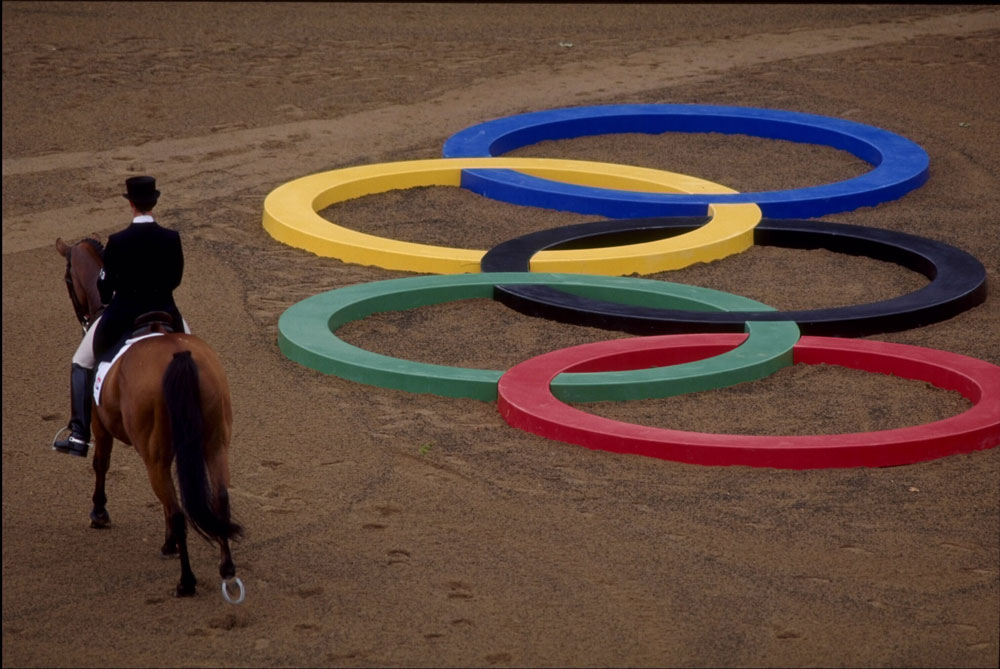
The Events
There are three Olympic disciplines in equestrian sport, with medals awarded in team and individual competition. In each discipline, men and women compete on equal terms, the only Olympic sport in which this is the case.
Dressage, which means training in French, is a test of the horse’s obedience, education, and harmony with its rider. The horse should be attentive, supple, and calm as he performs a prescribed series of movements. In the freestyle, a customized pattern is choreographed and ridden to music.
Show jumping tests the horse’s skill, speed, and agility, as well as the rider’s ability and horsemanship, as the two nego-tiate a course of obstacles.
Eventing, the ultimate test of horse and rider, includes dressage, cross-country, and show jumping over three days. The “triathlon of equestrian sport” challenges the horse’s bravery, endurance, and athleticism. Eventing formerly included a speed and endurance component consisting of roads and tracks, and a steeplechase on cross-country day. The current “short format,” in which cross-country was left to stand alone, came about primarily to keep eventing in the Olympics — a change that has affected the sport permanently. The last long-format Olympics were held in Sydney in 2000.
Though not an equestrian discipline per se, modern pentathlon includes show jumping among its five sports (riding, running, shooting, swimming, and fencing). The riding portion of the modern pentathlon will take place at the equestrian venue in Greenwich Park.
The Para Equestrian competition for disabled riders will also take place at Greenwich Park from August 30 to September 4 during the Paralympic Games. The United States will send one of 23 world teams to battle it out for team and individual medals.
As of 2012 all equestrian events in the Olympics are English riding, but some enthusiasts hope that one day cowboys and cowgirls will have their chance at Olympic gold in the sport of reining. In 2006 in Aachen, Germany, the Western discipline was added to the events at the World Equestrian Games (WEG), and reining was well-attended at the 2010 WEG in Lexington, Kentucky.
The Selection Process
A total of 200 riders representing 41 countries will compete in equestrian events at the London Olympics. The top teams from the 2010 WEG are automatically qualified, and this year Great Britain is also included as the host nation. Additional team competitions, such as the European Championships and the Pan-American Games, qualified the remaining teams.
The Transportation
Getting teams to major competitions requires precise logistical planning and a cooperative effort among team managers, grooms, and the shipping company. After traveling to the airport by truck, horses are loaded onto containers, which are then loaded onto a cargo plane. One groom usually looks after several horses when a team is traveling, and a team vet is always on board.
Generally speaking, horses travel well on such trips. Martin Atock, managing director of Peden Bloodstock — the company that has arranged horse shipping for every Olympics since Seoul, South Korea, in 1988 — says the two main concerns are claustrophobia and colic. “Just like people, most horses will travel fine, but there may be one or two who are nervous and agitated, and this is where the judgment and skill of our flying grooms comes into play,” Atock says. “They are the experts and the backbone of our operation.” The equines also get by with a little help from their friends: “Most of the horses traveling to the Olympic Games are frequent fliers, but even if you have a newbie the experienced horses are a good influence on the young ones,” says U.S. eventing team veterinarian Brendan Furlong.
One benefit to flying horses to England is that quarantine is not necessary as it was for horses traveling to Hong Kong, where equestrian events were held during the Beijing Olympics in 2008. Once horses land at their destination, the organizing committee sends trucks to pick them up at the airport; then they travel in a convoy to the venue, where veterinarians on the grounds check their paperwork, passports, and condition.
“In Hong Kong, because of the heat and humidity, the horses went from the air-conditioned plane onto air-conditioned trucks and straight into air-conditioned stabling — it was extraordinary,” Furlong recalls. “I’m sure the Brits will handle everything very well since they’ve been involved in horse sports for so long.”
The Venue
The equestrian events at the 2012 Olympic Games will take place in London’s Greenwich Park. Enclosed in 1433, the former fox hunting park is the city’s oldest Royal Park and part of the Maritime Greenwich area that was designated a World Heritage Site by UNESCO.
At a cost of 42 million euros, the arena — with high-tech footing consisting of sand, felt, and fiber — was built on a raised platform to avoid damaging the historic parkland. The cross-country course encompasses much of the 180-acre grounds, with stands seating 22,000 spectators.
The Competitors
Show Jumping: With show jumping as popular in Europe as football is in America, there is good reason that Europeans excel in the sport. But the Americans are the reigning gold medalists and will try their hardest to fly the stars and stripes again under U.S. team coach George Morris, who plans to retire after the games. A member of the silver medal-winning team at the 1960 Rome Olympics and jumping chef d’équipe since 2005, Morris is one of the most influential riders and trainers in equestrian sport, and also coaches the U.S. eventing team in show jumping.
Canada’s Eric Lamaze, formerly ranked No. 1 in the world and a 2008 individual Olympic gold medalist, tragically lost his partner Hickstead when the 15-year-old stallion collapsed and died — apparently of a massive coronary — during a competition in 2011. Sweden’s Rolph-Göran Bengtsson has since claimed the top spot, with Germany’s Ludger Beerbaum hot on Lamaze’s heels.
Americans to watch include Laura Kraut, a 2008 Olympic team veteran, and McLain Ward, who has recovered from the broken leg that had him sidelined at the start of the winter season.
Elizabeth “Beezie” Madden is the first woman to pass the $1 million mark in earnings for show jumping. Riding Abigail Wexner’s Authentic, the 2006 U.S. Equestrian Federation (USEF) Horse of the Year, Madden was on the gold medal-winning team at both the 2004 and 2008 Olympic Games and earned individual bronze in 2008. Since then, Madden and Coral Reef Via Volo, affectionately known as “Shrimp,” helped the United States bring home gold from the 2011 Pan-American Games in Mexico.
Dressage: Germany and the Netherlands have long dominated dressage, but the United States has a good chance at a medal in 2012 with this year’s World Dressage Masters Grand Prix winner, Steffen Peters. After finishing fourth at the 2008 Olympic Games riding Akiko Yamazaki’s horse Ravel, Peters took the dressage world by storm in 2009. He is a three-time USEF Rider of the Year, and Ravel was Horse of the Year in 2009.
The team is coached by Olympic judge and accomplished international rider Anne Gibbons, who trained the horse Metallic, who was ridden to an Olympic medal by Robert Dover in Atlanta in 1998.
Eventing: U.S. eventing team coach Capt. Mark Phillips boasts quite a resume (and a royal ex, Princess Anne). A member of the British eventing team, Phillips won gold in Munich in 1972. He has served as eventing chef d’équipe since 1994 and was named 2011 USEF Coach of the Year. Since 1993, Phillips has brought home medals from every championship he has coached, except for one. In 2011 his team won Pan-American team gold with all five athletes finishing on their dressage scores, the first time in history this has ever happened.
Phillips’ expected team is equally impressive. On the roster: Boyd Martin, the top-scoring U.S. rider at the 2010 WEG, and his ex-racehorse Neville Bardos. Martin rescued Neville from a barn fire on Memorial Day 2011. Though the horse suffered serious injuries in the fire, Martin and Neville made an amazing comeback in September to finish seventh out of 81 entries at the Land Rover Burghley Horse Trials in England, the world’s toughest three-day event. Martin finished the year ranked eighth in the HSBC world rankings, and Neville was chosen as the USEF International Horse of the Year.
“Neville doesn’t owe me a thing,” says Martin, “but to take him to the Olympic Games would be an amazing tribute to a horse whose life nearly ended in tragedy.”
From the July 2012 issue